

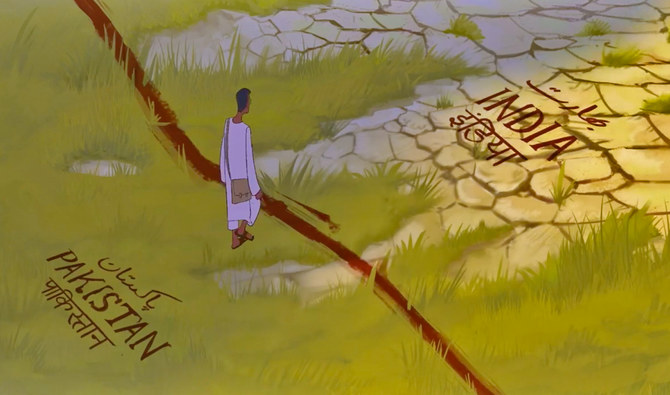

KARACHI: A new project on partition is using animations to tell the stories of witnesses of the end of British colonial rule and the birth of two sovereign nations, India and Pakistan, whose hastily drawn borders caused simmering tensions to boil over and whose memories, 75 years later, continue to haunt survivors.
Excitement over independence in August 1947 was quickly overshadowed by possibly some of the worst bloodletting the world has ever seen, leaving up to a million people dead as gangs of Hindus and Muslims slaughtered each other.
With “Lost Migrations,” a three-episode animation series, the aim is to tell the stories of survivors from a “new angle,” said Saadia Gardezi, co-founder and Pakistan lead of the project, which is part of Project Dastaan, a peace-building initiative that reconnects witnesses of the violence of 1947 with their past communities and villages through bespoke 360-degree digital experiences, particularly using virtual reality. Dastaan means ‘story’ in several South Asian languages.
The project’s new animation series, inspired by stories by famed Pakistani authors Saadat Hasan Manto and Intizar Hussain, among others, premiered at the British Film Institute in London on August 1. The shorts have been animated by Puffball Studio in Pakistan and Spitting Image in India.
“Lost Migrations fits into the larger historiography of partition because it looks at partition from a new angle,” Gardezi told Arab News. “We focused on narratives that aren’t commonly heard when we talk about partition and the migrations that it caused.”

Saadia Gardezi, co-founder of Project Dastaan and Pakistan lead of the project " “Lost Migrations," speaks to Arab News Pakistan via zoom on August 3, 2022. (AN Photo)
“All these three animations do have very different takes on partition and they exhibit some very different experiences that people have, whether they became stateless, whether they had to migrate on foot.”
Speaking about the decision to use animation for the project, Gardezi said there were fewer and fewer living witnesses of partition as time passed, and many had also died during the coronavirus outbreak.
“So, we wanted to then think about kind of like, how can we retell partition narratives in a new way, a diversity of stories for a younger generation, as well as, you know, bring it back into pop culture, which is why we thought we’d animate stories,” she said.
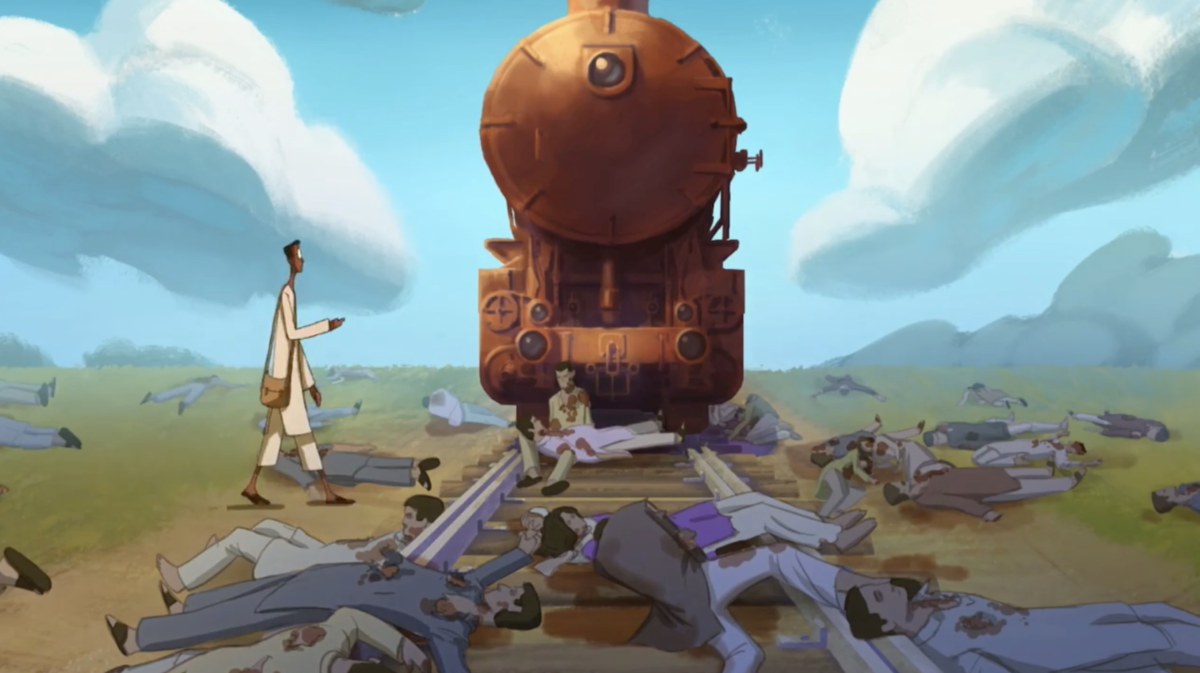
The picture shows a scene from “Lost Migrations,” a three-episode animation series by Project Dastaan, aiming to tell the stories of witnesses of the end of British colonial rule and the birth India and Pakistan. (Project Dastaan)
Gardezi said it was a “very interesting and educating process” to interview partition survivors as a Pakistani.
“We think of partition in a very different way than people in India think about it. But speaking to that generation, they have really harrowing stories of how they escaped, how their houses were burned down, how they might have been chased, how they lost their family.”
Gardezi said despite witnessing the horrors, “somehow these people are just so resilient and kind ... they are like I have no enmity toward Hindus or Sikhs. It was political, it was a crazy time but they are not holding on to the hatred.”
“It’s a very complex understanding and I think we need to realize that, that doesn’t negate our identities,” Gardezi added. “Sympathy for the enemy doesn’t mean our identity as Pakistani or Muslims goes anywhere. And I think we have a lot to learn from these stories about how we can be empathetic and humane toward the other, despite our differences.”
The first episode of the series, Sultana’s Dream, is inspired by a short story written by Bengali feminist thinker Rokeya Sakhawat Hossain, who imagined a female utopia and juxtaposed it with the real-life experiences of women during partition.
Seabirds, the second episode, focuses on a seafaring community on the Bay of Bengal, Gardazi said, which speaks of the double-horror of partition and of losing its own Burmese identity after getting uprooted from their country and arriving in India.
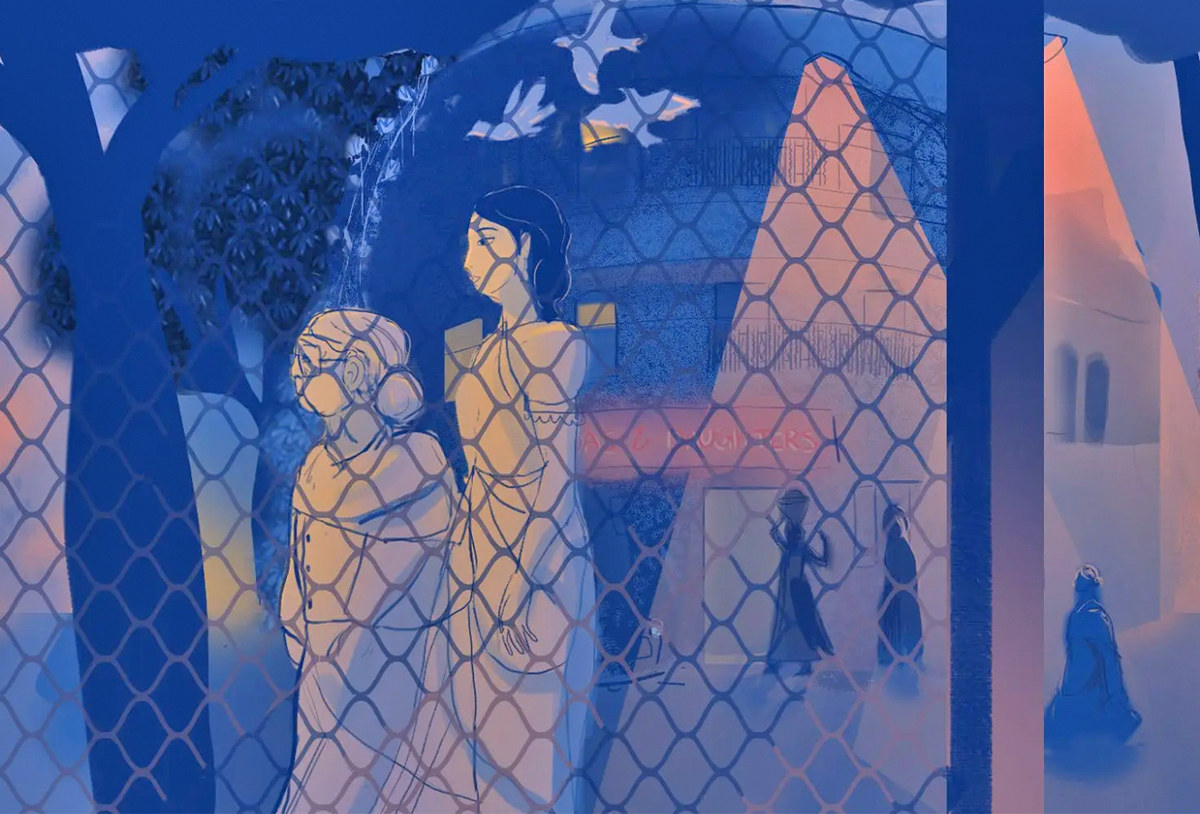
The picture shows a scene from “Lost Migrations,” a three-episode animation series, by Project Dastaan, aiming to tell the stories of witnesses of the end of British colonial rule and the birth India and Pakistan. (Project Dastaan)
The third animation, Rest in Paper, takes inspiration from Toba Tek Singh, a popular short story by Manto, to meditate on statelessness and the affect on the lives of people of drawing of new frontiers.
“These are difficult stories, they’re very emotional stories and they do have some very interesting historical and political thoughts,” Gardazi said. “They are an emotional one to watch.”
Work on Lost Migrations, the co-founder said, began two years ago, and the series was based on interviews as well as literary pieces inspired by partition. There are plans to screen the series in Karachi and Lahore in November 2022, she said.
Gardezi said Project Dastaan had initially aimed to interview 75 partition witnesses to mark the country’s diamond jubilee this August 14. But that did not materialize due to the coronavirus pandemic and a lack of funding.
“Some of our partition witnesses died and weren’t able to see their homes again. So, it’s a complex process to hit the mark with 75,” Gardezi said. “Up till now, we have done around 35 interviews and we’ve reconnected about 20 people back to their homes.”


