




RIYADH: The artist’s main focus is on the aesthetic aspect of life, leaving material concerns behind, leaving many artists struggling to understand the economic world, sparking confusion over pricing their paintings and profiting from their talents.
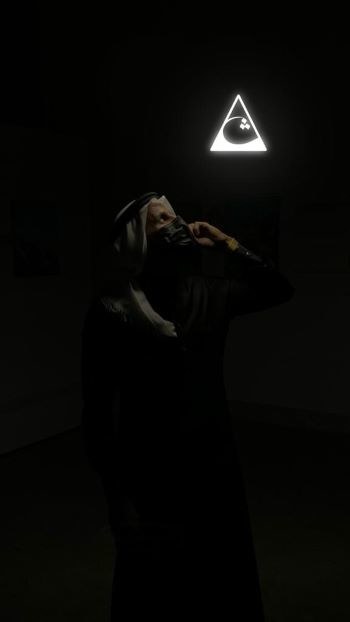
This was one of the reasons that artist Meshal Al-Hujaili was inspired to launch a community project of talks called “Thalothya” to support artists by educating them on more parts of their careers.
Thalothya emerged as an artistic community concerned with spreading artistic culture, enhancing the creative side of the artists, and exchanging experiences.
Their goal is to create a healthy artistic environment in which practitioners find support and expertise to develop their art. The sessions are held once a month in Madinah.
The group also organizes monthly dialogue sessions, regular presentations on the artists’ latest works, online interviews with an eclectic range of influential artists, and discussions on the journey that each artist took and its impact on their craft.
“Thalothya started in an informal way between me and my artist friends, and I decided to set up a meeting to discuss art. Then I was surprised that the topic started to spread among artists and that a large number wanted to attend courses. The news spread in the city. We started with 15 people, and the last session was attended by 60 artists,” Al-Hujaili told Arab News.
Al-Hujaili said that because of the crowds of people who wanted to attend the event, the sessions were moved from a cafe to art galleries in Madinah, where there are halls to accommodate 200 people in the session.
“Many people want to join the discussion circles, which is why I refuse the requests of many cafes and places that want to host us because I know that the place will not accommodate us,” said Al-Hujaili, adding: “Thalothya created an artistic revolution in Madinah.”
He said: “The topics we raise are not purely artistic, so we talk about the legal aspect of art, and 90 percent of artists do not know how to legally preserve their works or price their works. We help them to dialogue and talk in a safe space and host different topics each time.
“For example, we once discussed the subject of ‘art block’ during our research, and we found a definition that is completely different from what we thought, and we present a new aspect that focuses on the topic of marketing and the problems that the artist goes through, why an artist appears and becomes famous suddenly, and then he is isolated and disappears.”
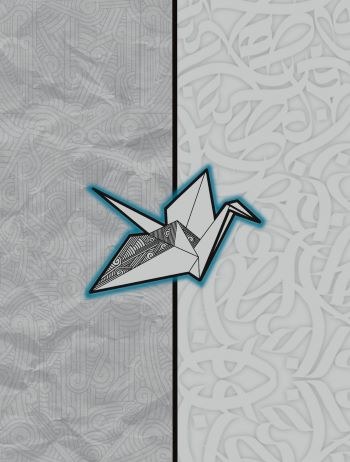
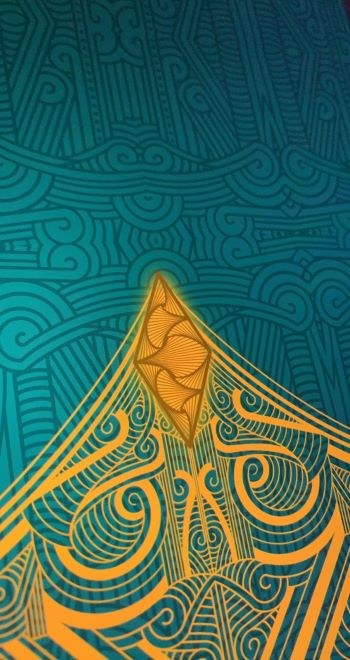
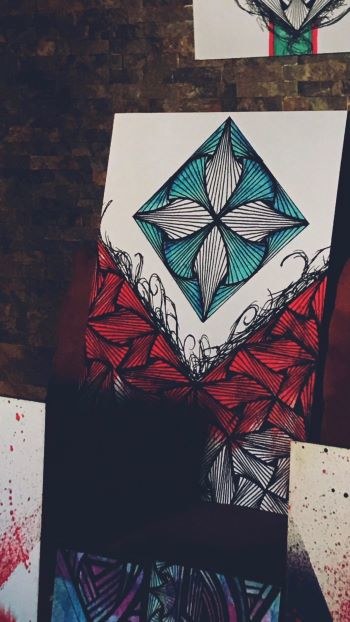
Al-Hujaili’s paintings are distinguished by geometric formations. He began his journey in the art world at a young age by drawing graffiti before taking another direction.
“I started my graffiti from primary to secondary school, and I drew graffiti, then art took a new curve. For six years, I only drew straight lines and worked on drawing geometric shapes, and the result was special, as I was unique in my art, in which I put my fingerprint. I was requested to paint a mural at the Arab Open University in Madinah,” he said.
The dialogues were not limited to male artists, with women making up a large share of the discussion.
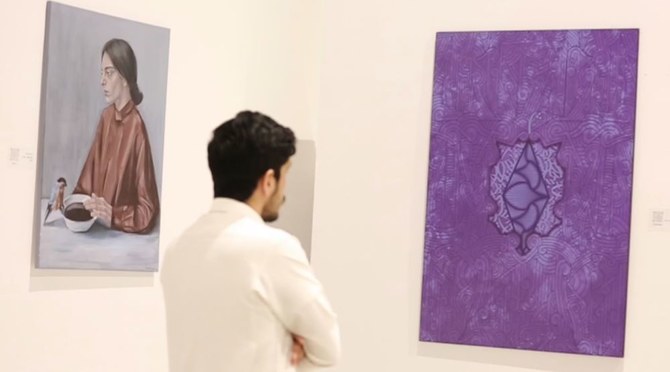
Basma Al-Bloshi, a portrait artist, said: “What distinguishes Thalothya is that it cares about the artist’s aspects, both psychologically and practically, and we discuss the things that develop the artist.”
She continued: “The idea of Thalothya is to educate the artist about other aspects of art. One of our goals is to spread Thakothya throughout the Kingdom.”


