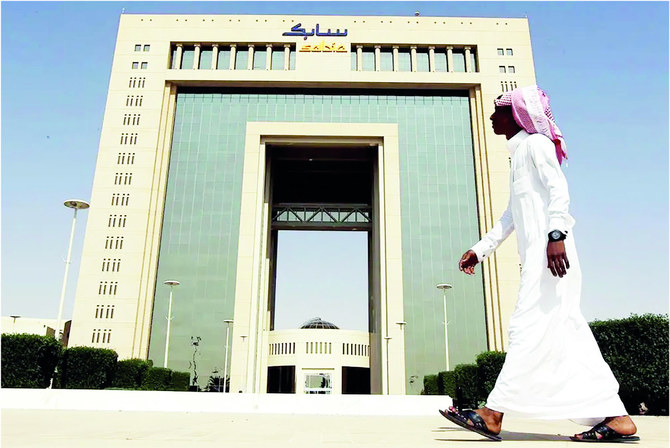

RIYADH: Saudi Basic Industries Corp. and anti-bribery firm Trace International have successfully provided compliance training to 4,500 third-party business partners since July last year to advance corporate governance in the organization.
According to SABIC vice president of legal affairs Naveena Shastri, each of the company’s third-party business partners, which included suppliers, distributors and contract workers, were trained in four to five compliance training sessions, totaling 20,000 sessions.
Of the 20,000 sessions, 18,090 sessions constituted temporary employees. The company also trained 44.3 percent of its temporary workers in the first half of 2022.
A total of 619 training sessions were conducted for SABIC’s suppliers in the second quarter of 2022.
“In any place we operate, we develop ecosystems where doing business with integrity is the norm,” said Shastri.
BACKGROUND
SABIC was awarded the Compliance Leader Verification for 2022 and 2023 from Ethisphere, a global leader in defining and advancing ethical business practices.
The program offers face-to-face or online training in Arabic, with training materials and formats updated regularly.
By doing this, Shastri said that the company could ensure that its small and medium business partners understand the company’s compliance concepts.
All SABIC employees are required to attend comprehensive compliance training, refresher courses, and special training on specific topics, such as antitrust legislation, fair employment practices, and trade controls, to build the proper foundation for ethical compliance, she added.
In addition, Shastri pointed out that SABIC led the implementation of a global trade system that allows automated compliance screening of customers with applicable international trade sanctions.
Due to the company’s commitment to corporate governance and ethics, the chemical manufacturing major was awarded the
Compliance Leader Verification for 2022 and 2023 from Ethisphere, a global leader in defining and advancing ethical business practices, Shastri said.
It was the company’s second consecutive year to receive the award following November 2021.
In previous sessions for its suppliers, the speakers elaborated on the importance of an ethical business model and why stakeholders — both global and regional — are increasingly seeking evidence of effective compliance practices.
The company has been collaborating on this front with compliance organizations such as the Pearl Initiative and Nazaha, the Oversight and Anti-Corruption Authority in Saudi Arabia.
Often facilitated by nongovernmental organizations, SABIC also plays a crucial role in cross-industry collaboration.
It participates in several global, multilateral anti-corruption initiatives, including the annual Business 20, the official business dialogue forum of the Group of 20 nations and the World Economic Forum.
Due to the company’s size, it ensures that the e-learning courses reach the right people in its supply chain and that trainees have the tools to follow up if necessary. “The company builds capacity, awareness, and knowledge in countries where some of these are new compliance concepts, and sets standards that its suppliers must follow to participate in business activities with SABIC,” Shastri concluded.