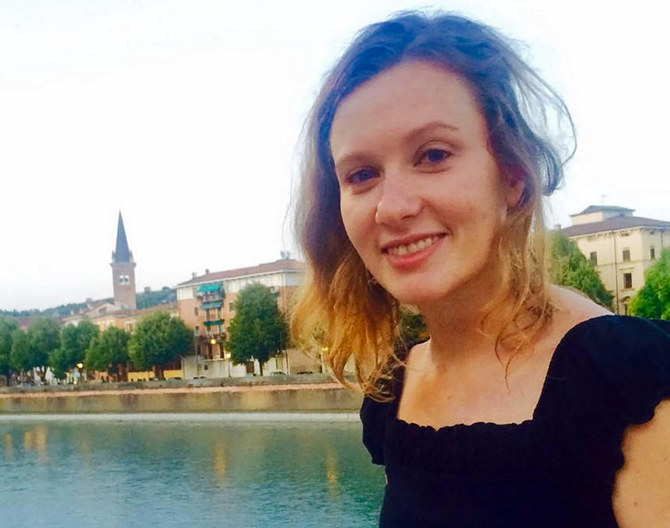

LONDON: An inquest into the death of a British Embassy worker in Beirut in 2017 has heard that she was raped and murdered by an Uber driver after a night out with friends, the Daily Mail reported on Friday.
Rebecca Dykes, 30, had been in Lebanon helping Syrian refugees when she was attacked before heading home for Christmas.
She was strangled to death by Uber driver Tariq Houshieh, who left her body by the side of a road.
It was discovered on Dec. 16, and Houshieh was tracked down by police using CCTV footage.
He was sentenced to death in 2019 by the Criminal Court of Mount Lebanon for his “premeditated and deliberate” crimes, but is appealing his sentence. Lebanon has not carried out an execution since 2004, according to Human Rights Watch.
Houshieh had a criminal record for alleged harassment and theft before the attack, according to Agence France-Presse.
Uber said at the time of Dykes’ death that it was “horrified by this senseless act of violence,” while the Lebanese government advised people to avoid using the ride-hailing app.
The inquest into her death opened in London this week, and heard that embassy staff had been told to use just three pre-approved taxi firms for security reasons, but that many frequently ignored the advice on account of brand familiarity with Uber, and waiting times with other companies.
Andrew Harrison, coroner at the Inner South London Coroner’s Court in the borough of Southwark, was told by embassy security officer Alyson King: “It came to light afterwards, many staff were using other taxi companies when they found them convenient.”
She said all embassy staff were given safety and security briefings on arrival in Beirut, including specific women-only meetings.
When asked by Harrison, she added that she felt the level of security briefings provided to staff were adequate for the situation they found themselves in.
The Foreign, Commonwealth and Development Office’s head of security, Bharat Joshi, said many staff at the embassy chose not to follow the taxi guidelines, but in general, the embassy was found to have had a “very, very strong” security culture in the aftermath of Dykes’ murder. There had “never been a serious incident” before involving Uber in Lebanon, Joshi added.
Members of Dykes’ family also addressed the inquiry, where she was described as having “improved the lives of countless refugees and vulnerable host communities.”
Her mother Jane Houng said via video link that she hoped “no parent has to go through what we have.”
She added: “One thing that pained me very much was that now embassy staff wear personal alarms. I think if Rebecca had been wearing a personal alarm at that point in time, it probably would have saved her life.
“When I went to Lebanon shortly after her death and sat around the table with Rebecca’s friends and colleagues, they all said they used Uber. It was commonplace for personal travel that people used Uber taxis.”
The coroner recorded a verdict of unlawful killing.