

PM visits Balochistan to evaluate flood-hit areas as deaths from monsoon rains reach 136

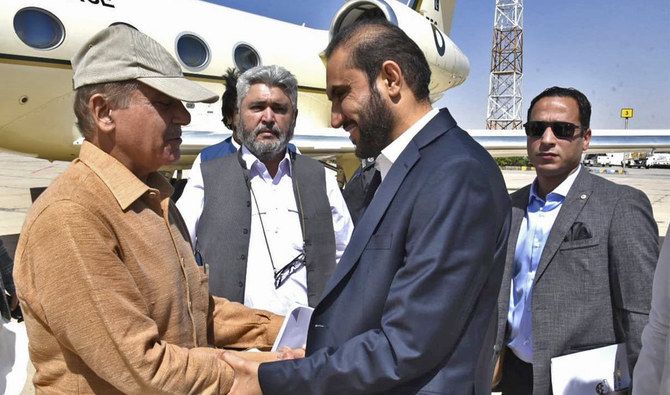
Balochistan Chief Minister Abdul Quddus Bizenjo (right) receives Prime Minister Shehbaz Sharif during a day-long visit to Quetta, Pakistan, to oversee relief operations in the flood-affected areas on August 1, 2022. (APP)
Short Url
Updated 01 August 2022
Follow

PM visits Balochistan to evaluate flood-hit areas as deaths from monsoon rains reach 136

  • Official statistics reveal 434 people have lost their lives in rains across Pakistan since the onset of monsoon
  • Balochistan is the worst affected province where 136 people have been killed in rains, floods since mid-June

ISLAMABAD: Prime Minister Shehbaz Sharif arrived in Quetta on Monday to visit flood-affected areas and interact with people in the southwestern Balochistan province during a daylong visit.

Pakistan has witnessed torrential rains since mid-June, leading to flash floods in different parts of the country.

According to a recent situation report circulated by the National Disaster Management Authority (NDMA), 434 people have lost their lives in rains in different parts of Pakistan since the onset of monsoon.

In Balochistan, nine people lost their lives in the last 24 hours, taking the overall death toll to 136 in rains since the beginning of the season.

“Chairman National Disaster Management Authority Lt. Gen. Akhtar Nawaz briefed the prime minister regarding the relief and rescue activities while onboard the flight to Quetta,” the Associated Press of Pakistan (APP) news agency reported.
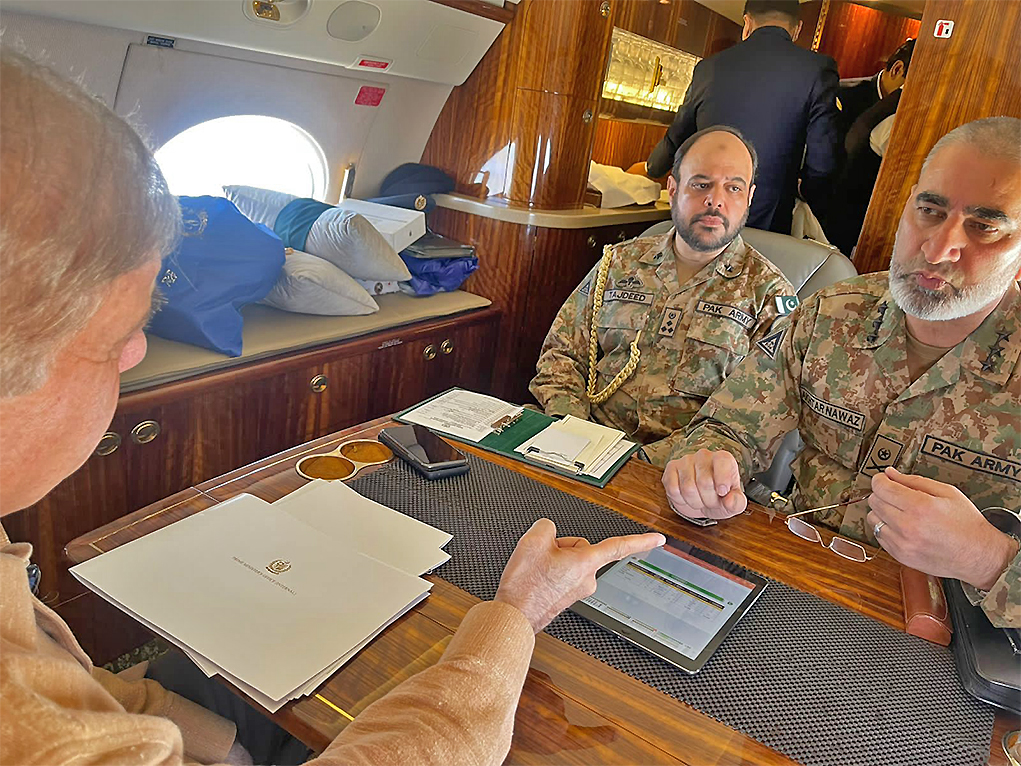


Chairman National Disaster Management Authority, Lt. Gen. Akhtar Nawaz (right) briefs Prime Minister Shehbaz Sharif (left) on his way to Quetta, Balochistan, on Aug 1, 2022. (APP)

The prime minister is expected to visit Qila Saifullah and Chaman in Balochistan to see the situation on the ground.

His visit to the southwestern province comes at a time when the meteorological department of Pakistan has predicted more than normal rain in the month of August.

The Met Office has also forecast relatively high temperatures in mountainous areas, indicating a faster rate of snowmelt that may result in floods in the area.

Experts have already warned that climate change has made monsoon highly erratic in terms of its onset, intensity and area of coverage.

One of them, Dr. Ghulam Rasul, told Arab News last week that monsoon had started penetrating “shadow zones,” including Balochistan and high mountains of Khyber Pakhtunkhwa and Gilgit-Baltistan, which it did not affect in the past.


Three Afghan migrants die crossing into Iran as UN warns of new displacement toward Pakistan

Updated 9 sec ago
Follow

Three Afghan migrants die crossing into Iran as UN warns of new displacement toward Pakistan

  • UNHCR says 1.8 million Afghans were forced to return from Iran this year, straining Afghanistan’s resources
  • Rights groups warn forced refugee returns risk harm as Afghanistan faces food shortages and climate shocks

KABUL: Three Afghans died from exposure in freezing temperatures in the western province of Herat while trying to illegally enter Iran, a local army official said on Saturday.

“Three people who wanted to illegally cross the Iran-Afghanistan border have died because of the cold weather,” the Afghan army official told AFP on condition of anonymity.

He added that a shepherd was also found dead in the mountainous area of Kohsan from the cold.

The migrants were part of a group that attempted to cross into Iran on Wednesday and was stopped by Afghan border forces.

“Searches took place on Wednesday night, but the bodies were only found on Thursday,” the army official said.

More than 1.8 million Afghans were forced to return to Afghanistan by the Iranian authorities between January and the end of November 2025, according to the latest figures from the United Nations refugee agency (UNHCR), which said that the majority were “forced and coerced returns.”

“These mass returns in adverse circumstances have strained Afghanistan’s already overstretched resources and services” which leads to “risks of onward and new displacement, including return movements back into Pakistan and Iran and onward,” UNHCR posted on its site dedicated to Afghanistan’s situation.

This week, Amnesty International called on countries to stop forcibly returning people to Afghanistan, citing a “real risk of serious harm for returnees.”

Hit by two major earthquakes in recent months and highly vulnerable to climate change, Afghanistan faces multiple challenges.

It is subject to international sanctions particularly due to the exclusion of women from many jobs and public places, described by the UN as “gender apartheid.”

More than 17 million people in the country are facing acute food insecurity, the UN World Food Program said Tuesday.