Tabuk Castle stands tall as one of the region’s most important historical monuments as its location has links with the site where Prophet Muhammad lived during the Battle of Tabuk.
The ancient fortress is one of the stations on the Shami Hajj Road, which connects the Levant and Madinah. The road has castles and stations starting from the borders of Jordan to Madinah.
The castle’s construction dates back to 1586. It was restored in 1653 and then renovated and restored again in 1843. The mosque’s mihrab bears an inscription to mark the occasion.
The castle was renovated again in 1950 and in 1992 by the Agency for Antiquities and Museums in the former Ministry of Education.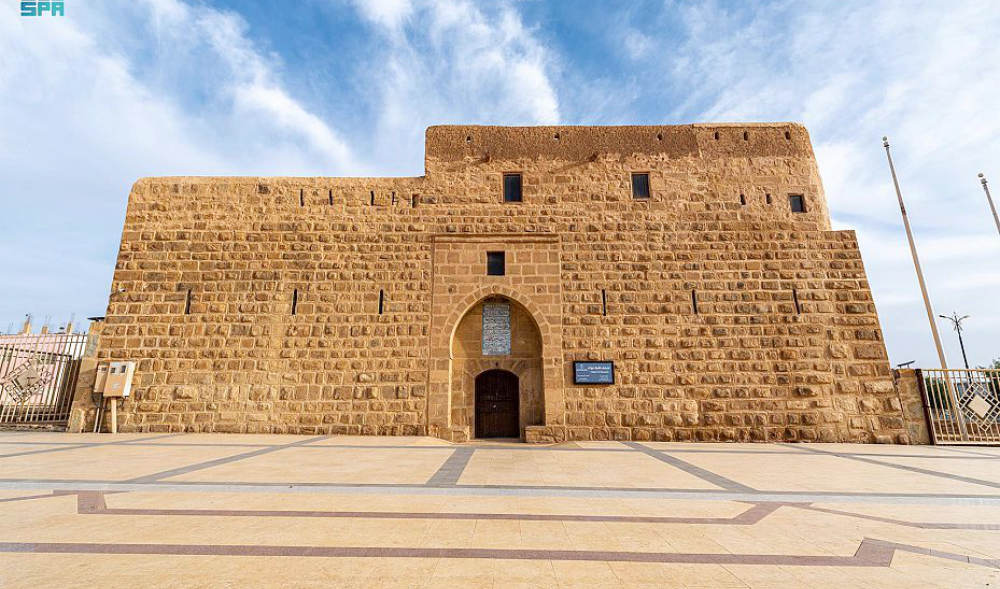
The General Authority for Tourism and National Heritage played an important role in refurbishing the castle in 2012, and the building is now an archaeological museum with many artifacts and heritage items on display.
It is open to visitors throughout the week.
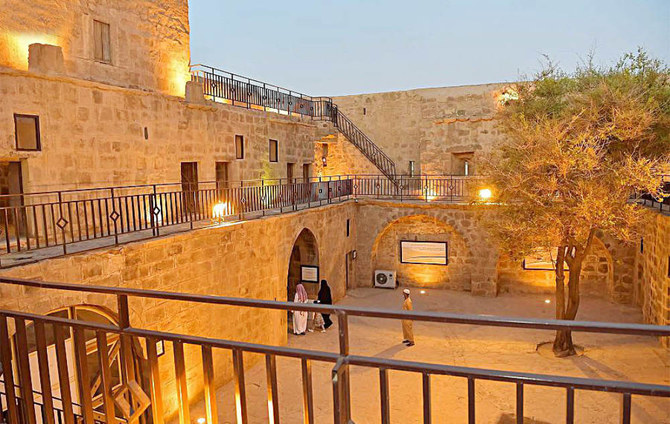
The castle has two floors, with the ground floor comprising an open courtyard, rooms, a mosque, and a well.
The upper floor has an open-air summer mosque and rooms, in addition to other stairs that lead to the towers used for guarding and observation. Behind the castle, there are the royal pools. One is square and the other is rectangular.
The Tabuk region has monuments, landmarks, castles, and palaces that reflect the depth of the historical eras and civilizations present in the region, which has a legacy spanning thousands of years.
Its geographical location was pivotal for trade routes throughout history.


![]()

ThePlace: Tabuk Archaeological Castle, an ancient fortress on the Levant-Madinah Hajj road
Short Url
https://arab.news/z52cm
ThePlace: Tabuk Archaeological Castle, an ancient fortress on the Levant-Madinah Hajj road
- The castle was renovated again in 1950 and in 1992 by the Agency for Antiquities and Museums in the former Ministry of Education


Latest updates


Recommended


© 2026 SAUDI RESEARCH & PUBLISHING COMPANY, All Rights Reserved And subject to Terms of Use Agreement.