

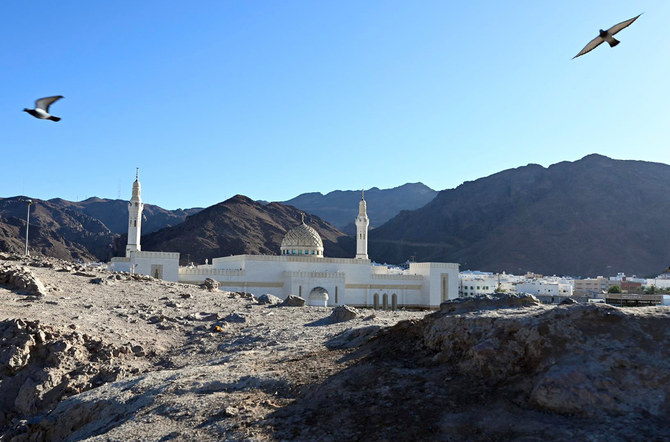
ThePlace: Sayed Al-Shuhada Mosque, a vital historic landmark in Madinah

Photo/SPA
Short Url
Updated 25 July 2022
Follow

ThePlace: Sayed Al-Shuhada Mosque, a vital historic landmark in Madinah

  • The mosque faces Mount Rumat, a small hill located to the west of Mount Uhud. The Uhud Martyr’s Square, along with the landmarks it contains, can be seen from the top of the hill

The Sayed Al-Shuhada Mosque is an important site in Islamic history as it tells the story of the Battle of Uhud, which took place during the third Hijri year.

It is also located next to the cemetery of 70 martyrs of Prophet Muhammad’s companions, about three kilometers away from the northern square of the Prophet’s Mosque.

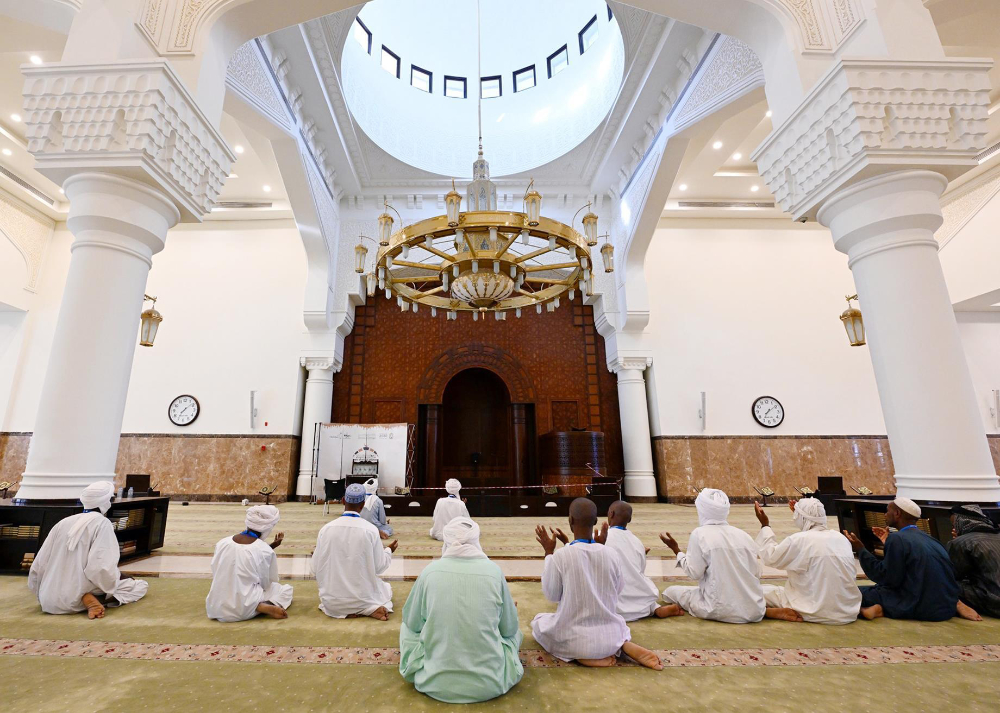
The mosque was completed in April of 2017 and features a unique architectural style. It covers an area of 54,000 square meters and can accommodate up to 15,000 worshippers. Supporting services and facilities can be found outside the site.
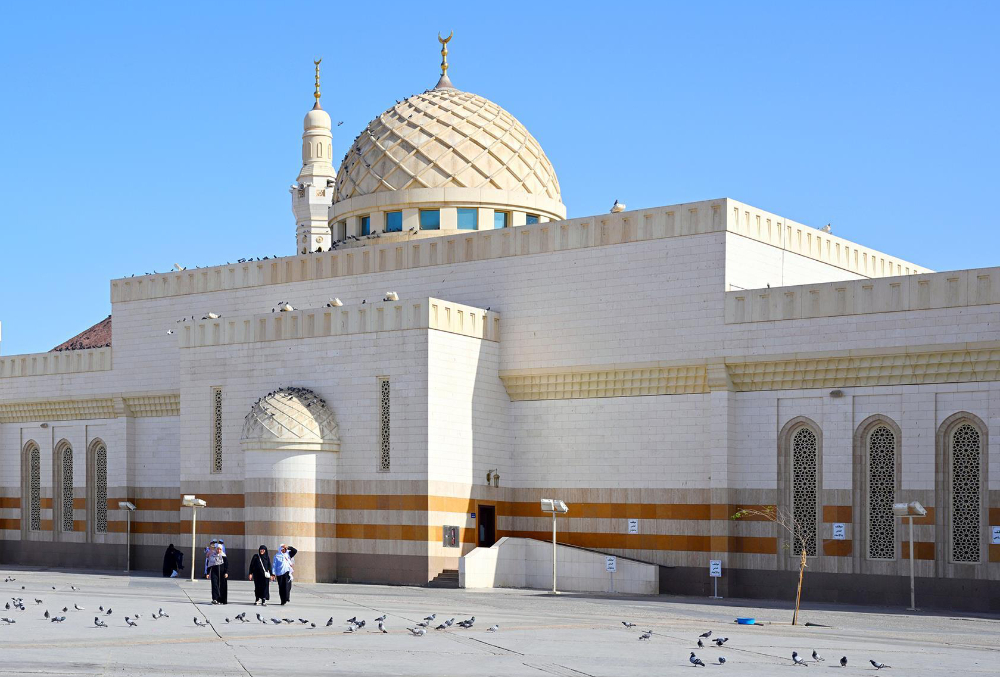
The mosque faces Mount Rumat, a small hill located to the west of Mount Uhud. The Uhud Martyr’s Square, along with the landmarks it contains, can be seen from the top of the hill.

Historical sources say that the army of the Quraysh tribe and its allies went to Madinah to kill Muslims and avenge those who died in the Battle of Badr, which took place in the second Hijri year.

Muslims confronted them, with the Prophet Muhammad deploying archers on Mount Rumat. He ordered the archers to stay in their posts unless told to move.

When the attackers began to flee, the archers thought the battle was over and that they had won. They came down the mountain, disregarding the Prophet Muhammad’s order.
The commander of the attackers, Khalid bin Al-Walid, who had not yet converted to Islam, surprised the descending archers, killed them, then attacked the other Muslims.

Seventy of the Prophet’s companions were killed, including his uncle Hamzah bin Abdul-Muttalib. They were buried at the battle site at the base of Mount Rumat.

Muslims visit their graves to this day, as the Prophet Muhammad once did. Worshippers also ascend the mountain to observe the site of the battle.


SR 4.5bn raised from 135m donations through the Saudi Ehsan charity platform in 2025

Updated 4 sec ago
Follow

SR 4.5bn raised from 135m donations through the Saudi Ehsan charity platform in 2025

  • More than 330m donations made on the platform over past 5 years worth a total of SR14bn, officials reveal in run-up to 6th National Campaign for Charitable Work
  • In addition, the Jood Eskan platform that helps low-income families secure housing has raised SR5bn from 4.5m donors since its launch in 2019

RIYADH: Ahead of the launch on March 3 of the sixth National Campaign for Charitable Work on the Ehsan platform, officials on Monday revealed that more than SR4.5 billion ($1.2 billion) was donated through the platform in 2025 alone.

Abdullah Alghamdi, president of the Saudi Data and Artificial Intelligence Authority, said there were 135 million donations last year worth a total daily average of SR12.45 million, compared with about SR2.8 million during the platform’s first campaign in 2021.

Over the past five years, he added, more than 330 million donations have been made through Ehsan, worth a total of SR14 billion.

The platform was built on three main pillars, Alghamdi said: reliability, transparency and ease of use. It uses advanced data analytics and artificial intelligence to verify beneficiary eligibility and prevent duplication of support, he added, and a donation can be completed in less than five seconds.

It was built to “humanize the donation journey,” he said, by ensuring donors can see the direct effects of their contributions, and operates under a framework of governance that includes 13 supervisory entities and five subcommittees.

The Ehsan Waqf Fund, which was introduced to ensure long-term sustainability, so far has collected SR2.2 billion of a SR5 billion target, Alghamdi said.

Majed Al-Hogail, the minister of municipalities and housing, highlighted the expanding role of nonprofit organizations in the housing sector in particular. More than 313 nonprofits now operate within the system, he said, supported by more than 345,000 volunteers working alongside public and private organizations.

Housing initiatives have helped support more than 106,000 families eligible for assistance, he added, and prevented more than 200,000 households from losing their homes. In addition, a rent-support program is assisting about 6,600 families this year, “expanding the reach of support to more households.”

The Jood Eskan housing platform, which enables donors to help people on low incomes secure housing, began by supporting 100 families and now serves more than 50,000 across the Kingdom, Al-Hogail said. Since its launch in 2019, more than 4.5 million donors have contributed more than SR5 billion to housing initiatives, he added.

“This transformation is the result of cumulative efforts built on clear governance, precise eligibility criteria, and electronic integration with relevant entities,” Al-Hogail said.

He also highlighted digital-transformation efforts designed to accelerate the provision of assistance, including the linking of a debt defaulters support platform to the Ministry of Justice, which has reduced processing times for cases from a month to 19 days. Meanwhile an electronic signature service cut the processing time for property-ownership procedures from 14 days to just two.

“In 2025, more than 150,000 digital operations were implemented and the needs of over 400,000 beneficiary families were studied through the integration of national databases,” Al-Hogail said.