

Haitham Al-Ghais set to start role as first Kuwaiti OPEC chief

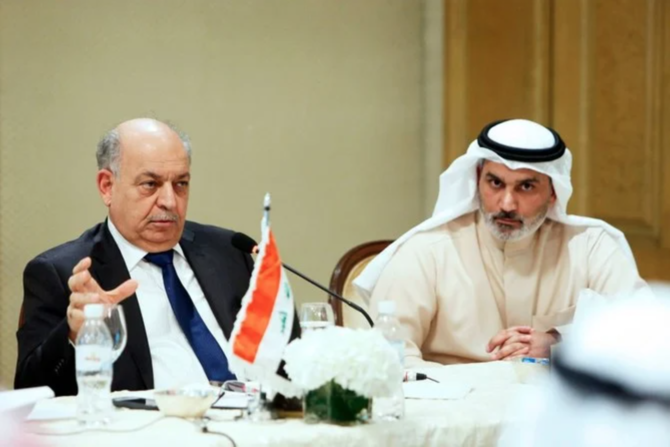
Haitham Al-Ghais (right) when he was Kuwait OPEC governor (Getty).
Short Url
Updated 31 July 2022
Follow

Haitham Al-Ghais set to start role as first Kuwaiti OPEC chief

  • He says his unanimous selection by member countries reflects Kuwait’s position among them
  • He takes over from Nigerian Mohammad Barkindo, who died in July

KUWAIT: Haitham Al-Ghais will begin his new role as secretary-general of the Organization of the Petroleum Exporting Countries on Monday, the Kuwait News Agency reported. 

The Kuwaiti takes over from Nigerian Mohammad Barkindo, who died in July. 

In an interview with KUNA on Sunday, Al-Ghais thanked Emir Sheikh Nawaf Al-Ahmad Al-Jaber Al-Sabah and Crown Prince Sheikh Mishal Al-Ahmad Al-Jaber Al-Sabah for their confidence in him as Kuwait’s nominee.

Al-Ghais is the first Kuwaiti to hold the position of OPEC chief, having been elected by acclamation for a three-year term. 

He said the unanimous selection of him by OPEC’s 13 member countries reflects Kuwait’s position among them. 

From 2017 to 2021, Al-Ghais served as Kuwait’s OPEC governor, representing the country during meetings of the board of governors. He also chaired its joint technical committee with countries outside the organization. 

He was appointed deputy director of international marketing at the state-owned Kuwait Petroleum Corp. after stepping down as Kuwait’s OPEC governor in June 2021.

Prior to OPEC, he worked at the KPC’s global marketing sector in various sales departments, headed its regional offices in Beijing and London, and was director of the corporation’s research department and deputy managing director of global marketing. 

Al-Ghais has nearly 30 years of experience in the oil industry, and has participated in many international conferences and forums. 


Saudi Arabia’s foreign reserves rise to a 6-year high of $475bn

Updated 10 sec ago
Follow

Saudi Arabia’s foreign reserves rise to a 6-year high of $475bn

RIYADH: Saudi Arabia’s foreign reserves climbed 3 percent month on month in January to SR1.78 trillion, up SR58.7 billion ($15.6 billion) from December and marking a six-year high.

On an annual basis, the Saudi Central Bank’s net foreign assets rose by 10 percent, equivalent to SR155.8 billion, according to data from the Saudi Central Bank, Argaam reported.

The reserve assets, a crucial indicator of economic stability and external financial strength, comprise several key components.

According to the central bank, also known as SAMA, the Kingdom’s reserves include foreign securities, foreign currency, and bank deposits, as well as its reserve position at the International Monetary Fund, Special Drawing Rights, and monetary gold.

The rise in reserves underscores the strength and liquidity of the Kingdom’s financial position and aligns with Saudi Arabia’s goal of strengthening its financial safety net as it advances economic diversification under Vision 2030.

The value of foreign currency reserves, which represent approximately 95 percent of the total holdings, increased by about 10 percent during January 2026 compared to the same month in 2025, reaching SR1.68 trillion.

The value of the reserve at the IMF increased by 9 percent to reach SR13.1 billion.

Meanwhile, SDRs rose by 5 percent during the period to reach SR80.5 billion.

The Kingdom’s gold reserves remained stable at SR1.62 billion, the same level it has maintained since January 2008.

Saudi Arabia’s foreign reserve assets saw a monthly rise of 5 percent in November, climbing to SR1.74 trillion, according to the Kingdom’s central bank.

Overall, the continued advancement in reserve assets highlights the strength of Saudi Arabia’s fiscal and monetary buffers. These resources support the national currency, help maintain financial system stability, and enhance the country’s ability to navigate global economic volatility.

The sustained accumulation of foreign reserves is a critical pillar of the Kingdom’s economic stability. It directly reinforces investor confidence in the riyal’s peg to the US dollar, a foundational monetary policy, by providing SAMA with ample resources to defend the currency if needed.

Furthermore, this financial buffer enhances the nation’s sovereign credit profile, lowers national borrowing costs, and provides essential fiscal space to navigate global economic volatility while continuing to fund its ambitious Vision 2030 transformation agenda.