

SAMA gears up to make Saudi Arabia the regional fintech hub: top official

The banking authority is working with local and international entities to help support the fintech ecosystem in the Kingdom (File)
Short Url
Updated 28 July 2022
Follow

SAMA gears up to make Saudi Arabia the regional fintech hub: top official

RIYADH: The Saudi Central Bank, also known as SAMA, is planning to make Saudi Arabia a regional financial technology hub as part of its strategy to implement the Financial Sector Development Program envisaged in the Kingdom’s Vision 2030 blueprint, a top official said.

Speaking exclusively to Arab News, SAMA’s Deputy Governor for Development and Technology Ziad Al Yousef said that the central bank is developing regulations to address new business models to assist and guide entrepreneurs in the payments, investments and financing sector.

“We have issued 11 new regulations in the last two years to support new fintech ideas and business models. This is a continuous journey, and we are going to accelerate this now with the approval of the national fintech strategy that is now part of vision 2030,” Al Yousef said.

Al Yousef further stated that SAMA had also nurtured 12 companies from different domains as a part of the fintech accelerator program.

He added that the banking authority is working with local and international entities to help support the fintech ecosystem in the Kingdom.

“There are different initiatives, which include initiatives related to talent development, raising the funding for fintech companies and creating partnerships with local and international players,” he said.
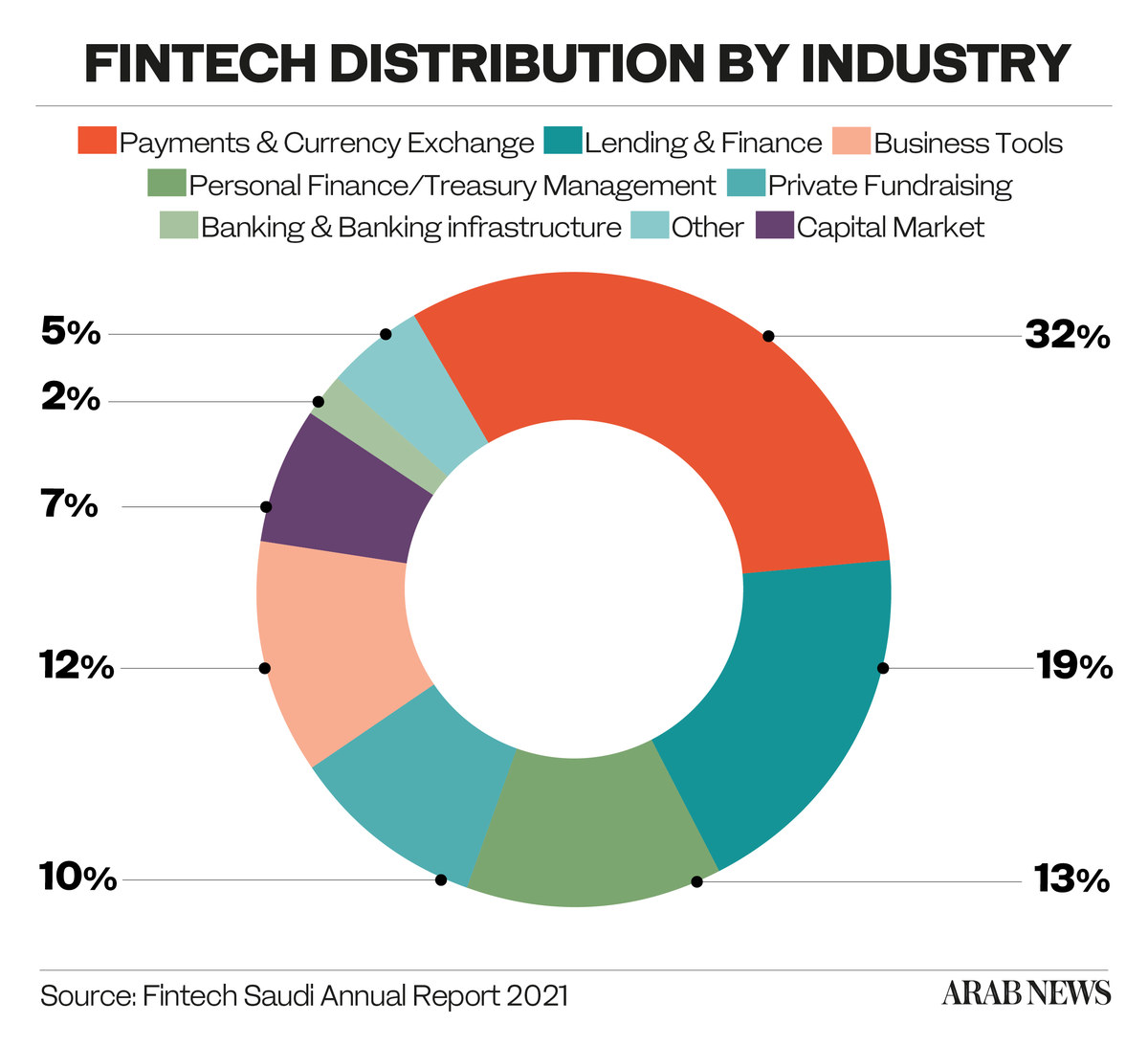
 

Last month, the Ministry of Finance stated that under the national fintech strategy, the number of firms is expected to increase from 82 to 230 by 2025.

It also seeks to increase the fintech sector’s contribution to the gross domestic product to SR4.5 billion ($1.2 billion) and create nearly 6,000 jobs by 2025, besides increasing the share of digital transactions to 70 percent of all financial dealings.

The strategy aspires to raise the cumulative value of venture capital investments in fintech companies to reach SR2.6 billion by 2025 to boost domestic and foreign investment and create nearly 18,000 jobs by 2030.

In addition to raising the sector’s contribution to the GDP to SR13 billion by 2030, the new plan also aims at increasing investments in fintech companies to SR12 billion.
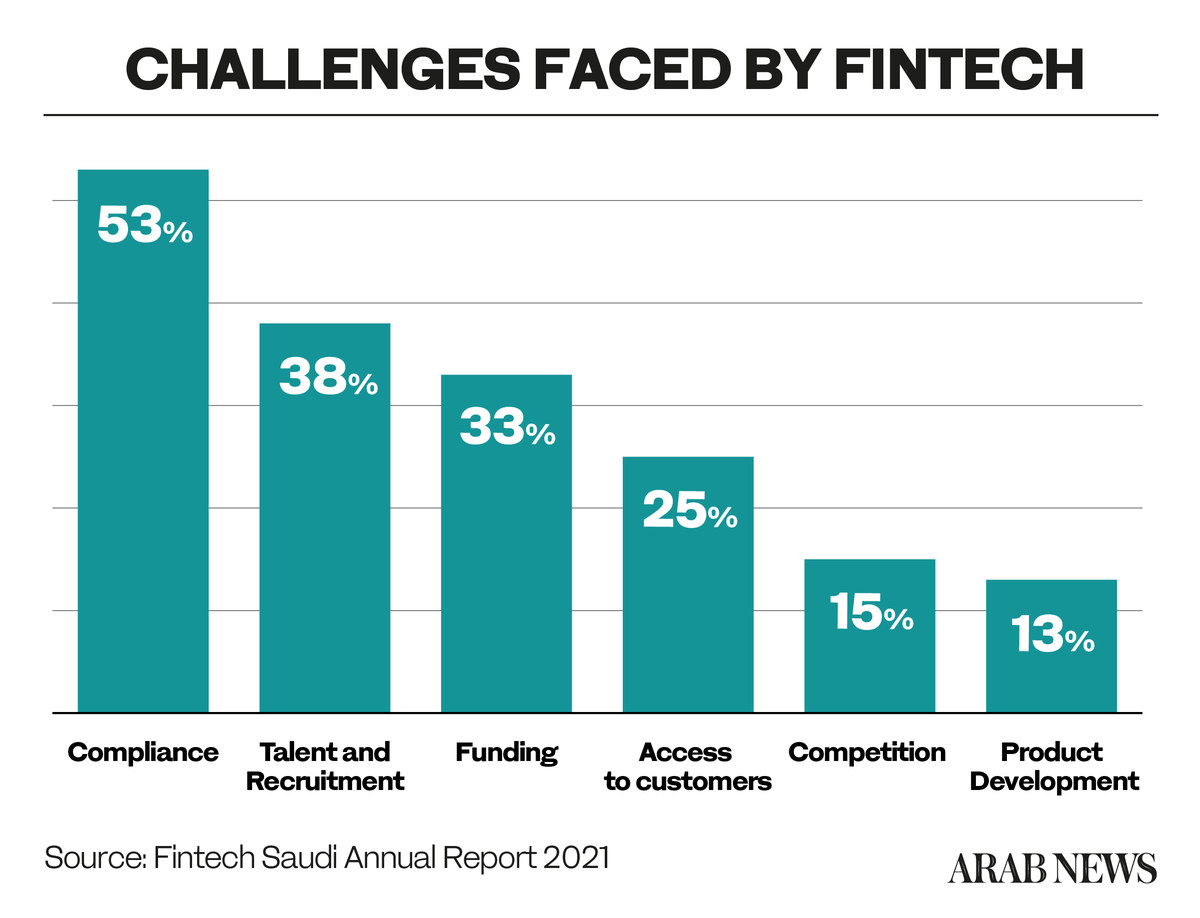
The Kingdom has been performing well in terms of digitizing financial transactions after it surpassed the expected 55 percent with 57 percent in 2021.

Moreover, the number of fintech companies increased to 30 in the digital payment sector, with the number of payments executed via smart devices on point-of-sale terminals rising by 282 percent in 2021.

Future solutions that will boost the execution of the strategy include payments, capital market services, lending, insurance and data.

The Financial Sector Development Program was launched in 2017 to enable financial institutions to support the growth of the private sector, develop an advanced capital market, and boost and enable financial planning.


Global investors commit more than $3bn to King Salman Park as Saudi giga-project secures new deals

Updated 10 March 2026
Follow

Global investors commit more than $3bn to King Salman Park as Saudi giga-project secures new deals

RIYADH: The King Salman Park Foundation has secured more than $3.8 billion in new private-sector commitments at the MIPIM 2026 real estate conference, including a landmark $3 billion fund backed by international investors to develop a major mixed-use district in the heart of Riyadh.

According to a press release, the announcements bring total committed investment in the 17.2 sq. kilometers urban regeneration project to over $5.3 billion across five major packages.

Launched in 2019 under Saudi Vision 2030, the development is designed to be the world’s largest city park and aims to boost green space, improve quality of life, and feature over 1 million trees and extensive leisure facilities.

A $3 billion metro-connected district

The largest of the two packages, designated Package 5, will see a consortium led by Kolaghassi Development Co. deliver a residential-led district with a total built-up area exceeding 1 million sq. meters. 

It will provide approximately 3,700 residential units, a K–12 school, around 300 hospitality keys and more than 100,000 sq m of Grade A office space alongside a wide variety of retail and dining offerings.

The development is supported by a Saudi-domiciled, Capital Market Authority-regulated fund managed by Mulkia Investment Co. that has attracted leading investors from the Kingdom and across the world.

Kolaghassi Development Co. will lead the project alongside Al Othaim Investment, one of the Kingdom’s real estate players, and RXR, a New York-headquartered real estate investor and operator.

“Securing investment of this scale, supported by international capital and expertise, is an important milestone for King Salman Park,” said George Tanasijevich, CEO of King Salman Park Foundation. 

$850 million cultural district package

In a separate announcement, the Foundation confirmed the award of Package 4 to a consortium led by Retal Urban Development Co., with support from a fund managed by SAB Invest.

The project has a total value exceeding $850 million and will host more than 600 residential units, over 140 hotel keys, and almost 50,000 sq m of Grade A office space, alongside curated retail and food and beverage experiences.

“This opportunity reflects the maturity of Saudi Arabia’s real estate investment landscape and our confidence in culture-led, mixed-use urban destinations as a driver of sustainable returns,” said Abdullah Al-Braikan, CEO and founder of Retal Urban Development Co.

Ali Al-Mansour, CEO of SAB Invest, said the fund structure brings together “long-term capital, experienced development partners, and a shared commitment to place-making excellence” while contributing to Riyadh’s cultural vibrancy and the Kingdom’s quality-of-life ambitions under Vision 2030.