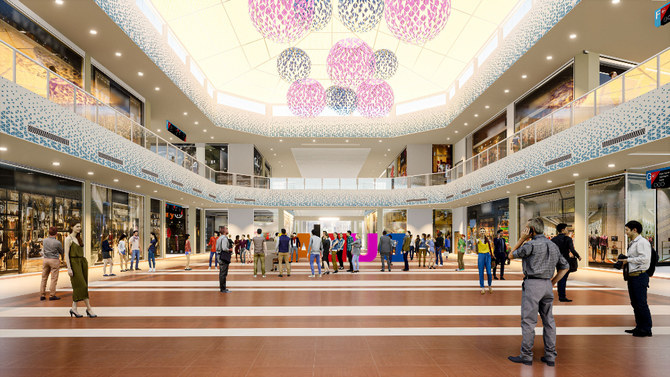
‘World’s largest outlet mall’ to open doors in Dubai in Q4

The expansion drive will bring the total area of the mall to 3.8 million square.
Short Url
Updated 25 July 2022
Follow

‘World’s largest outlet mall’ to open doors in Dubai in Q4

  • The expansion will include a number of new features and concepts to entertain visitors of all ages around the year, joining 117 Live Arena as part of DOM’s entertainment cluster

Dubai Outlet Mall, the first “value” concept mall in the MENA region, is all set to open the doors to its extension in Q4 2022. The major expansion drive embarked by DOM will bring the total area of the mall to 3.8 million square feet — making it the largest outlet mall not only in the region but in the world.
The expansion is in line with the brand’s commitment to delivering outstanding experiences to customers and demonstrates its ongoing drive to boost the country’s retail economy.
Strategically located at the intersection of MBZ and Dubai Bypass and Al-Ain Road, DOM is easily accessible to all UAE residents across the seven emirates and provides a well-structured comprehensive retail mix, offering great value from high-end brands to streetwear. While the extension is wrapping up its leasing phase and gearing up for its upcoming opening, a huge roster of international brands have joined the family of great brands at DOM.
Brands like Aigner and New Balance have taken serious positions in the expansion along with other brands such as Rivoli Group, Gallery One, Mumuso, Zippy Kids, OVS Kids, Simple Kitchen, Dwell, Supercare, Optivision, Optics for Less, Sensoline, Via Milano, Ricci Ceremony, Lens Kart, Notino Gallery, Intimate Collection, Mario Barutti, Tiyabi Taif Al-Emarat, Selz, and Duozoulo, while many more are looking forward to opening their stores later this year.
Mohammed Naser Khammas, CEO of Al-Ahli Group, said: “We are excited to see our list of partnering brands grow with us as we welcome New Balance and Aigner and all of the new brands that have joined the Dubai Outlet Mall family. As we realize the vision of reimagining the world of shopping and retail, I’ll be very excited to announce in due course all of the brands that have signed up for the expansion.”
The expansion will include a number of new features and concepts to entertain visitors of all ages around the year, joining 117 Live Arena as part of DOM’s entertainment cluster. The expansion will also provide a range of gastronomic experiences through unique food and beverage concepts such as the indoor Farmers’ Market and fine dining restaurants. The mall will also include a state-of-the-art cinema, a megamarket, and community space. Furthermore, the destination will be releasing an omni-channel that provides yet another exclusive experience for both shoppers and retailers alike.
Since its opening in 2007, DOM has made its mark as the first value shopping concept mall in the MENA region. It has been home to more than 1,300 premium brands with over 240 stores.


New energy vehicles drive next phase of mobility in Saudi Arabia

Updated 06 February 2026
Follow

New energy vehicles drive next phase of mobility in Saudi Arabia

Saudi Arabia stands at a defining moment in its mobility transformation. Under Vision 2030, the Kingdom is accelerating its transition toward cleaner, smarter and more connected transport systems.
New energy vehicles are at the center of this shift, offering a pathway to a more sustainable automotive ecosystem. Yet while consumer interest is rising rapidly, converting intent into everyday adoption will depend on how effectively the wider mobility system evolves alongside electric vehicles.
Recent nationwide research by Al-Futtaim highlights the strength of this momentum. More than 70 percent of Saudi residents surveyed are already familiar with NEVs, while nearly eight in 10 say they would consider purchasing one as their next vehicle. Most notably, 80 percent expect to buy an electric vehicle within the next three years, signaling that the transition is moving from aspiration to reality.
Despite this optimism, important barriers remain. Range anxiety continues to be the most frequently cited concern, alongside high purchase prices and long charging times. Practical considerations dominate purchasing decisions, with affordability and access to charging infrastructure outweighing environmental motivations. These findings underline a pressing reality: consumers will embrace NEVs at scale only when electric mobility feels as convenient, reliable and accessible as conventional driving.
For industry leaders, this represents both an opportunity and a responsibility. Jerome Saigot, managing director of Al-Futtaim BYD KSA, said: “Saudi Arabia is building the foundations for a future-ready mobility system under Vision 2030. The opportunity now is to connect the dots, bringing together vehicles, charging infrastructure, consumer education and service capability to unlock confident, large-scale adoption of new energy vehicles.”
Charging networks therefore play a central role in supporting adoption, but they are not the only requirement. NEV uptake is closely linked to how cities are planned, how people commute and how transport systems connect.
Emerging mobility models also point to a more connected future. High levels of openness to mobility-as-a-service, autonomous vehicles and shared transport indicate that Saudi consumers are receptive to innovation. However, these technologies will succeed only if they are embedded within systems that link vehicles, infrastructure, data and urban design.
Successful electric mobility ecosystems need to be built around coordinated rather than isolated initiatives. Electric vehicles perform best when supported by reliable charging, smart traffic management, efficient public transport and well-designed urban environments. In this context, NEVs benefit directly from parallel investment in rail, bus networks, digital platforms and active mobility infrastructure.
Encouragingly, public confidence in Saudi Arabia’s long-term mobility vision remains strong. More than 85 percent of respondents surveyed by Al-Futtaim believe the Kingdom is on track to lead in future mobility. Consumers also clearly identify priorities for continued progress, including expanding charging infrastructure, improving mass transportation and strengthening regulatory frameworks.
For policymakers, investors and industry players, the message is clear. The next phase of mobility transformation must focus on alignment: aligning infrastructure with consumer expectations, aligning innovation with everyday needs, and aligning public and private investment around shared outcomes.
Saudi Arabia’s mobility transition is no longer a distant ambition. It is unfolding now, shaped by confident consumers, ambitious institutions and accelerating technological change. By building connected systems that place people at their center, the Kingdom can ensure that electric mobility becomes a lasting part of its sustainable future.
To explore these insights and recommendations in more detail, download The Future of Mobility in Saudi Arabia.