


BEIRUT: Political observers fear a strike by Lebanon’s public sector employees that started a month ago will turn into civil disobedience if it is not dealt with properly, amid government efforts to address their grievances.
The heads of the administrative units in the Ministry of Education and Higher Education announced that they, too, would join the strike by Monday.
Ministry employees said they were joining the strike because their salaries no longer covered the cost of getting to work and because of delays in paying transport allowances and social assistance that were approved months ago.
They said they were also protesting against the “humiliation” they faced in banks while trying to withdraw their salaries, which were barely enough to feed their children and cover medicine and hospitalization costs.
But public sector employees fear their industrial action will affect their July salaries as Finance Ministry employees are also on strike.
Maj. Gen. Abbas Ibrahim, director-general of Lebanon’s General Security agency, warned that political disasters were ravaging the country and the state was “rapidly falling.”
He said: “Only the military and security institutions remain, but the country could be facing further deterioration.”
Salaries were not enough to cover basic needs, and there were no signs that Lebanon and its components were making any progress, he added.
“Everyone seems to be involved in the race for the presidency while forming a government seems to be postponed due to the current political impasse.”
He said public administration was shut and that the Lebanese were suffocating. “We do not know when it is time to surrender. We are in a country roaming on shifting sands.”
Ibrahim said the national currency’s value was ever-depreciating and that Lebanon was, unfortunately, not present at the discussion table of the regional and international community, except as a new home for refugees and displaced people.
His warnings came amid indications that public sector employees might hear some good news in the coming days.
Caretaker Prime Minister Najib Mikati and Finance Minister Youssef Khalil have been making efforts to convince Finance Ministry employees to go to their offices to ensure all striking workers receive their July salaries on time.
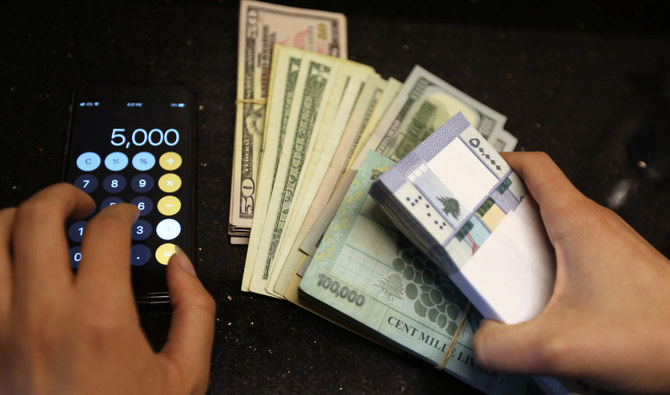
The representative for the Employees Association in the government, Hassan Wehbe, said: “The initial agreement provides for giving an additional salary with the previously approved social assistance worth LBP2,000,000 ($1,326.7) in addition to an LBP95,000 transportation allowance for every work day, with incentives that may amount to a minimum of LBP200,000 LBP and a maximum of LBP300,000.”
Lebanese President Michel Aoun has signed a decree to give temporary social assistance to all public sector employees and retirees and to give the Finance Ministry an advance from the treasury to cover this assistance.
But the proposal has not satisfied the committees leading the strike. The industrial action was sparked by a decision to pay judges' salaries according to the US dollar exchange rate of LBP8,000 instead of LBP1,507, which was the official rate before the Lebanese economic collapse began in 2019.
Caretaker Minister of Social Affairs Hector Hajjar said a meeting on Monday was expected to suggest solutions that would be in everyone’s interests, especially employees.
Hajjar said that the public sector could not function properly by only allocating two working days per week but through the possibility of allocating new revenues to the treasury.
A delegation of the Lebanese-American Coordination Committee said the country was facing an unprecedented crisis at the constitutional, sovereign, economic and social levels.
It said many sectors were severely affected and subject to massive collapse.
The observations came at the end of the delegation's visit to Lebanon, which included meetings with key government officials, parties, and activists.
The committee said that Lebanon’s friends in the international community and the Arab world had expressed keenness to save the country's identity and ensure its recovery.
“This proves that Lebanon is not left behind, and all concerned parties in the US are making sure support is provided for Lebanon, especially to the Lebanese army. The constitution must be respected and all international resolutions regarding Lebanon’s sovereignty must be implemented.
“This is a historic moment that should not be wasted because of political settlements and positions that lack courage. Wasting this opportunity could lead to Lebanon’s total collapse.”


