


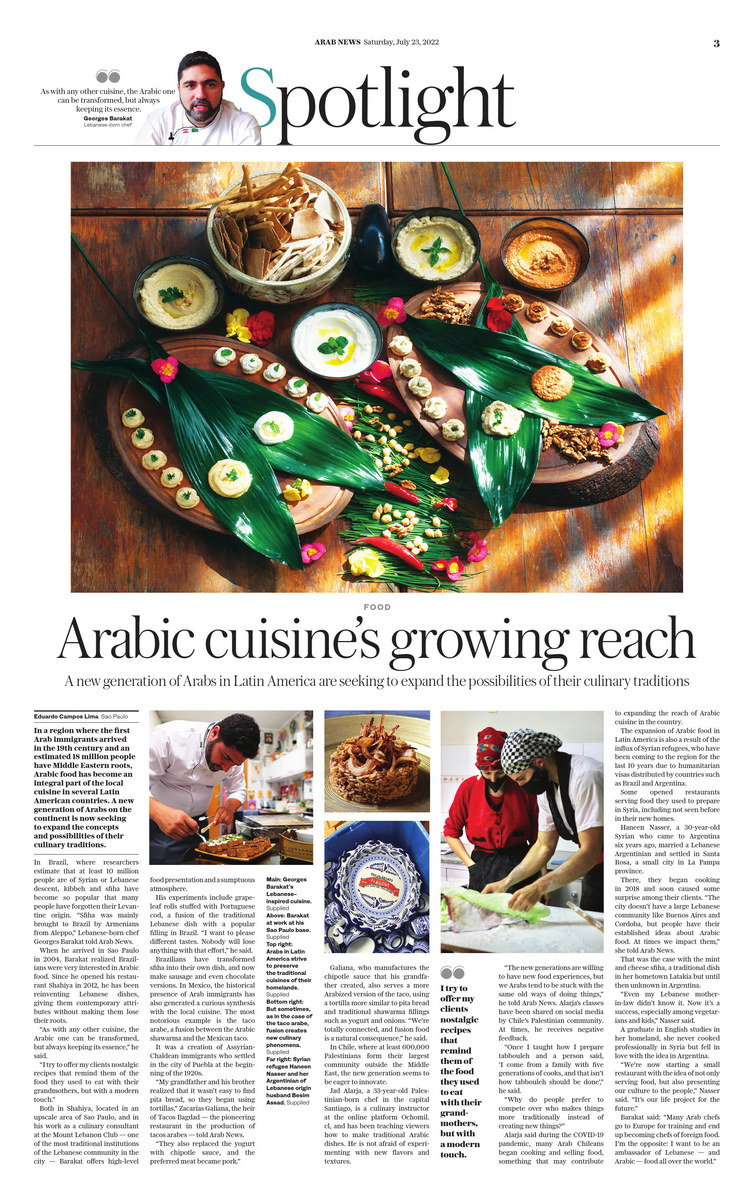
SAO PAULO, Brazil: In a region where the first Arab immigrants arrived in the 19th century and an estimated 18 million people have Middle Eastern roots, Arabic food has become an integral part of the local cuisine in several Latin American countries. A new generation of Arabs on the continent is now seeking to expand the concepts and possibilities of their culinary traditions.
In Brazil, where researchers estimate that at least 10 million people are of Syrian or Lebanese descent, kibbeh and sfiha have become so popular that many people have forgotten their Levantine origin. “Sfiha was mainly brought to Brazil by Armenians from Aleppo,” Lebanese-born chef Georges Barakat told Arab News.
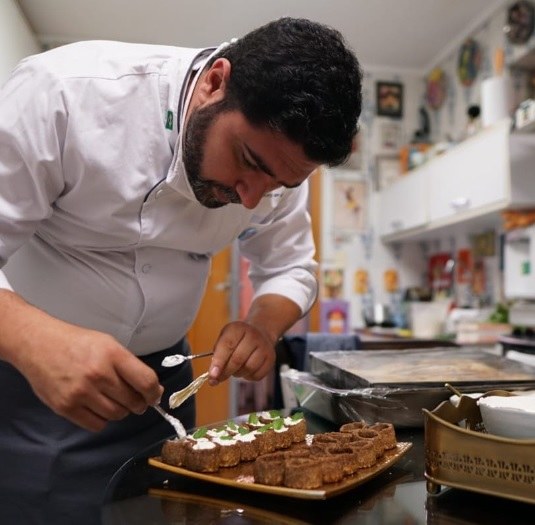
When he arrived in the city of Sao Paulo in 2004, he realized that Brazilians were very interested in Arabic food. Since he opened his restaurant Shahiya in 2012, he has been reinventing Lebanese dishes, giving them contemporary attributes without making them lose their roots.
“As with any other cuisine, the Arabic one can be transformed, but always keeping its essence,” he said.
“I try to offer my clients nostalgic recipes that remind them of the food they used to eat with their grandmothers, but with a modern touch.”
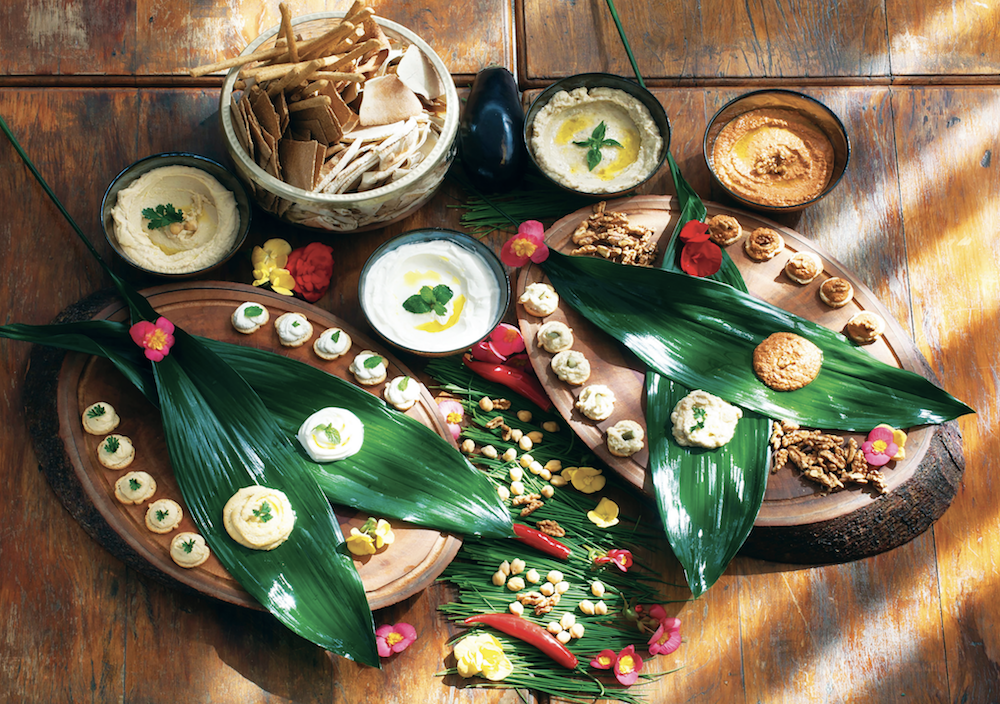
Georges Barakat’s Lebaneseinspired cuisine. (Supplied)
Both in Shahiya, located in an upscale area of Sao Paulo, and in his work as a culinary consultant at the Mount Lebanon Club — one of the most traditional institutions of the Lebanese community in the city — Barakat offers high-level food presentation and a sumptuous atmosphere.
His experiments include grape-leaf rolls stuffed with Portuguese cod, a fusion of the traditional Lebanese dish with a popular filling in Brazil. “I want to please different tastes. Nobody will lose anything with that effort,” he said.
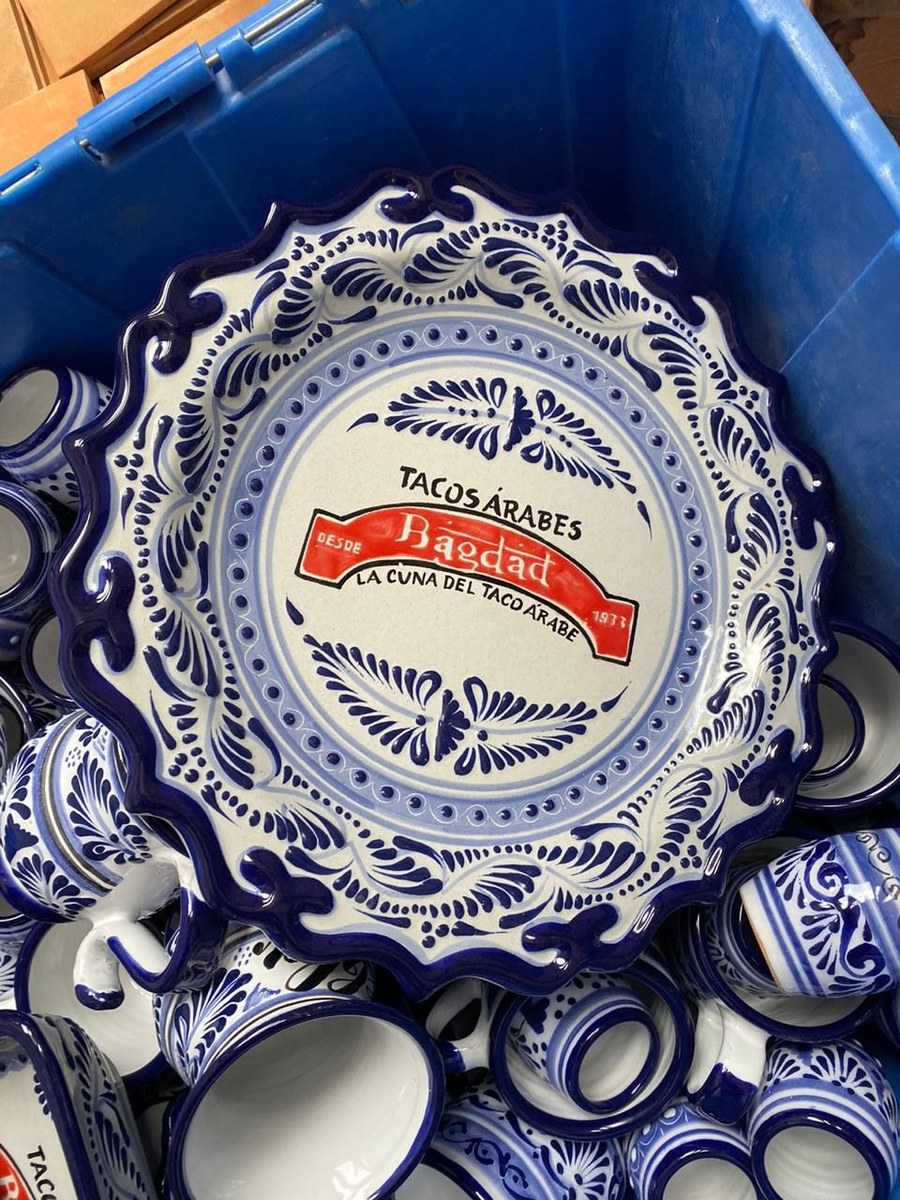
Brazilians have transformed sfiha into their own dish, and now make sausage and even chocolate versions. In Mexico, the historical presence of Arab immigrants has also generated a curious synthesis with the local cuisine. The most notorious example is the taco arabe, a fusion between the Arabic shawarma and the Mexican taco.
It was a creation of Assyrian-Chaldean immigrants who settled in the city of Puebla at the beginning of the 1920s.
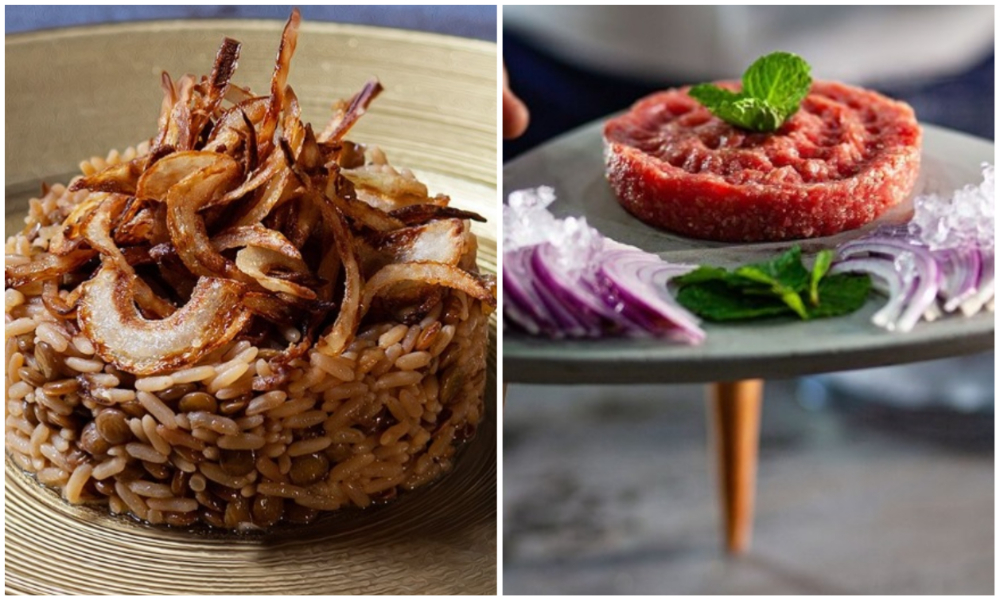
On the left: Shahiya's mijadra; on the right: Shahiya's kibbeh nayeh. (Supplied)
“My grandfather and his brother realized that it wasn’t easy to find pita bread, so they began using tortillas,” Zacarias Galiana, the heir of Tacos Bagdad — the pioneering restaurant in the production of tacos arabes — told Arab News.
“They also replaced the yogurt with chipotle sauce, and the preferred meat became pork.”
Galiana, who manufactures the chipotle sauce that his grandfather created, also serves a more Arabized version of the taco, using a tortilla more similar to pita bread and traditional shawarma fillings such as yogurt and onions. “We’re totally connected, and fusion food is a natural consequence,” he said.
In Chile, where at least 600,000 Palestinians form their largest community outside the Middle East, the new generation seems to be eager to innovate.
Jad Alarja, a 33-year-old Palestinian-born chef in the capital Santiago, is a culinary instructor at the online platform Ochomil.cl, and has been teaching viewers how to make traditional Arabic dishes. He is not afraid of experimenting with new flavors and textures.
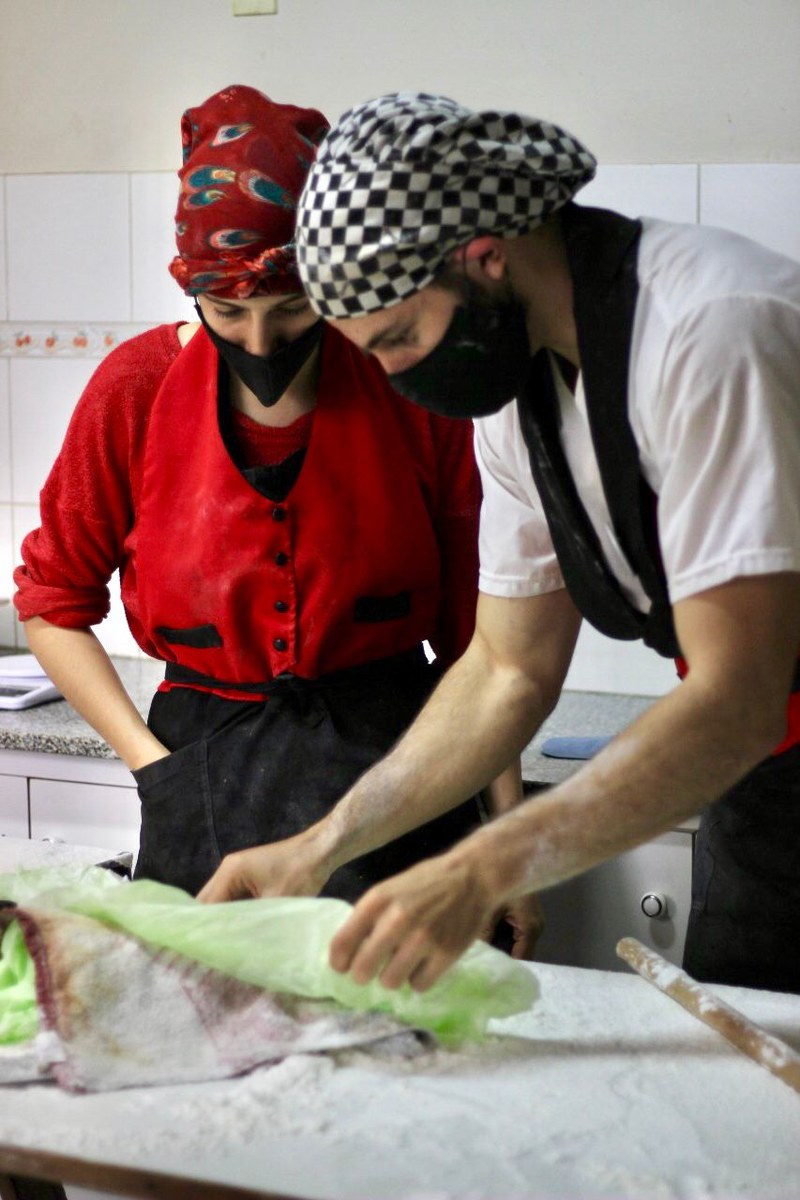
Syrian refugee Haneen Nasser and her husband, the Argentinian of Lebanese origin Besim Assad. They cook and sell Arab food in Santa Rosa, La Pampa province, using the commercial name Arabian. (Supplied)
“The new generations are willing to have new food experiences, but we Arabs tend to be stuck with the same old ways of doing things,” he told Arab News. Alarja’s classes have been shared on social media by Chile’s Palestinian community. At times, he receives negative feedback.
“Once I taught how I prepare tabbouleh and a person said, ‘I come from a family with five generations of cooks, and that isn’t how tabbouleh should be done’,” he said.
“Why do people prefer to compete over who makes things more traditionally instead of creating new things?”
Alarja said during the COVID-19 pandemic, many Arab Chileans began cooking and selling food, something that may contribute to expanding the reach of Arabic cuisine in the country.
The expansion of Arabic food in Latin America is also a result of the influx of Syrian refugees, who have been coming to the region for the last 10 years due to humanitarian visas distributed by countries such as Brazil and Argentina.
Arabs in Latin America strive to preserve the traditional cuisines of their homelands, but sometimes, as in the case of the taco arabe, fusion creates new culinary phenomena. (Supplied)
Some of them opened restaurants and have been serving the food they used to prepare in Syria, which can at times surprise Latin Americans used to a specific Arabic cuisine.
Haneen Nasser, a 30-year-old Syrian who came to Argentina six years ago, married a Lebanese Argentinian and settled in Santa Rosa, a small city in La Pampa province.
There, they began cooking in 2018 and soon caused some surprise among their clients. “The city doesn’t have a large Lebanese community like Buenos Aires and Cordoba, but people have their established ideas about Arabic food. At times we impact them,” she told Arab News.
That was the case with the mint and cheese sfiha, a traditional dish in her hometown Latakia but until then unknown in Argentina.

Zayas Galeana Antar, an Assyrian-Chaldean immigrant in Puebla, Mexico, in the 1930s, in front of Taquería Bagdad. (Supplied)
“Even my Lebanese mother-in-law didn’t know it. Now it’s a success, especially among vegetarians and kids,” Nasser said.
A graduate in English studies, she never cooked professionally in Syria but fell in love with the idea in Argentina. At time, she asks for help from her mother and aunt in Syria with some recipes.
“We’re now starting a small restaurant with the idea of not only serving food, but also presenting our culture to the people,” Nasser said. “It’s our life project for the future.”
Barakat said: “Many Arab chefs go to Europe for training and end up becoming chefs of foreign food. I’m the opposite: I want to be an ambassador of Lebanese — and Arabic — food all over the world.”

keywords


