

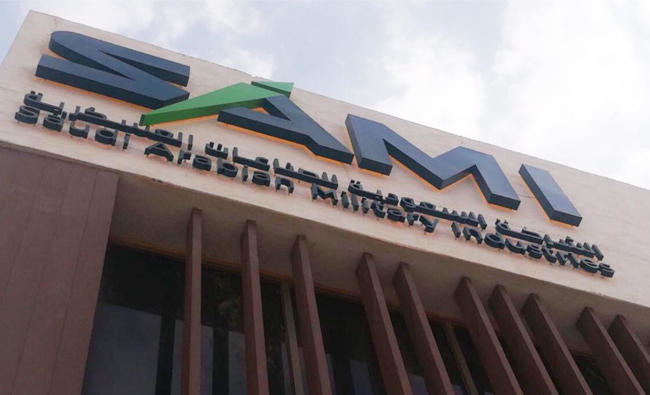

FARNBOROUGH, UK: Saudi Arabian Military Industries’ CEO has hinted his firm and BAE Systems will soon make announcements aimed at boosting the “indigenous capability” of Saudi Arabia’s defense industry.
Speaking to Arab News from the Farnborough Air Show held in the UK, Walid Abukhaled said that solving the Kingdom’s supply chain challenge is key to boosting the military sector.
He warned that SAMI could not do “everything ourselves” when it comes to developing the Kingdom’s defense industry, and later this year the company would set out the “services and support required” by the firm.
SAMI aims at localizing 50 percent of total military spending by 2030, in line with the Kingdom’s Vision 2030.
Referring to talks between SAMI and BAE Systems, Abukhaled said: “There is nothing that we can announce yet, but we’re hoping soon we will be able to both announce some positive news that will demonstrate and show that SAMI is the national defense champion, and they are working very hard to build indigenous capability in the Kingdom.”
Abukhaled pointed to BAE Systems’ 50 years of experience in operating in Saudi Arabia, adding: “They acknowledged that the changing environment in the Kingdom required them also to adapt to the new requirements and to be key strategic partners in the Kingdom.”
As well as outside companies, Abukhaled emphasized the important role of the General Authority for Military Industries, also known as GAMI, in building up strong Saudi supply chains.
When it comes to helping small and medium enterprises become more involved, he said: “We’re planning to have an industry day for all our suppliers toward quarter three of this year.”

During the Farnborough Airshow, which took place from July 18-22, SAMI also announced the establishment of a company called SAMI Composite LLC to produce and manufacture composite parts that will go into both military and commercial aircraft.
The facility is expected to start operations by the third or fourth quarter of 2023, Abukhaled revealed.
A joint venture has been launched in Jeddah, a machine has been installed, and Saudi technicians returned from specialist training abroad on how to produce metallic precision parts that go into aircraft.
Abukhaled told Arab News there was also a “specific key project with Lockheed Martin, and that was related to SAMI Composite.”
He added that in nearly five years, SAMI has signed 13 global joint ventures with the top defense companies globally, including Boeing, Lockheed Martin, Northrop Grumman, General Dynamics, Airbus and others.
“Those joint ventures will be enablers for us,” said the official, adding: “We will establish capability in the Kingdom, we will grow together, we will work with our partners to support the Saudi supply chain, and really to grow and insert capability in the kingdom.”
SAMI’s focus is to deliver “A+ and high-quality services” to customers to meet their demands and overcome their challenges, Abukhaled said.
“When we start to build these capabilities, then we would look outside of the Kingdom. However, now, if there are opportunities that come from abroad, from ally nations and friendly countries, and it’ is on projects that we are already executing in the Kingdom, we will absolutely welcome it with our partners to export outside,” he added.
Other deals signed by SAMI at the airshow included an agreement with Singapore’s ST Engineering to produce “cutting-edge defense systems”, and an agreement with Airbus Helicopters Arabia to assist with the provision of rotorcraft support to the Saudi Armed Forces.


