LONDON: Princes William and Harry’s former nanny on Thursday received substantial damages from the BBC over “false and malicious” claims about her used to obtain a 1995 interview with Princess Diana.
Alexandra Pettifer, known at the time as Tiggy Legge-Bourke, was given a public apology for “fabricated” allegations that she had an affair with the princes’ father, Prince Charles.
The High Court in London was also told that she was falsely accused of becoming pregnant by him when she was his personal assistant and of having an abortion.
Pettifer’s lawyer Louise Prince said the allegations caused “serious personal consequences for all concerned” and her client did not know where they came from.
But she said it was likely that the “false and malicious allegations arose as a result and in the context of BBC Panorama’s efforts to procure an exclusive interview with Diana, Princess of Wales.”
The explosive interview saw Diana detail her troubled marriage to Charles, his affair with Camilla Parker Bowles, and how she had also been unfaithful.
Questions were immediately raised about how little-known interviewer Martin Bashir secured Diana’s agreement to take part in the program, which sent shockwaves through the royal family.
It has since emerged that he used subterfuge, including fake documents alleging some of her aides were in the pay of the security services.
Pettifer’s lawyer said the “totally unfounded” claims “appeared to exploit some prior false speculation in the media” about her and Charles.
“After Diana, Princess of Wales, became aware of the allegations in late 1995, she became upset with the claimant without apparent justification,” she added.
Prince said Pettifer “holds the BBC liable for the serious impact the false and malicious allegations have had” which had caused her “25 years of lies, suspicion and upset.”
Pettifer said she was one of many people whose life had been “scarred” by the way the program was made and the BBC’s failure to investigate properly afterwards.
“The distress caused to the royal family is a source of great upset to me,” she added.
“I know first-hand how much they were affected at the time, and how the program and the false narrative it created have haunted the family in the years since.”
BBC director-general Tim Davie confirmed the corporation would pay “substantial damages” to Pettifer and pledged not to show the program again.
He also apologized to her, Charles, William and Harry “for the way in which Princess Diana was deceived and the subsequent impact on all their lives.”
The BBC has previously paid damages to Diana’s former aide Patrick Jephson and a graphic designer who blew the whistle on the underhand methods used.


BBC pays ‘substantial’ damages to royal nanny over Diana interview

https://arab.news/znchq
BBC pays ‘substantial’ damages to royal nanny over Diana interview

- Alexandra Pettifer, known at the time as Tiggy Legge-Bourke, was also falsely accused of becoming pregnant by Prince Charles and getting an abortion


To infinity and beyond: Grendizer’s 50 years of inspiring Arabs
- 50 years after its creation, the Grendizer anime series continues to capture Arab imagination
- Arab News Japan speaks to creator Go Nagai, Middle Eastern fans and retells the story behind the UFO Robot tasked with protecting our planet
LONDON: Few cultural imports have crossed borders as unexpectedly, or as powerfully, as Grendizer, the Japanese giant robot that half a century ago became a childhood hero across the Arab world, nowhere more so than in Saudi Arabia.
Created in Japan in the mid-1970s by manga artist Go Nagai, Grendizer was part of the “mecha” tradition of giant robots. The genre was shaped by Japan’s experience during the Second World War, and explored themes of invasion, resistance and loss through the medium of science fiction.
But while the series enjoyed moderate success in Japan, its true legacy was established thousands of kilometers away in the Middle East.

The anime “UFO Robot Grendizer” arrived on television in the region in 1979, dubbed into Arabic and initially broadcast in Lebanon during the Lebanese civil war. The story it told of the heroic Duke Fleed, a displaced prince whose planet had been destroyed by alien invaders, struck a chord with children growing up amid regional conflict and occupation by Israel.
Its themes of defending one’s homeland, standing up to aggression and protecting the innocent were painfully relevant in the region, transforming the series from mere entertainment into a kind of emotional refuge.
Much of the show’s impact came from its successful Arabization. The powerful Arabic dubbing and emotionally charged voice-acting, especially by Lebanese actor Jihad El-Atrash as Duke Fleed, lent the show a moral gravity unmatched by other cartoons of the era.

The theme song for the series, performed by Sami Clark, became an anthem that the Lebanese singer continued to perform at concerts and festivals right up until his death in 2022.
By the early 1980s, “Grendizer” had spread across the Middle East, inspiring fandoms in Saudi Arabia, Kuwait, Iraq and beyond. For many, it was not only their first exposure to anime, it also delivered lessons on values such as justice and honor.
Grendizer was so influential in the region that it became the subject of scholarly research, which in addition to recognizing the ways in which the plight of the show’s characters resonated with the audience in the Middle East, also linked the show’s popularity to generational memories of displacement, particularly the Palestinian Nakba.
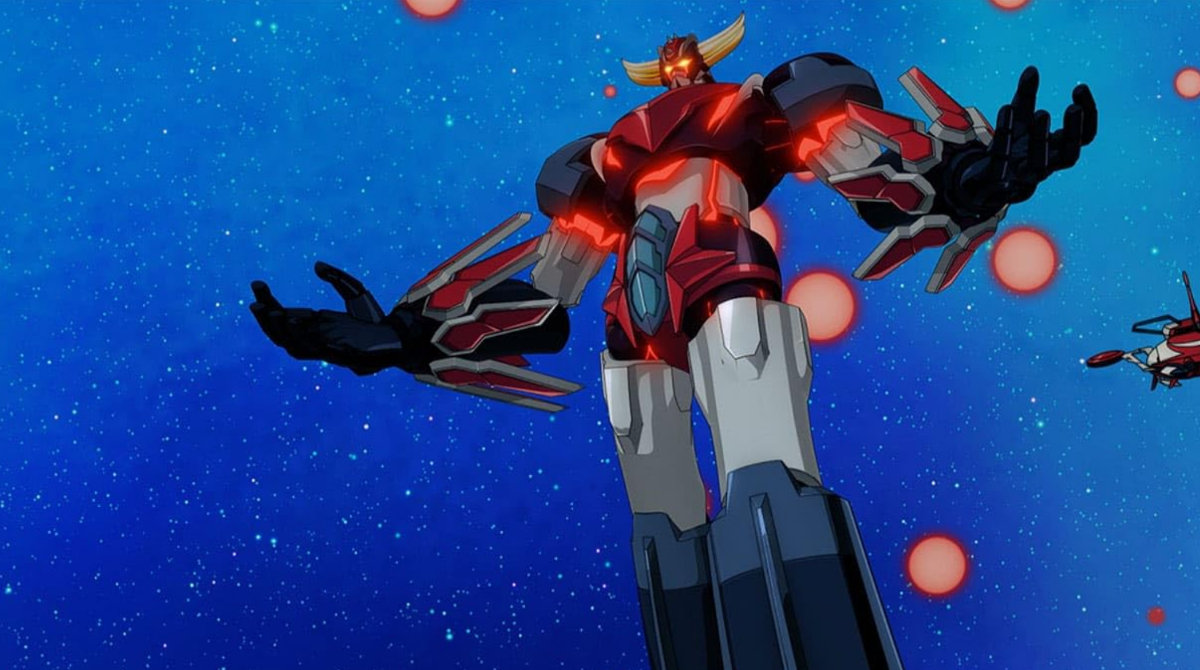
Half a century later, “Grendizer” remains culturally alive and relevant in the region. In Saudi Arabia, which embraced the original version of the show wholeheartedly, Manga Productions is now introducing a new generation of fans to a modernized version of the character, through a video game, The Feast of The Wolves, which is available in Arabic and eight other languages on platforms including PlayStation, Xbox and Nintendo Switch, and a new Arabic-language anime series, “Grendizer U,” which was broadcast last year.
Fifty years after the debut of the show, “Grendizer” is back — although to a generation of fans of the original series, their shelves still full of merchandise and memorabilia, it never really went away.


