Pakistan, Afghanistan allow free movement of cargo vehicles to increase bilateral trade

Laden Pakistani trucks are seen near Torkham, close to the Pakistan-Afghanistan border, on April 14, 2017. (AFP/FILE)
Short Url
Updated 20 July 2022
Follow

Pakistan, Afghanistan allow free movement of cargo vehicles to increase bilateral trade

  • The two sides have decided to take measures to start Peshawar-Jalalabad and Quetta-Kandahar luxury bus services
  • The two governments will also develop customs procedures and systems to ensure speedy clearance of goods

ISLAMABAD: Pakistan and Afghanistan have agreed to increase bilateral trade by allowing free movement of trucks and other goods carrying vehicles during a two-day visit of an official delegation from Islamabad that concluded its negotiations with Afghan authorities on Wednesday.
The delegation traveled to Kabul earlier this week where its members held meetings with the acting Afghan ministers for commerce and foreign affairs along with other senior officials.
According to a statement released by Pakistan’s diplomatic mission in Afghanistan, the two sides expressed satisfaction that bilateral trade and transit had registered growth during the current financial year while agreeing to further build on the momentum.
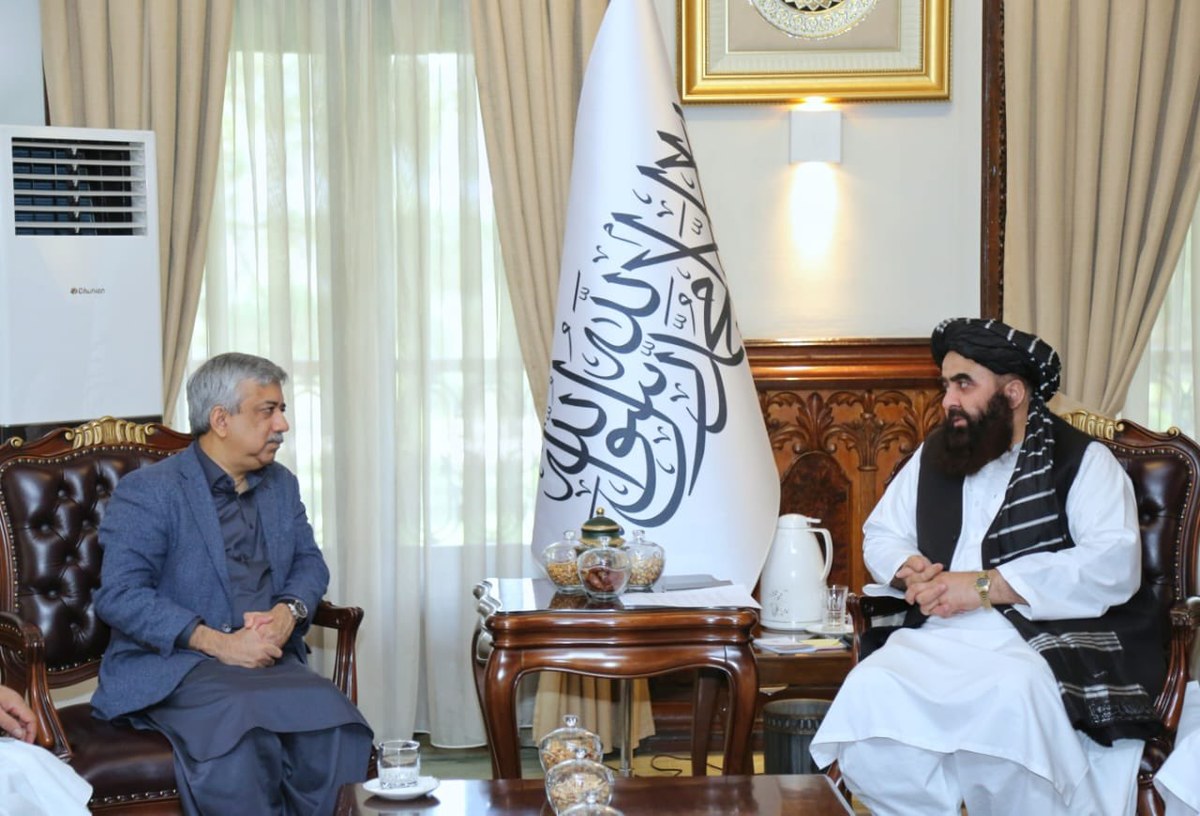


Pakistan's commerce secretary, Sualeh Ahmad Faruqui (L), and Afghan Taliban spokesman, Zabihullah Mujahid, can be seen during a meeting in Kabul, Afghanistan, on July 20, 2022. (Social Media)


“It was agreed to make border crossing points more efficient to ensure early clearance of trade and transit traffic and address the bottlenecks and impediments on priority basis,” the statement added. “The two sides agreed to implement Temporary Admission Document (TAD) allowing free movement of bilateral trade vehicles and prevent loading and unloading of goods at the border crossing points with view to further increase trade between the two countries.”
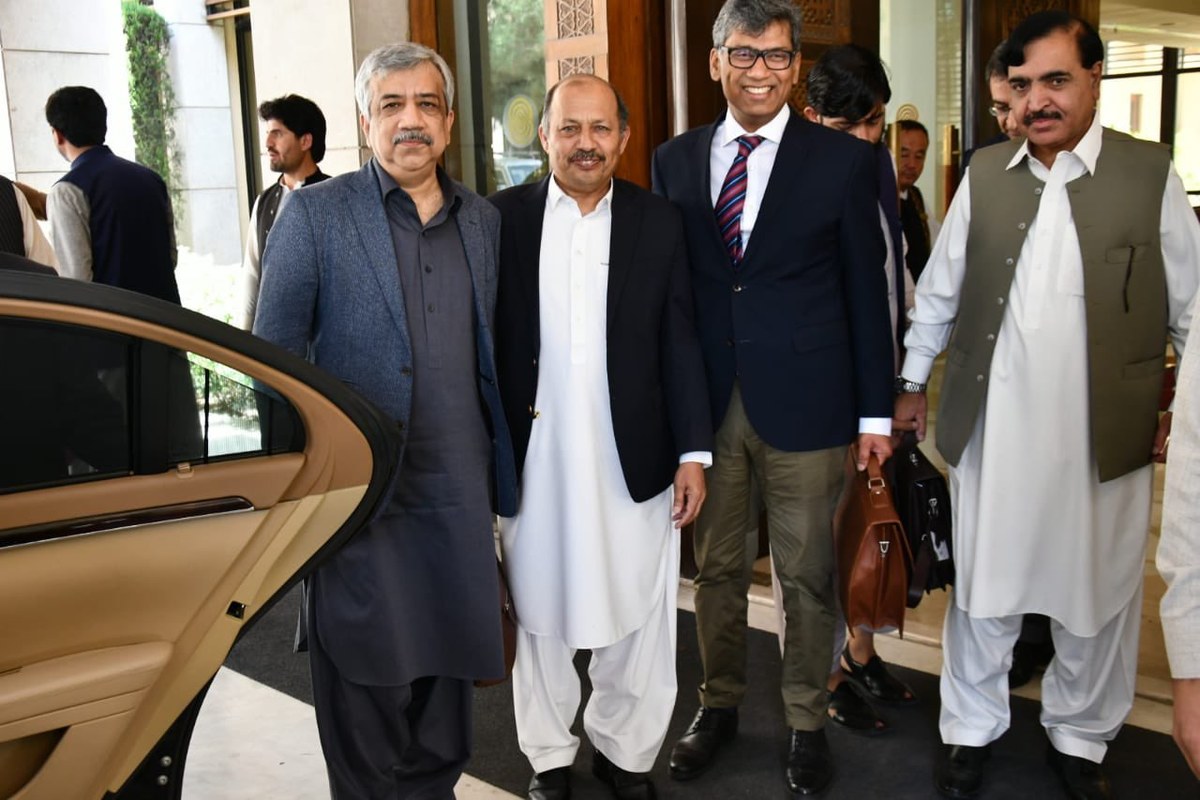


Pakistan's commerce secretary, Sualeh Ahmad Faruqui (L), poses for a photo with the Pakistani delegation in Kabul, Afghanistan, on July 20, 2022. (Social Media)

The Pakistan embassy also informed the two countries agreed to increase operational timings at all crossing points between them.
They decided to “evolve mutually connected custom procedures and systems to improve efficiency in clearance of goods.”
Apart from that, the two countries decided to make all possible efforts to start “luxury bus service between Peshawar and Jalalabad and Quetta and Kandahar” from the end of August this year.
Pakistan and Afghanistan reiterated their resolve to remove difficulties in processing visas by emphasizing mutual coordination.


Pakistan, Saudi Arabia discuss regional situation, upcoming engagements

Updated 14 February 2026
Follow

Pakistan, Saudi Arabia discuss regional situation, upcoming engagements

  • Ishaq Dar and Prince Faisal bin Farhan agree to stay in contact amid Middle East tensions
  • The two officials speak ahead of Trump’s Feb. 19 Board of Peace meeting in Washington, DC

ISLAMABAD: Pakistan’s Deputy Prime Minister and Foreign Minister Ishaq Dar discussed regional developments and upcoming international engagements with Saudi Foreign Minister Prince Faisal bin Farhan in a phone call on Saturday, according to the foreign office in Islamabad.

The conversation took place against the backdrop of deepening strategic ties between Islamabad and Riyadh. In September last year, the two countries signed a bilateral defense agreement that formalized decades of military cooperation and included a commitment to view aggression against one as an attack on both countries.

“Deputy Prime Minister/Foreign Minister Mohammad Ishaq Dar held a telephonic conversation today with the Foreign Minister of Saudi Arabia, Faisal bin Farhan Al Saud,” Pakistan’s foreign ministry said in a statement.

“The two leaders discussed the evolving regional situation, forthcoming international engagements, and agreed to remain in close contact,” it added.

The two officials spoke at a time of heightened tensions in the Middle East, with the conflict in Gaza far from resolution amid ongoing ceasefire violations by Israel.

The region has also been on edge as the United States pursues nuclear negotiations with Iran, prompting regional states to call for diplomacy rather than new military flare-ups.

Both Pakistan and Saudi Arabia are participants in US President Donald Trump’s Board of Peace, which is scheduled to meet on Feb. 19 in Washington.

Islamabad and Riyadh have consistently coordinated positions over regional and global issues.

The foreign ministry did not provide further details of the discussion.