

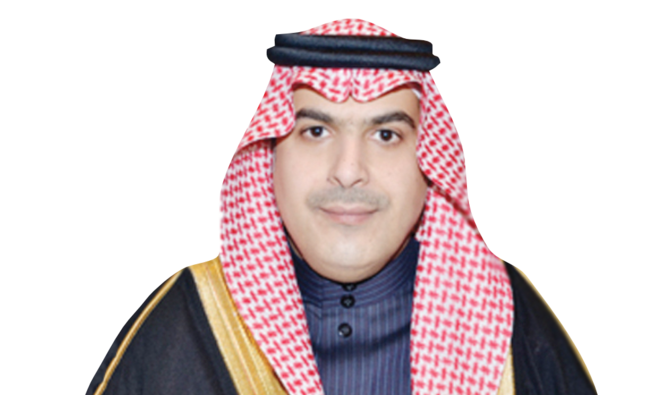
Who’s Who: Ayman Al-Sayari, deputy governor for investment and research at the Saudi Central Bank

Ayman Al-Sayari
Short Url
Updated 17 July 2022
Follow

Who’s Who: Ayman Al-Sayari, deputy governor for investment and research at the Saudi Central Bank

Ayman bin Mohammed Al-Sayari was recently appointed deputy governor for investment and research at the Saudi Central Bank, following a royal decree.

He expressed his gratitude and appreciation to King Salman and Crown Prince Mohammed bin Salman for the generous trust granted to him, saying that it was a great honor that comes with great responsibility.

In 2019, Al-Sayari was appointed deputy governor of the Saudi Central Bank, also known as SAMA.

He had previously been SAMA’s deputy governor for investment since 2013, playing a key role in formulating the Kingdom’s sovereign debt strategy.

Al-Sayari gained a master’s degree in finance from George Washington University in the US, a bachelor’s degree in accounting from King Fahd University of Petroleum and Minerals in Dhahran, and completed a general management program at Harvard Business School.

He is also a CFA (chartered financial analyst) charter holder.

Al-Sayari is a board member of the Saudi Fund for Development, which participates in investment projects in developing countries through the granting of loans, as well as providing technical aid for financing studies. In addition, he is a board member of the Public Pension Agency and Saudi Federation for Cyber Security and Programming.

In his role as acting head of Saudi Arabia’s Debt Management Office, which functions under the umbrella of the country’s Ministry of Finance, he has led the development of the Kingdom’s overall public debt strategy.

In 2003, Al-Sayari was seconded by SAMA for three years to the Department of Financial Markets of the International Finance Corporation, affiliated with the World Bank Group.

Al-Sayari began his professional career as a financial analyst for the Saudi Industrial Development Fund. Before joining SAMA in 1999, he earned an investment analyst certificate from Chase Manhattan bank.



Pioneering electric bus service takes to the road in Makkah

Updated 19 December 2025
Follow

Pioneering electric bus service takes to the road in Makkah

  • The bus rapid transit project, a system designed to have higher capacity and reliability than conventional bus services, is said to be the first of its kind in the Kingdom
  • The vehicles operate in dedicated bus lanes within a network that includes two main bus stations and 11 stops along the route connecting them

MAKKAH: A pioneering electric bus service took to the road in Makkah this week.

Electromin, the developer and operator of the service in partnership with Umm Al-Qura for Development and Construction, said it is expected to serve more than 125 million passengers over the next 15 years, while cutting carbon dioxide emissions by more than 31,500 tonnes compared with traditional vehicles.

The bus rapid transit project, a system designed to have higher capacity and reliability than conventional bus services, is said to be one of the first of its kind in the Kingdom. It was inaugurated on Wednesday by Amr Al-Dabbagh, chairperson of Al-Dabbagh Group; Samir Nawar, managing director of Petromin; and Yasser Abu Ateeq, CEO of Umm Al-Qura.

The bus rapid transit project is designed to have higher capacity and reliability than conventional bus services. (Supplied)

Electromin, a subsidiary of Petromin specializing in energy and mobility solutions, said the new service, which forms part of the Masar Destination mixed-use real estate development project in Makkah, is one the first transport networks of its kind in the country, and represents a significant shift toward a cleaner, more efficient urban transport model.

It operates in dedicated bus lanes, connecting key hubs within Masar and providing safe, reliable and environmentally friendly transportation for residents and visitors, the company added. The network includes two main bus stations and 11 stops along the route connecting them. It has been designed to serve more than 5 million visitors and pilgrims annually, and to be easily accessible to all users.

Operators say the service is designed as a foundation for Makkah’s future transportation system, through its integration with the broader Masar project, which includes pedestrian walkways, more than 5,000 parking spaces, metro services and other urban infrastructure.