

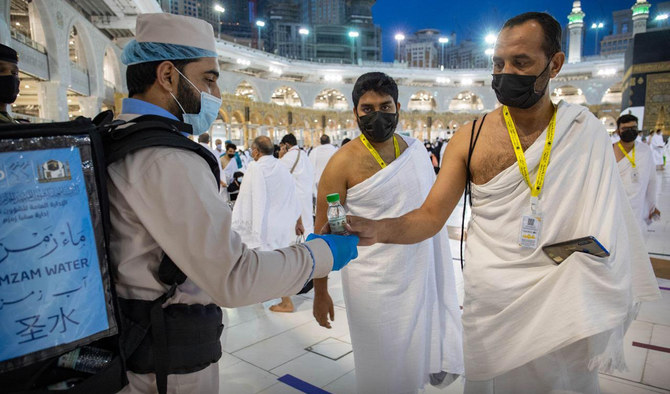
Grand Mosque distributed 12 million liters of Zamzam water during Hajj

A total of 12 million liters of Zamzam water were distributed at the Grand Mosque during this year’s Hajj period. (SPA)
Short Url
Updated 16 July 2022
Follow

Grand Mosque distributed 12 million liters of Zamzam water during Hajj

  • 1,150 workers were employed to distribute water among pilgrims
  • They were supported by high-tech smart carts and robots

JEDDAH: A total of 12 million liters of Zamzam water were distributed at the Grand Mosque during this year’s Hajj period, according to official figures.

The General Presidency for the Affairs of the Two Holy Mosques said via Twitter on Saturday that the water was distributed over a period of 15 days.

Abdulrahman Al-Zahrani, who manages the Zamzam water department at the mosque, said the total comprised 990,000 liters distributed in the form of 3 million 330ml bottles and 11 million liters from more than 25,000 water containers, each with a capacity of 40 liters.

The containers, distributed throughout the Grand Mosque and its courtyards, were refilled five times a day.
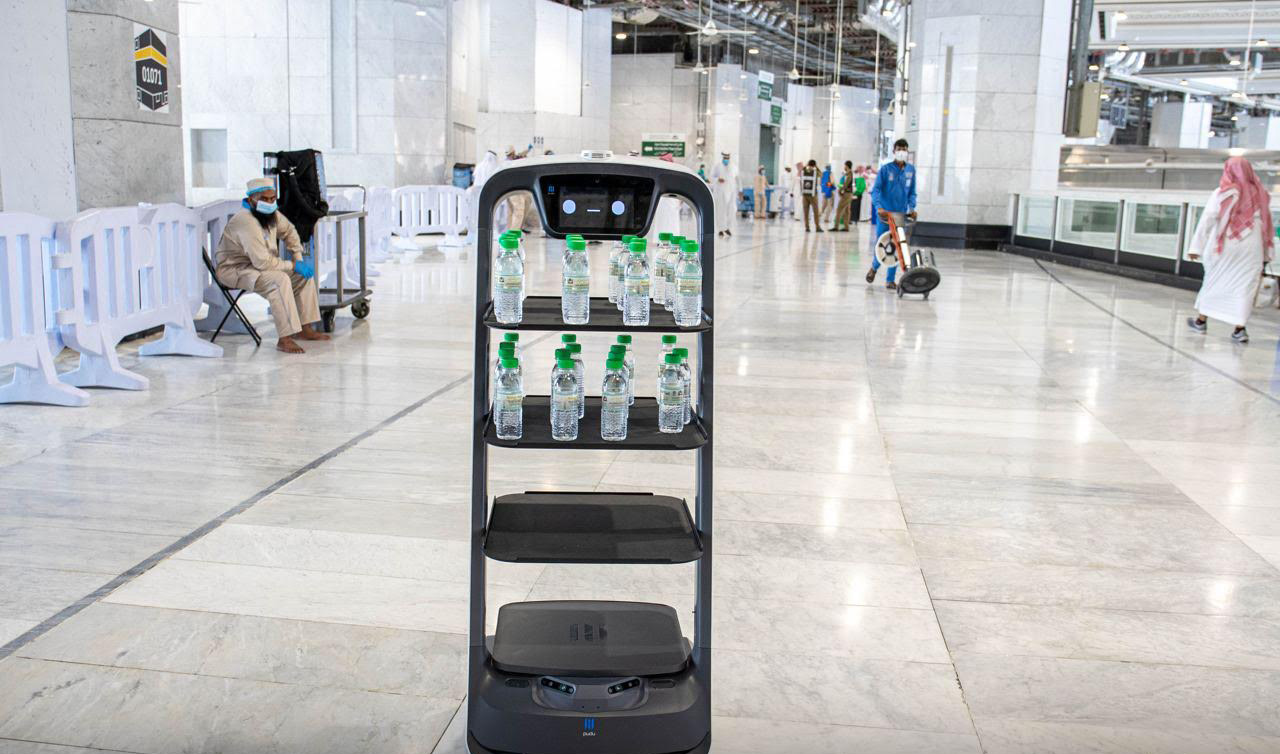


A total of 12 million liters of Zamzam water were distributed at the Grand Mosque during this year’s Hajj period. (SPA)

Al-Zahrani said 1,150 workers helped to distribute the bottles, while 80 smart carts and water-dispensing robots were also employed around the mosque to ensure the pilgrims kept hydrated.

All of the carts and bags used to carry the water, were frequently washed and sterilized to ensure good health standards, he added.
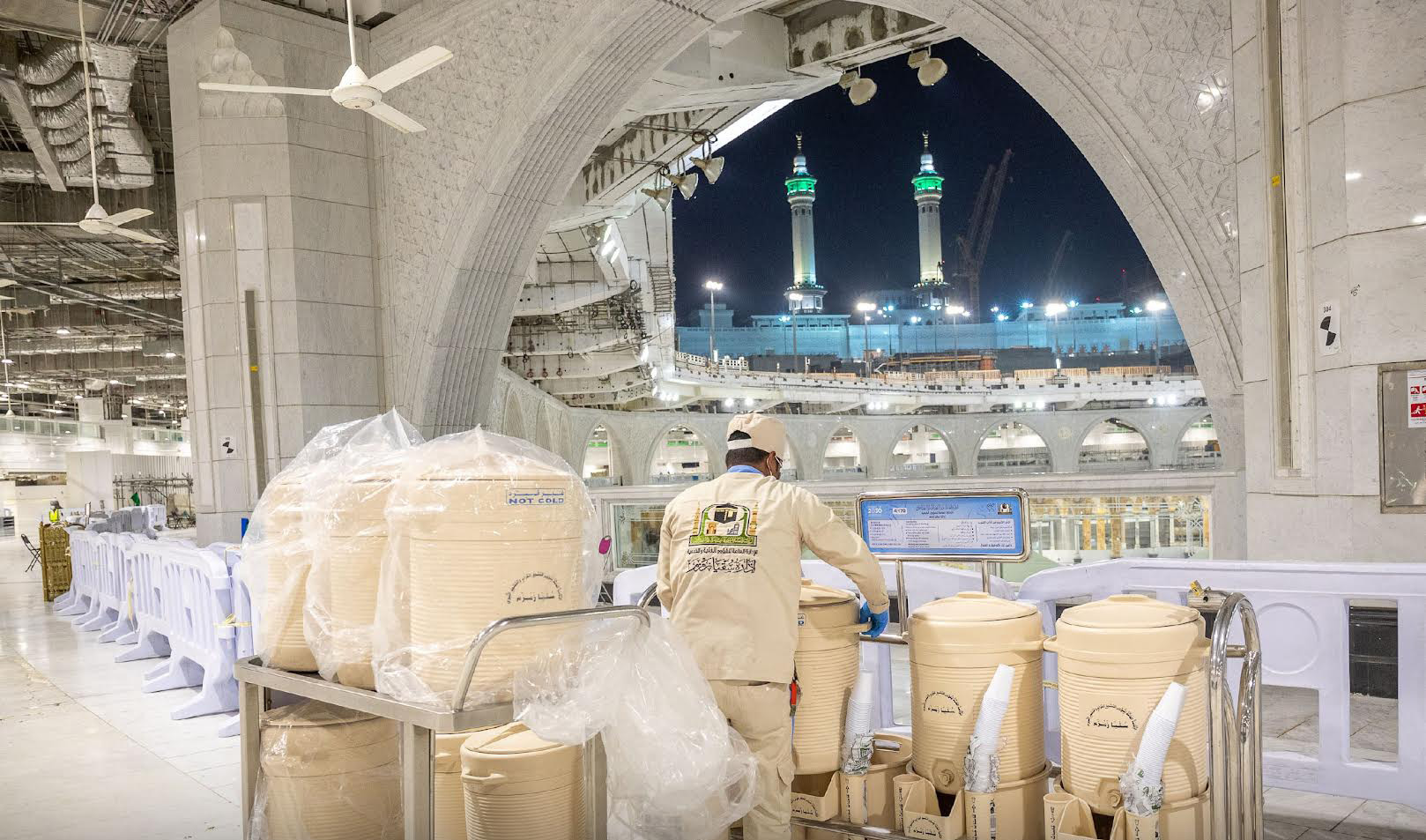


A total of 12 million liters of Zamzam water were distributed at the Grand Mosque during this year’s Hajj period. (SPA)

The same sanitation protocols were applied to the water pumps, which were supervised by 150 workers, he said.

As a further safety measure, employees of the Zamzam water laboratory tested more than 70 samples a day to ensure the water pumped to the Grand Mosque was potable.

Al-Zahrani said technology would increasingly be used in the management and distribution of Zamzam water, in line with the 2024 plan for the presidency — headed by Sheikh Abdulrahman Al-Sudais — and the wider Saudi Vision 2030.

The volume of Zamzam water distributed during the Hajj period was about the same as provided during Ramadan, taking the total for the year to 24 million liters.


Saudi aid agency launches food distribution projects in Djibouti and Guinea

Updated 21 February 2026
Follow

Saudi aid agency launches food distribution projects in Djibouti and Guinea

  • Projects to benefit 40,000 individuals across Djibouti and 50,000 in Guinea
  • KSrelief's aid programs have reached a total of 113 countries across four continents

RIYADH: The King Salman Humanitarian Aid and Relief Center (KSrelief) has launched its 2026 food distribution projects in the African republics of Djibouti and Guinea.

The initiatives are part of Saudi Arabia’s broader humanitarian relief efforts to enhance global food security for vulnerable populations, according to statements carried by the Saudi Press Agency (SPA).

In Djibouti, Saudi Ambassador Mutrek Al-Ajaleen and other local officials rolled out the fifth phase of the year’s project. It consists of 6,715 baskets of essential food items designed to support 40,000 individuals across multiple regions of the country.

In Guinea, Saudi Ambassador Dr. Fahad Al-Rashidi led the launch ceremony for a similar initiative. Under this project, 8,400 food baskets will be distributed, benefiting 50,000 people nationwide.

Since its establishment in 2015, KSrelief has served as Saudi Arabia's primary humanitarian arm, making food security one of its largest and most critical operational sectors. According to the center's official statistics, KSrelief has implemented over 1,150 dedicated food security projects at a total cost of more than $2.2 billion.

These specific food distribution initiatives have successfully delivered vital sustenance to vulnerable populations in 86 countries worldwide. Broadening the scope beyond just food security, KSrelief's overall humanitarian and development aid programs have reached a total of 113 countries across four continents.