
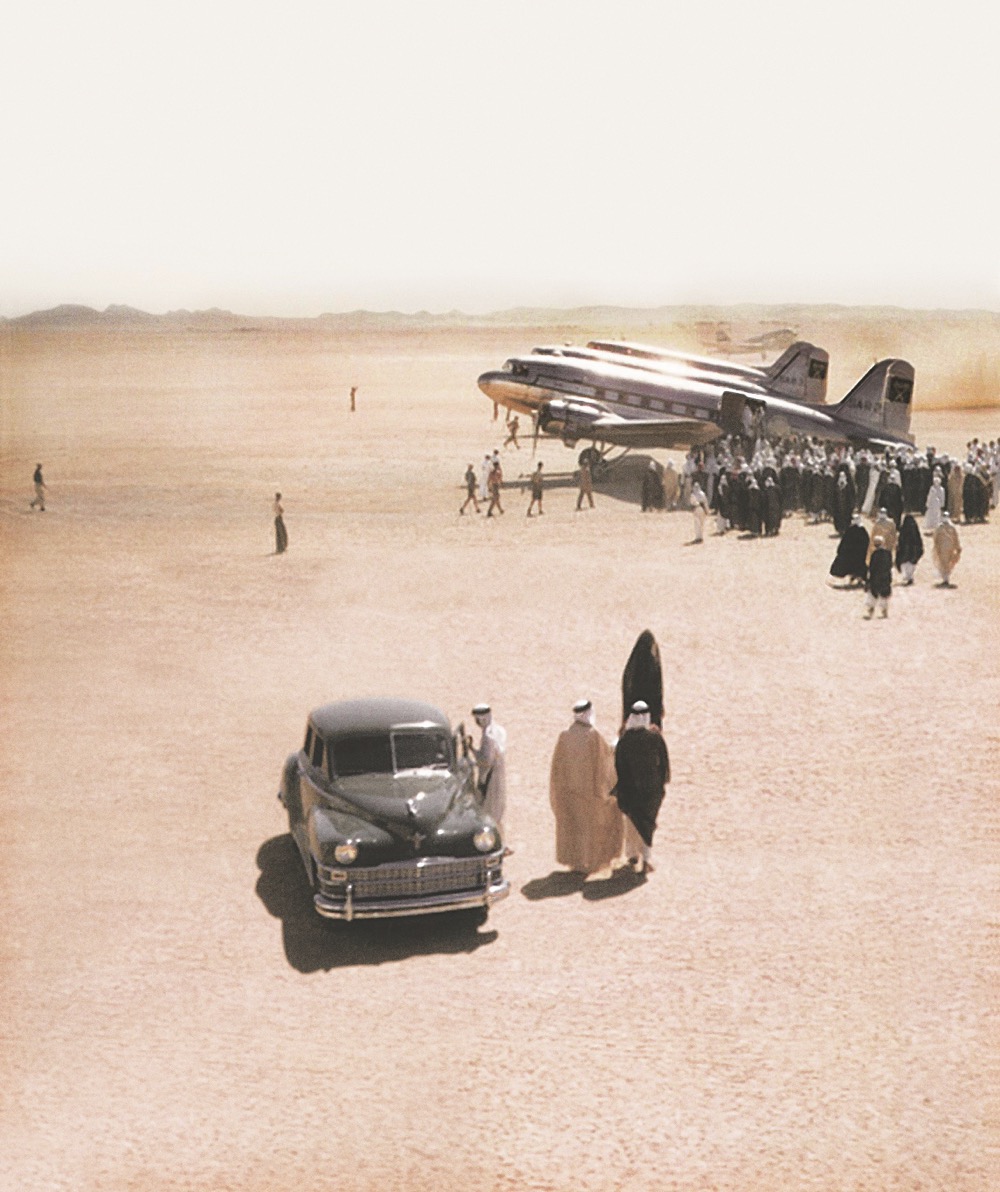
JEDDAH: When US President Franklin Roosevelt presented a Douglas DC-3, a propeller-driven airline, as a gift to King Abdul Aziz in 1945, the occasion marked the starting point of Saudi Arabia’s civil aviation industry.
The Kingdom’s flag carrier Saudi Arabian Airlines, now known as Saudia, was founded in September 1945 as a wholly-owned government agency under the Ministry of Defense.
Nearly eight decades later, as US President Joe Biden’s flight hit the tarmac of King Abdulaziz International Airport in Jeddah on Friday, there was a growing sense that the visit would mark the beginning of world-class commercial aviation infrastructure in the Kingdom.
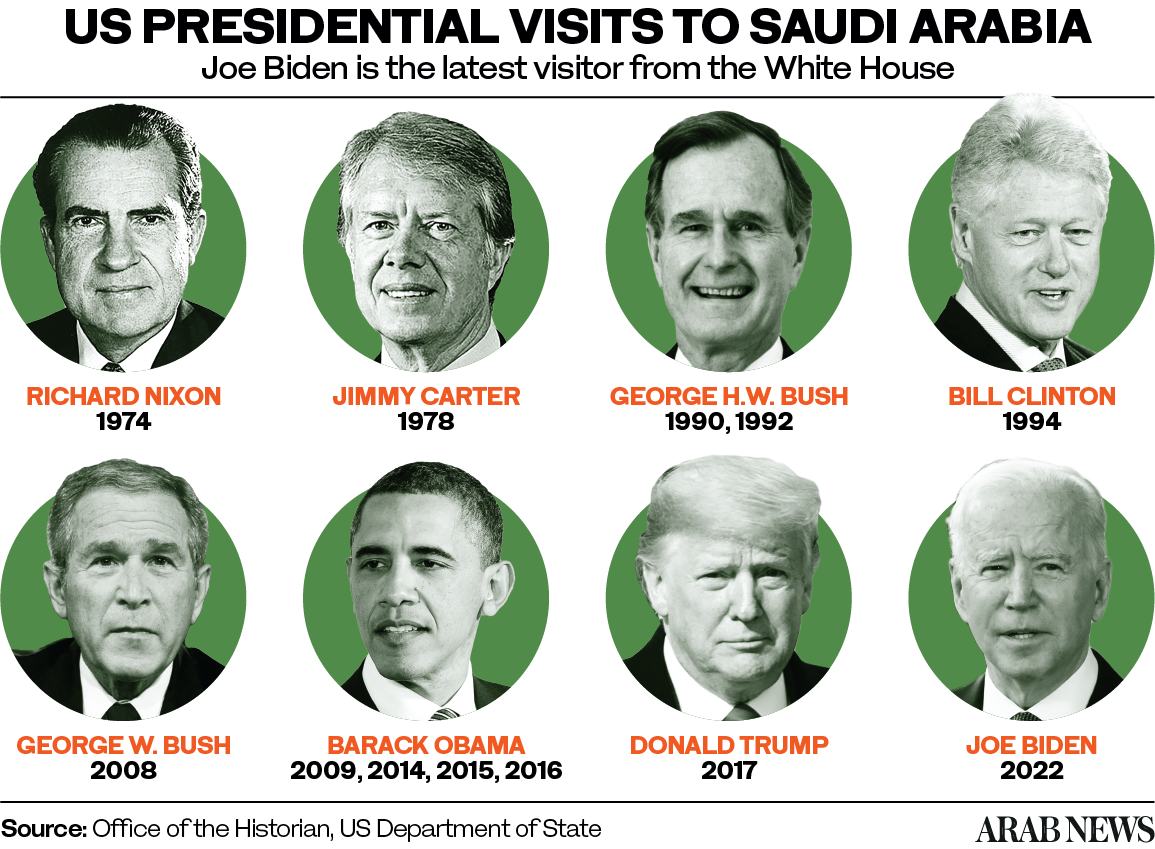
His predecessor Donald Trump’s visit to the Kingdom in 2017 led to a windfall in aviation deals between the two countries.
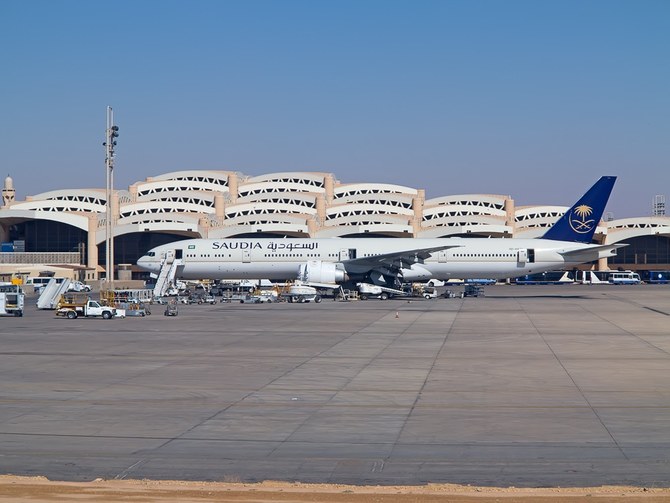
Saudi Arabian Airlines, now known as Saudia, was founded in September 1945.
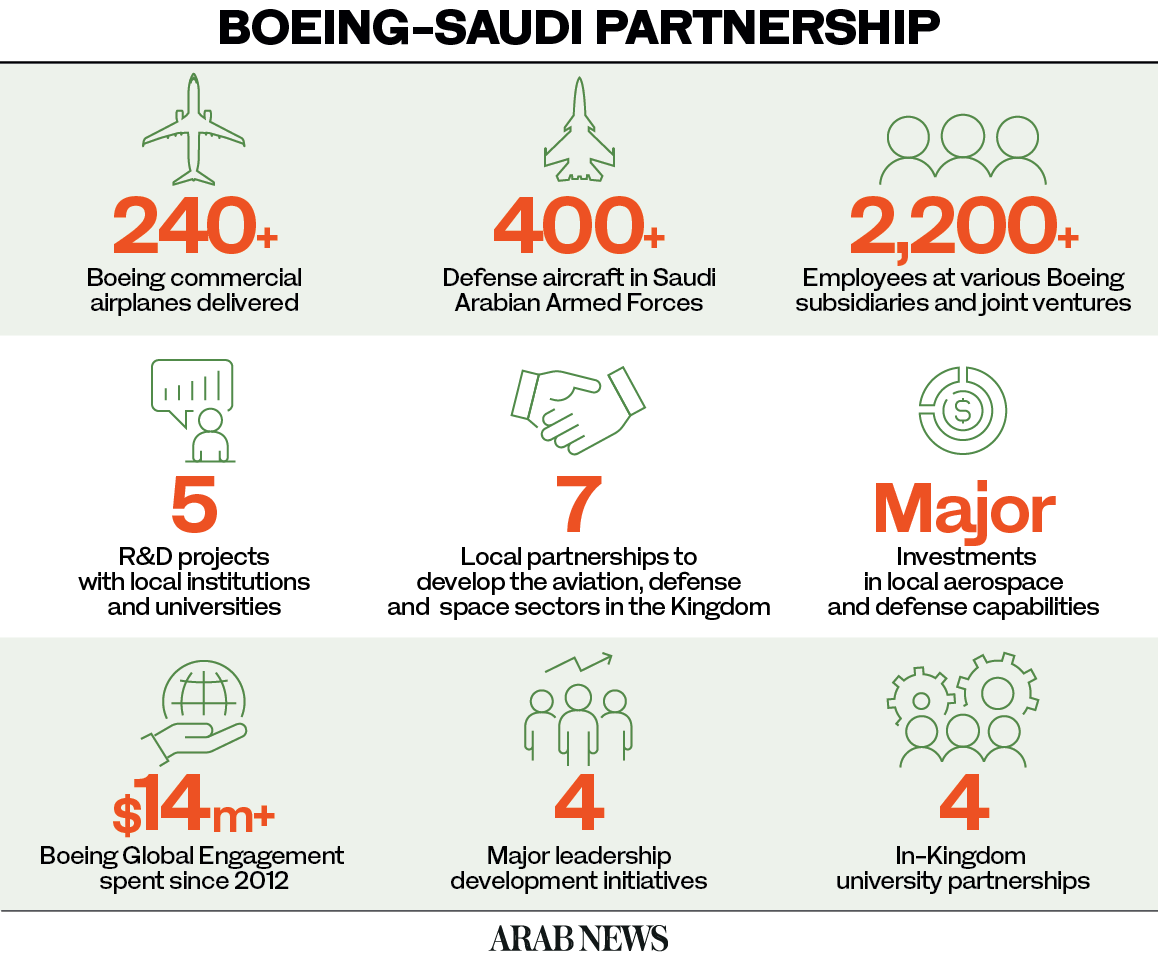
The event formed defense and commercial agreements for Boeing, worth over $50 billion, which further strengthened the Boeing-Saudi Arabia partnership, according to a statement issued by Boeing.
Among the deals signed was the sale of 16 widebody jets to Dammam-based carrier Saudi Gulf; the carrier later ceased operations in 2020 due to the COVID-19 outbreak.
The deals came during the Saudi US CEO Forum, where Saudi King Salman and Trump met with CEOs, including Boeing Chairman, President and CEO Dennis Muilenburg.
“I appreciate the efforts of King Salman, President Trump and his administration to support American manufacturers as we seek to grow at home and around the world,” Muilenburg said in a statement during the visit.
Taking on the headwinds
Boeing has had a crucial presence in the Kingdom since 1962, when the national carrier took delivery of two narrow-bodied Boeing 720s, becoming the first airline in the Middle East to operate commercial jet airplanes.
Over the years, Saudia has taken delivery of most Boeing aircraft, including VIP airplanes. Today the Kingdom represents about 70 percent of its business jet purchases in the Gulf Cooperation Council.
The airline operated its first Boeing 747s service in 1977 when three Jumbo Jets were leased from Lebanon’s national carrier Middle East Airlines.
Saudia’s all-cargo flights between the Kingdom and Europe witnessed the introduction of American Lockheed L-1011s and Fairchild FH-27s in the region.
The US-Saudi aviation relationship scaled new heights when Boeing became a member of the King Abdullah University of Science and Technology industrial collaboration program in 2019. The program facilitates local and international industrial collaboration.
The Obama-Biden Administration widened the scope of aviation in the region. For instance, GE Aviation Services, a leading US manufacturer of jet and turboprop engines, signed an exclusive 10-year material agreement with Saudia to cover its fleet of CFM56-5B engines in 2009.
Flynas, the Kingdom’s low-cost carrier, uses GE engines in their A320 aircraft.
“This ecomagination-certified engine has a 15 percent lower fuel burn during cruise than the platform it replaces,” GE stated.
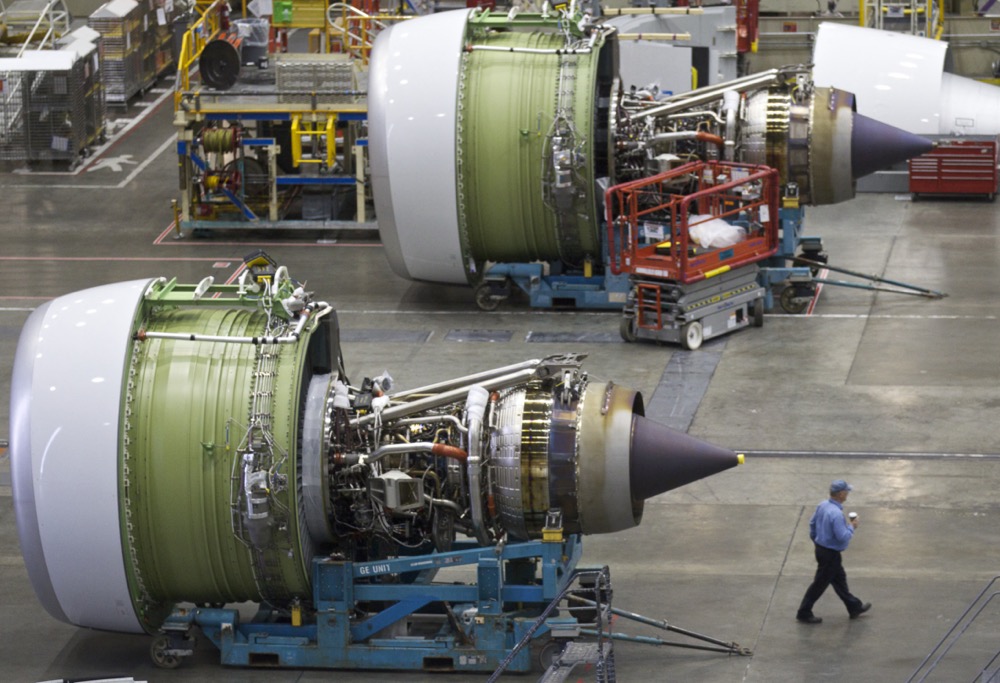
As part of the Saudi localization efforts, GE announced that the company would use its facility, located at King Abdulaziz International Airport in Jeddah, to launch overhaul services on the GE90 engines in the region.
The Royal Saudi Air Force is another major GE Aviation customer, the GE’s Military Systems Operation team partnered with SAEI to establish engine overhaul capability within the Kingdom. The project includes organic capabilities for the disassembly, inspection, repair, assembly and testing of the company’s engines undertaken at Saudia Aerospace Engineering Industries’ facility in Jeddah.
In 2014, Boeing Research & Technology opened an office at KAUST to increase academic engagements with professors and resident companies interested in collaboration, research, and development.
The same year Boeing and King Abdulaziz City for Science and Technology launched the Decision Support Center in Riyadh. The center has been serving as an experimentation hub between customers and partners in the Kingdom, offering more informed interoperability decisions for aerospace and defense products.
In 2015, Boeing signed an agreement with Saudia Aerospace Engineering Industries to create the Saudi Rotorcraft Support Co. The company offers rotorcraft maintenance, repair, overhaul and support in the Kingdom.
The Trump-Pence Administration further bolstered the aviation space when Boeing and the Saudi National Industrial Development signed a memorandum of understanding to further the development of the aerospace industry in the Kingdom.
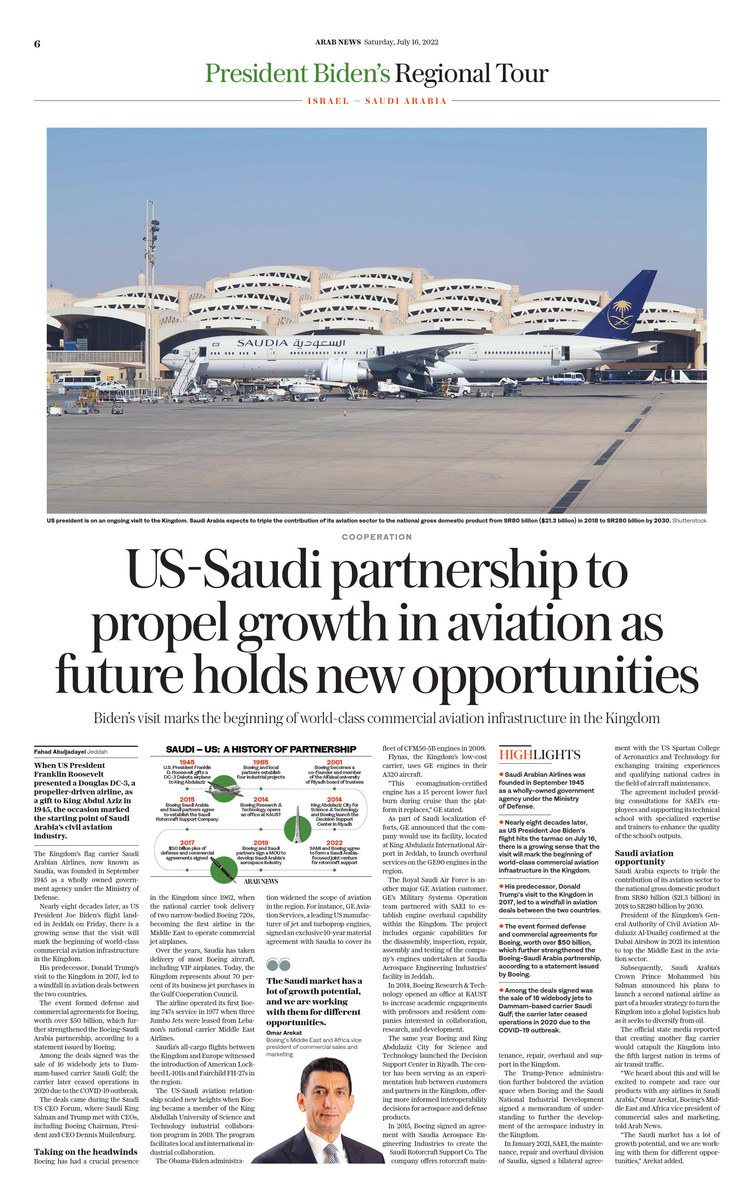
Boeing has had a crucial presence in the Kingdom since 1962. (Getty Images/AFP)
In January 2021, SAEI, the maintenance, repair and overhaul division of Saudia, signed a bilateral agreement with the US Spartan College of Aeronautics and Technology for exchanging training experiences and qualifying national cadres in the field of aircraft maintenance.
The agreement included providing consultations for SAEI’s employees and supporting its technical school with specialized expertise and trainers to enhance the quality of the school’s outputs.
Saudi aviation opportunity
Saudi Arabia expects to triple the contribution of its aviation sector to the national gross domestic product from SR80 billion ($21.3 billion) in 2018 to SR280 billion by 2030.
Abdulaziz Al-Duailej, president of the Kingdom’s General Authority of Civil Aviation, confirmed at the Dubai Airshow in 2021 its intention to top the Middle East in the aviation sector.
Subsequently, Saudi Arabia’s Crown Prince Mohammed bin Salman announced his plans to launch a second national airline as part of a broader strategy to turn the Kingdom into a global logistics hub as it seeks to diversify from oil.
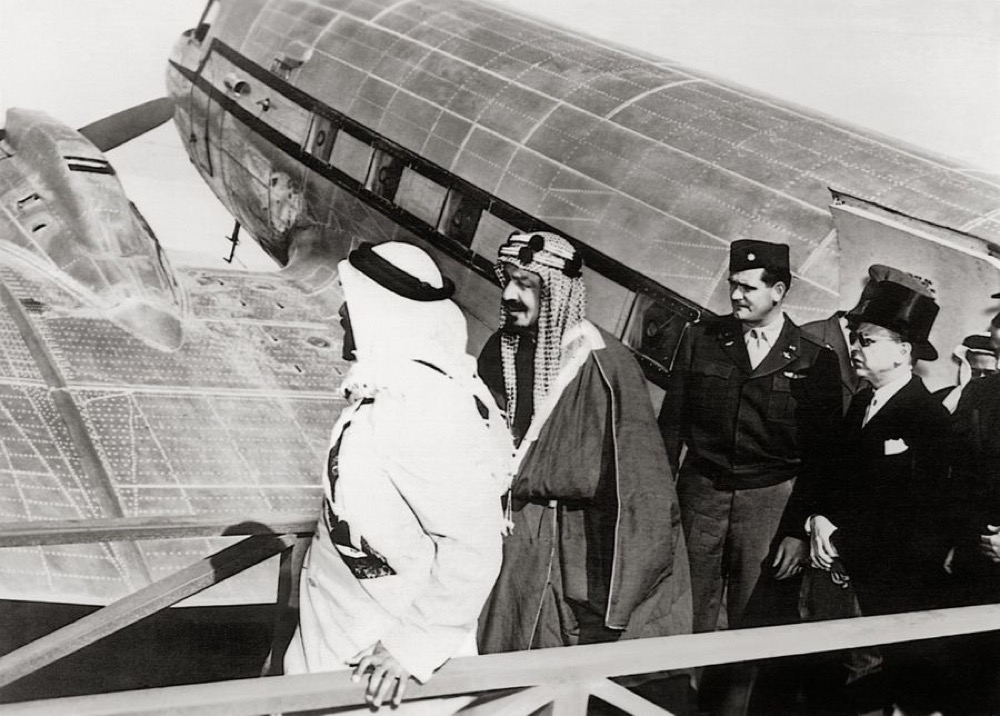
US President Franklin Roosevelt presented a Douglas DC-3, a propeller-driven airline, as a gift to King Abdul Aziz in 1945.
The official state media reported that creating another flag carrier would catapult the Kingdom into the fifth largest nation in terms of air transit traffic.
“We heard about this and will be excited to compete and race our products with any airlines in Saudi Arabia,” Omar Arekat, Boeing’s Middle East and Africa vice president of commercial sales and marketing, told Arab News.
“The Saudi market has a lot of growth potential, and we are working with them for different opportunities.”

keywords