

Khuzam Palace: A building block of Saudi-American commercial relations

1 / 3
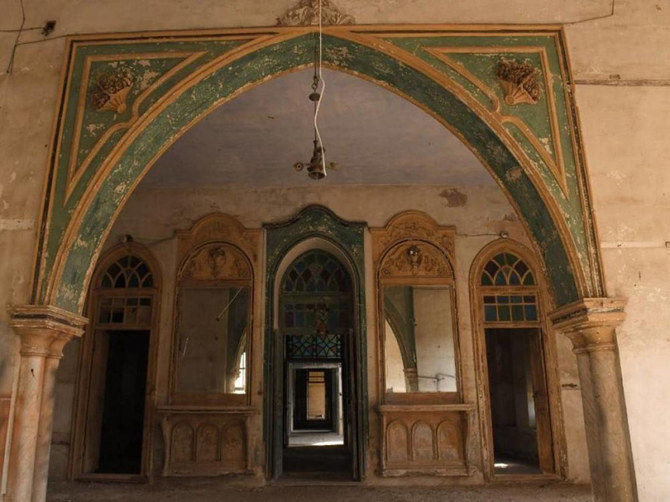
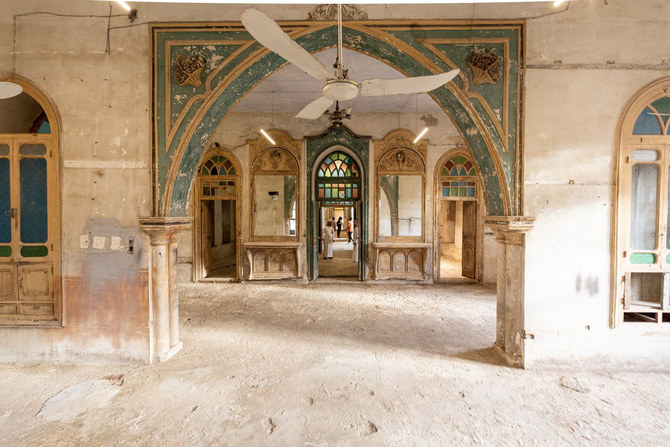
Khuzam Palace was central to the founding of Saudi Arabia, receiving foreign delegations during the reigns of King Abdulaziz and King Saud. (Supplied)
2 / 3
Khuzam Palace was central to the founding of Saudi Arabia, receiving foreign delegations during the reigns of King Abdulaziz and King Saud. (Supplied)
3 / 3
Khuzam Palace was central to the founding of Saudi Arabia, receiving foreign delegations during the reigns of King Abdulaziz and King Saud. (Supplied)
Short Url
Updated 16 July 2022
Follow

Khuzam Palace: A building block of Saudi-American commercial relations

  • Special ties were established with US private sector, represented by the launch of the Arabian-American Oil Company
  • The Jeddah palace was the site of the first oil concession deal between Saudi Arabia and Standard Oil of California

MAKKAH: Khuzam Palace, one of the most important historical palaces in the Kingdom, has hosted several influential meetings between the leadership of Saudi Arabia and the US.

The palace’s first links with the US took place on May 29, 1933, when it witnessed the signing of the first agreement in the concession for oil exploration between the Saudi government, represented by Minister of Finance Sheikh Abdullah bin Suleiman, and Standard Oil of California, represented by Lloyd Hamilton.

Faisal Ibrahim Al-Shammari, writer and political analyst specializing in American affairs, said that Khuzam Palace was central to the founding of the country as it received foreign delegations during the reigns of King Abdulaziz and King Saud.
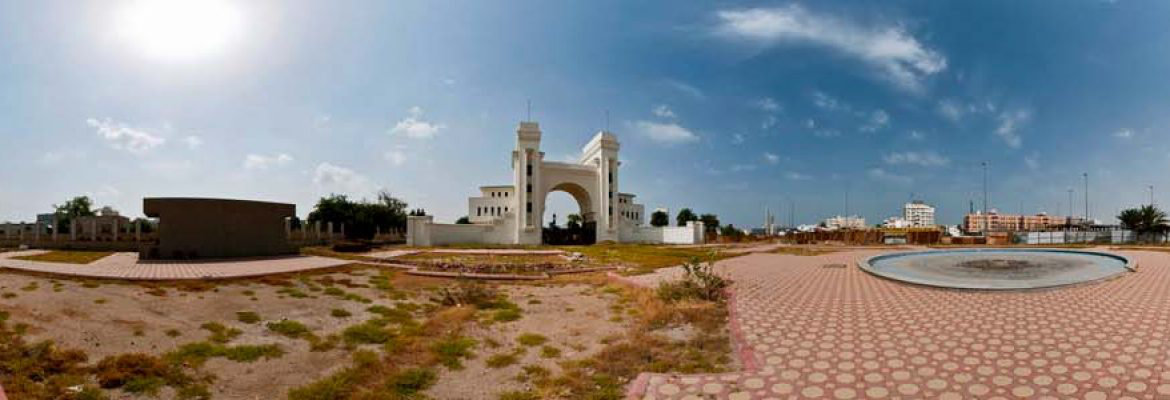


General view of Khuzam Palace, located in Al-Nazla Al-Yamaniya in the southeast of historic Jeddah. (Supplied)

Khuzam Palace also played a prominent role in the establishment of Saudi-American relations before they became official. Special relations were established with the American private sector, represented by the launch of the Arabian-American Oil Company, which later became Aramco.

Al-Shammari added that people are mistaken if they think that the early days of Saudi -US relations were just political, noting that they also involved economic links.

He said that the relations that were established in Khuzam Palace with the American private sector played a fundamental role in strengthening political relations, noting the healthy economic relations with successive US administrations and that trade remains expansive amid large bilateral investments.

Al-Shammari stressed that Khuzam Palace represents the beginning of Saudi-American relations before the meeting of US President Franklin Roosevelt with King Abdulaziz aboard the USS Quincy.
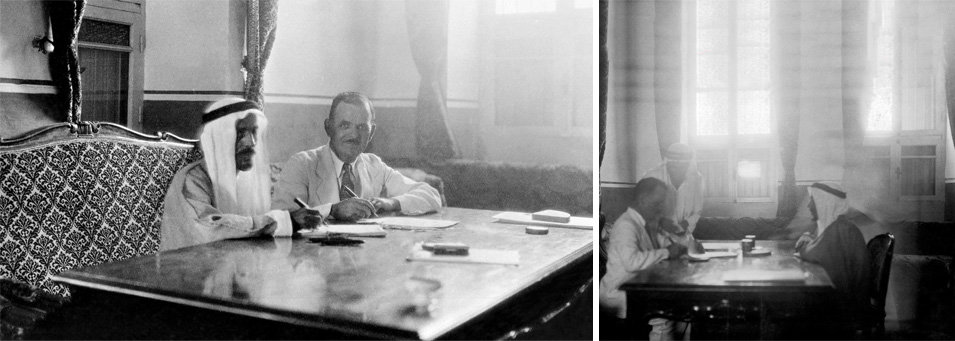


Khuzam Palace played a prominent role in the establishment of Saudi-American relations before they became official. (Supplied)

Saleh Al-Misnad Al-Tamimi, a researcher specializing in contemporary Saudi history, told Arab News that Khuzam Palace is one of the most important historical palaces in the modern era because of its main role in shaping the building blocks of historical Saudi-American relations.

Located in Al-Nazla Al-Yamaniya in the southeast of historic Jeddah, construction began in 1928 and was completed in 1932.

“The site of the palace was chosen for the good climate of the area,” the researcher said, adding that “some say that the reason for calling the palace ‘Khuzam’ is due to the presence of the Khuzam (tulip) plant in and around it, but no source or document proves the validity of this.”
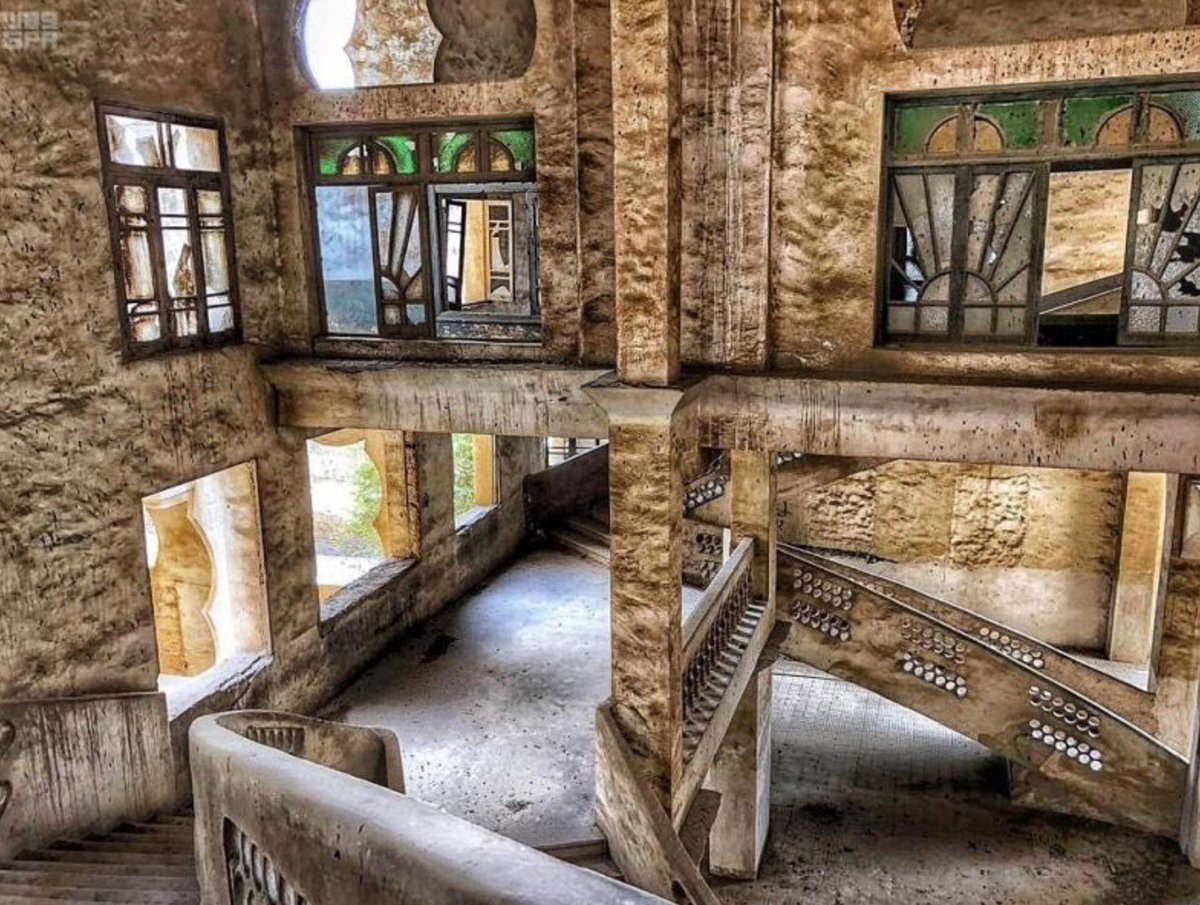


Khuzam palace was built of stone bricks and its roof was constructed using Javanese wood. (Supplied)

Al-Tamimi said: “If we check Arabic sources for the meaning of ‘Khuzam,’ we will find that it means the leash with which the camel is led and tied to its nose. Moreover, the repetition of the name ‘Khuzam’ for the palaces of King Abdulaziz confirms that the name does not relate to the ‘Khuzam’ plant.”

He added that the construction of the palace was completed by builders from Jeddah under the supervision of Mohammad Awad bin Laden.

“The palace was built of stone bricks and its roof was constructed using Javanese wood,” said Al-Tamimi.
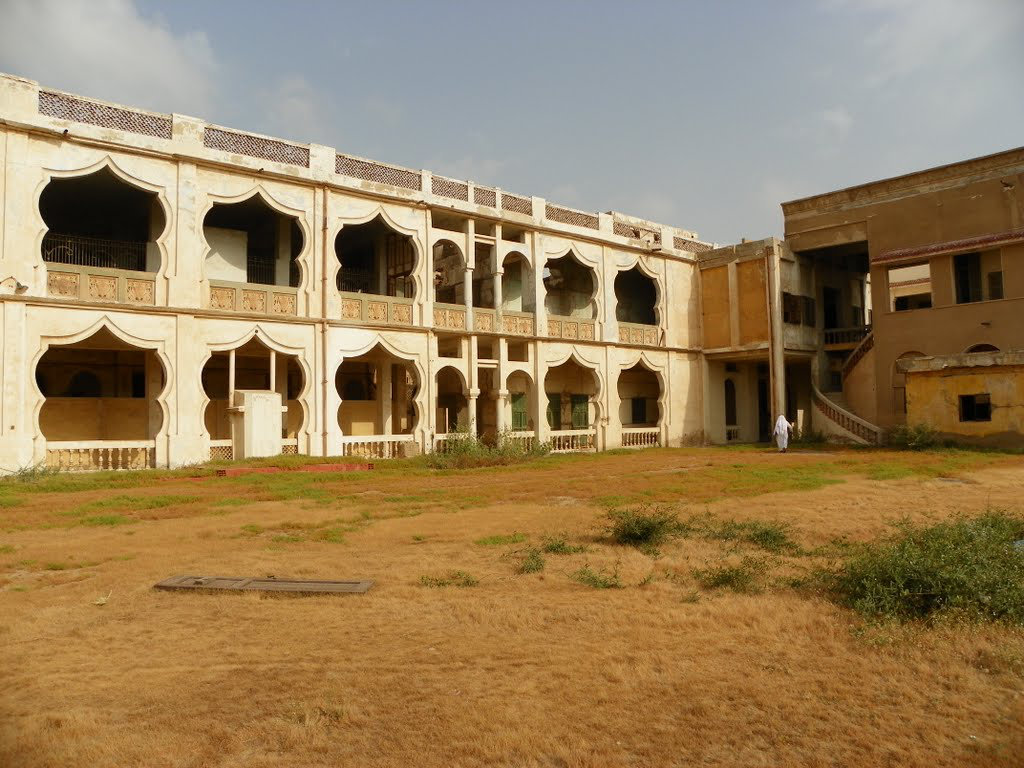


The site of Khuzam Palace was chosen for the good climate of the area, according to researcher Saleh Al-Misnad Al-Tamimi. (Supplied)

“About three years later, the Egyptian National Company built annexes to it that were made of reinforced concrete, including the palace that King Abdulaziz used to receive kings, heads of state, ministers, ambassadors and senior officials,” he added.

The palace also hosted the signing ceremonies for a border agreement with Kuwait and a reciprocal memorandum with Egypt regarding construction projects on July 29, 1940. Other notable events that took place at the palace include the renewal of the Treaty of Jeddah with the British government in 1943, the signing of the Dhahran Airfield Agreement with the US, a commercial agreement with Syria, and a friendship treaty with Pakistan.

The palace’s place in Saudi history even made its way onto the national currency. “The image of the palace's main gates was printed on the Saudi banknotes in 1955,” said Al-Tamimi.
Druze: the great survivors
How the world's most secretive faithhas endured for a thousand years

Enter


keywords

Canada eyes stronger ties with Saudi Arabia in 2026

Updated 7 sec ago
Follow

Canada eyes stronger ties with Saudi Arabia in 2026

  • Minister of International Trade Maninder Sidhu highlights connectivity, investment, and business opportunities between the two countries
  • More than 150 Canadian companies already active in Saudi Arabia as ties deepen in tech, mining, and defense

RIYADH: On the sidelines of OpenText’s regional headquarters opening in Riyadh, Canada’s Minister of International Trade Maninder Sidhu told Arab News that Saudi-Canadian cooperation will “speed up” under Prime Minister Mark Carney’s new government.

“You are going to see a quick speeding up of this relationship in 2026,” Sidhu said.

“This was my first visit to the region, and I did that on purpose because this region plays a vital role to Canada. This is about friendship and, of course, allyship,” he added.

During the visit, Sidhu will hold meetings in Qatar, Saudi Arabia, and the UAE with a Canadian senior-level business delegation.

When asked about the primary goal of the visit to the Kingdom, he said: “Well, for this visit, I think it is about connectivity — making sure conversations happen between the Saudi ecosystem, Saudi businesses, and Canadian businesses.

“But of course, government-to-government is very important to establish initiatives that enable more businesses.”

The minister noted that two-way trade between Saudi Arabia and Canada currently stands at $4 billion, with room to grow.

“Right now, I am focused on opening doors for businesses on both sides, but also to show collaboration. You are seeing a lot more coming. Companies set up their regional hubs here to create economic opportunities.”

During his visit, Sidhu met with Saudi Minister of Investment Khalid Al-Falih to discuss advancing Saudi-Canadian industry and investment partnerships and supporting both countries’ trade diversification efforts.

In November 2025, a high-level Saudi delegation led by Al-Falih visited Ottawa, during which both sides announced the reactivation of the Joint Economic Commission.

More than 150 Canadian companies are currently active in the Kingdom, in sectors such as artificial intelligence, mining, creative economy, healthcare, and defense.

Sidhu aims to use his visit to further business-to-business cooperation, both in the Kingdom and in Canada.

“We are also welcoming Saudi companies to come to Canada because the physical distance between our two nations is very wide, and we serve different regions,” Sidhu said.

“And so there is a lot of complementary opportunities that we should be looking at. In Canada, we have 15 trade agreements with 51 countries. We welcome Saudi companies to set up there, just as OpenText has done in the region, to continue collaborating.”

During the interview, the minister also highlighted mining as a key area of cooperation and said he hopes to further develop it.

Sidhu noted that more than 100 Canadian companies are participating in the Future Minerals Forum, running until Jan. 15 in Riyadh.

The minister also said that defense cooperation will expand, noting that while 40 Canadian companies participated in 2025, this year’s World Defense Show will welcome 80.

Sidhu also met with Minister of Communications and Information Technology Abdullah Al-Swaha to discuss strengthening bilateral partnerships in AI, innovation, and advanced technologies, supporting Saudi Arabia’s goal to become a global hub for AI and the digital economy.

Closing the interview, Sidhu noted the many similarities between the two countries: “We (Saudi Arabia and Canada) are roughly 40 million people, and we have a lot of alignment in education, healthcare, and tourism.”