

Pakistan’s Aamir Sohail says big bucks ‘good for cricket’

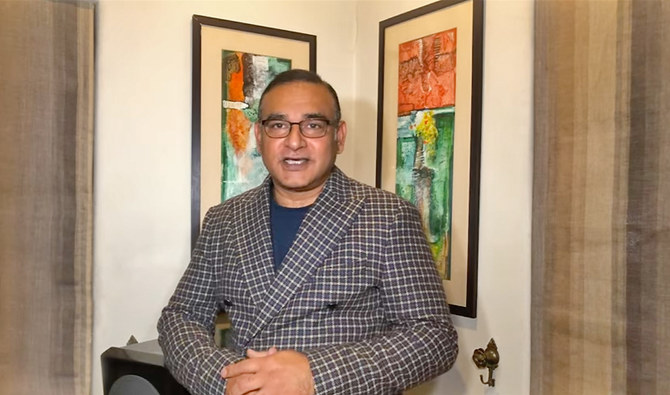
Former Pakistan captain Aamir Sohail speak on his Youtube channel on January 6, 2022. (Screengrab form Youtube channel – Aamir Sohail)
Short Url
Updated 14 July 2022
Follow

Pakistan’s Aamir Sohail says big bucks ‘good for cricket’

  • 55-year-old Aamir Shoail was a whistleblower in Pakistan’s 1990s match-fixing controversy
  • Aleft-handed opener Sohail was key in Pakistan’s 1992 50-over World Cup triumph

GALLE, Sri Lanka: Former Pakistan captain and match-fixing witness Aamir Sohail welcomes the deluge of legitimate money into cricket that has seen players make millions in tournaments, saying it reduces temptation for corruption.

Sohail’s playing heyday came between 1990 and 2000, far too early to benefit from the T20 revolution begun by the Indian Premier League.

But the 55-year-old, who was a whistleblower — a term he dislikes — in Pakistan’s 1990s match-fixing controversy, told AFP the big bucks are good for the sport.

“It’s good that players are getting good money nowadays,” said Sohail, who played 47 Tests and 156 one-day internationals.

“Temptations are there but of late we haven’t had any news of wrongdoing.”

“So if things are under control and cricketers are getting legitimate money, I think that’s very good for the game.”

Former Pakistan captain Salim Malik was banned for life for match-fixing and pace bowler Ata-ur-Rehman for perjury after the country’s cricket board set up a judicial commission to investigate revelations by several players, including Sohail, of match-fixing.

Sohail, who is in Sri Lanka as a TV commentator and will call the two Tests starting Saturday involving Pakistan, added current players should not be complaining about too much cricket.

“The contemporary cricketer, if he is aspiring to play top level of the game then he should be prepared for its demands,” said Sohail, a left-handed opener who was key in Pakistan’s 1992 50-over World Cup triumph.

“Your level of fitness and the hunger should match up to the level of playing for your country.”

He lauded Pakistan skipper Babar Azam for showing the way to the countries new generation with his work ethic and prolific run-scoring.

“Babar has proved himself with his performance,” said Sohail.

“Now he has to live up to those expectations that he has set from his batting and keep on improving.”

The 27-year-old Babar has an average of over 45 in 40 Tests and recently hit 196 in the second Australia Test, which ended in a draw. Pakistan lost the series 1-0.

Sohail rates the current Pakistan Test team as full of talent but said the fast bowlers need to develop new methods to make the old ball more effective when reverse swing is not available.

“There is definitely room for improvement in Test cricket. We used to rattle opposition batting with our reverse swing in the middle overs,” Sohail said.

Pakistan have been pioneers of reversing the ball, with former speedsters Sarfraz Nawaz, Imran Khan — who went on to become prime minister — Wasim Akram and Waqar Younis rattling the opposition batsmen.

New Covid-19 rules prohibit the use of saliva to maintain the old ball — a practice that aids reverse swing — and pace bowlers including India’s Jasprit Bumrah believe sweat is not as effective.

But Sohail, also a left-arm spinner during his playing days, insists it’s not saliva but the changed nature of pitches that has resulted in reverse swing becoming ineffective at times — and urged the quicks to make adjustments.

“They are good with the new ball, good in the middle overs if it’s reversing but when it’s not reversing then they haven’t got anything new,” he said.

“If our fast bowlers learn the art of working with the old ball then our team will go a long way with the kind of talent we have.”


Football’s return to Syrian pitches brings fanfare — and friction

Updated 31 December 2025
Follow

Football’s return to Syrian pitches brings fanfare — and friction

RIYADH: Just 10 days after the first anniversary of Syria’s Liberation Day, and one week after the historic performance of the country’s football team at the 2025 Arab Cup — where they reached the quarterfinals — domestic football returned as the Syrian Premier League kicked off its new season.

While league football has continued intermittently since a one-year suspension in 2011, this season represents a notable shift.

For the first time since 2017, the competition features 16 teams playing a full round-robin format — a return to structural normality after years of disrupted campaigns, withdrawals and operational challenges caused by conflict and deteriorating infrastructure.

Foreign players have also returned in significant numbers. A total of 25 overseas players are registered across the 16 clubs in what is now known as the “Prime TV” Syrian Premier League, following the broadcaster’s acquisition of domestic broadcasting rights for the season.

Yet despite the sense of renewal, the league’s reset has been far from smooth. Average attendances remain well below pre-war levels, while the season itself was delayed multiple times before eventually beginning in mid-December — a schedule that is now expected to extend deep into the summer months.

Concerns over facilities and fan safety have already sparked internal tension. The anticipated Matchday Two fixture between Tishreen and Hottin — also known as the Latakia Derby — was postponed by the Syrian Football Association until further notice. No official explanation was provided, but stadium readiness and crowd safety has been at the core of football discussion in Syria.

Supporters have also voiced their frustration over the newly announced ticket prices. Entry fees increased from 5,000 Syrian pounds ($0.45) to 15,000 SYP, a threefold rise announced by the SFA and widely cited as a factor behind subdued crowds.

Infrastructure remains a pressing issue. Historic venues such as Khalid Ibn Al-Walid Stadium in the city of Homs are still not cleared to host games due to pitch conditions and safety requirements, reinforcing the sense of uneven progress — advances made, but frequently offset by new obstacles.

Operational shortcomings were evident as early as the first game of the season. In the opening fixture between Al-Shorta and Hottin, a formal warning was issued to the former by the Disciplinary and Ethics Committee due to a breach in organizational arrangements for the match, including the failure to provide ball boys, which led to a five-minute delay to kick-off.

Political sensitivities have not been easy to navigate either. Al-Karamah were fined 1,500,000 SYP after fans directed verbal abuse at Al-Wahda player Milad Hamad, due to previous political posts made on his Facebook account.

Five days later, Al-Wahda announced Hamad’s suspension from all sporting activities pending review by the relevant committee at the SFA. “This decision comes in solidarity with all our beloved Syrian fans and as a reaffirmation of our commitment to the unity of our people and our land, and to the fact that the blood of our martyrs in the Syrian Revolution has not been shed in vain,” the club said in a statement posted via their official Facebook page.

Rebuilding a sustainable football system in Syria has proven complex. The league’s return has brought moments of excitement alongside renewed tension — a reminder that restoring domestic football is not simply about restarting competition, but about addressing the structures that support it. The Syrian Football Association was contacted for comment, but did not respond.