

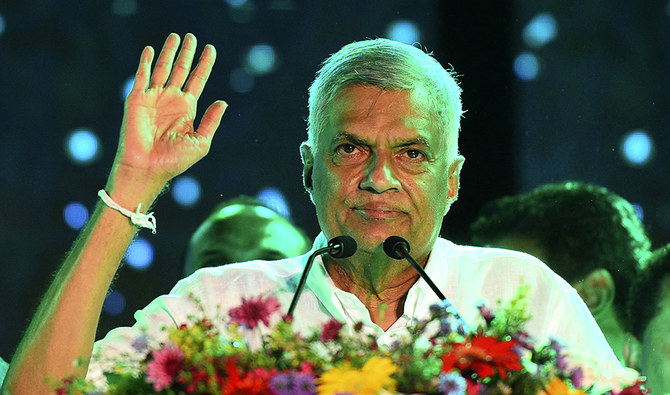

COLOMBO: Sri Lankan Prime Minister Ranil Wickremesinghe has been appointed acting president, it was announced on Wednesday, after his predecessor, Gotabaya Rajapaksa, fled the country just hours before he was due to step down.
The island nation of 22 million people, facing its worst economic meltdown in memory, barely has any US dollars left to buy essential imports. The fuel shortage has upended daily life, the prices of food and medicine have soared, and power cuts have become the norm.
Nationwide protests sparked by the growing discontent reached new heights over the weekend, when thousands of people in Colombo stormed the homes of the president and prime minister to demand their resignation.
Rajapaksa, whom the protesters blame for the crisis, pledged to resign on Wednesday, but that morning, before doing so, flew out of the country to the Maldives.
“President Gotabaya Rajapaksa has appointed Prime Minister Ranil Wickremesinghe as the acting president,” Parliament Speaker Mahinda Yapa Abeywardena told reporters.
He said lawmakers were set to elect a new leader on July 20, after Rajapaksa filed his resignation letter, which was expected to happen by the end of the day.
As protesters continued to gather in the capital demanding that Wickremesinghe also quit — which he vowed to do on Saturday — the prime minister declared a state of emergency in Western Province, where Colombo is located.
The decision followed advice from intelligence services, he said.
“A section of the protesters has decided to invade the prime minister’s office and the air force commander’s house, and the residences of the army commander and the navy commander. We cannot allow this to happen,” Wickremesinghe said.
But the protests continued, despite police using tear gas and water cannons to disperse the crowds gathering outside Wickremesinghe’s office.
Dr. Dayan Jayatilleka, Sri Lanka’s former envoy to the UN in Geneva, said the declaration of a state of emergency could jeopardize the security situation.
“The acting president has conferred powers on the armed forces to act independently to control the protesters, which is very dangerous to the security of the county,” he told Arab News.
“He should not have overreacted in this manner, which is extremely dangerous. These protesters are forceful but they are calm and harmless.”


