

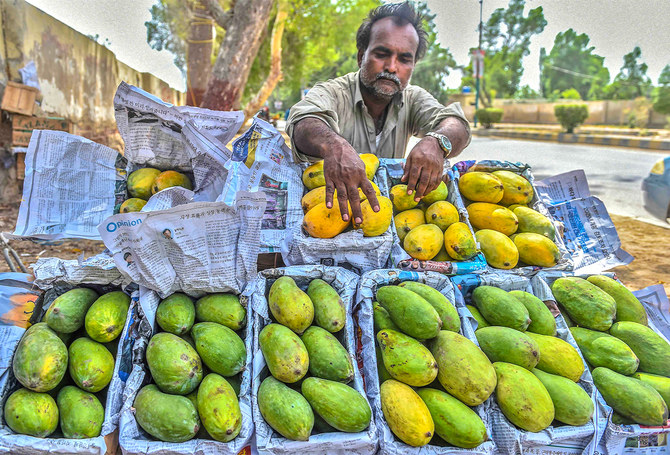
Pakistan’s prized mango harvest hit by water scarcity

In this picture taken on June 15, 2022, a street vendor waits for customers while selling mangos in Mirpur Khas city in Pakistan's southern Sindh province. (AFP)
Short Url
Updated 11 July 2022
Follow

Pakistan’s prized mango harvest hit by water scarcity

  • Farmers say mango production has fallen by up to 40 percent in some areas because of high temperatures, water shortages 
  • Mango season is eagerly anticipated in Pakistan, around two dozen varieties arriving through hot, humid summers

Mirpur Khas, Pakistan: Mango farmers in Pakistan say production of the prized fruit has fallen by up to 40 percent in some areas because of high temperatures and water shortages in a country identified as one of the most vulnerable to climate change.

The arrival of mango season in Pakistan is eagerly anticipated, with around two dozen varieties arriving through the hot, humid summers.

This year, however, temperatures rose sharply in March — months earlier than usual — followed by heatwaves that damaged crops and depleted water levels in canals farmers depend on for irrigation.

“Usually I pick 24 truckloads of mangoes... this year I have only got 12,” said Fazle Elahi, counting the bags lined up by his farm.
“We are doomed.”
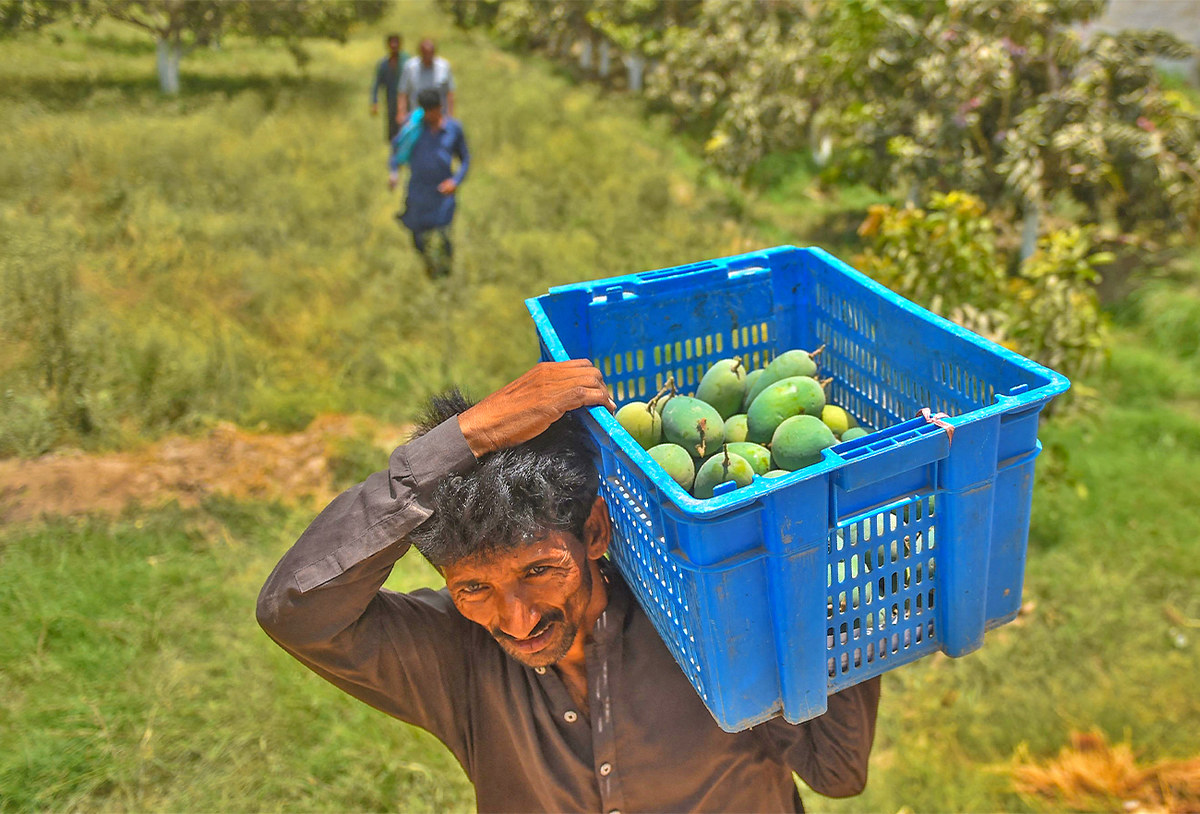


In this picture taken on June 15, 2022, a farm worker carries a basket load of mangoes on his shoulder at a farm outside Mirpur Khas city in Pakistan's southern Sindh province. (AFP)

The country is among the world’s top exporters of mangoes, harvesting nearly two million tons annually across southern parts of Punjab and Sindh.

The total harvest is yet to be measured, but production is already short by at least 20 to 40 percent in most areas, according to Gohram Baloch, a senior official at the Sindh provincial government’s agriculture department.

Umar Bhugio, who owns swaths of orchards outside Mirpur Khas — locally known as the city of mangoes — said his crops received less than half the usual amount of water this year.

“Mango growers confronted two problems this year: one was the early rise in temperatures, and secondly the water shortage,” he said.
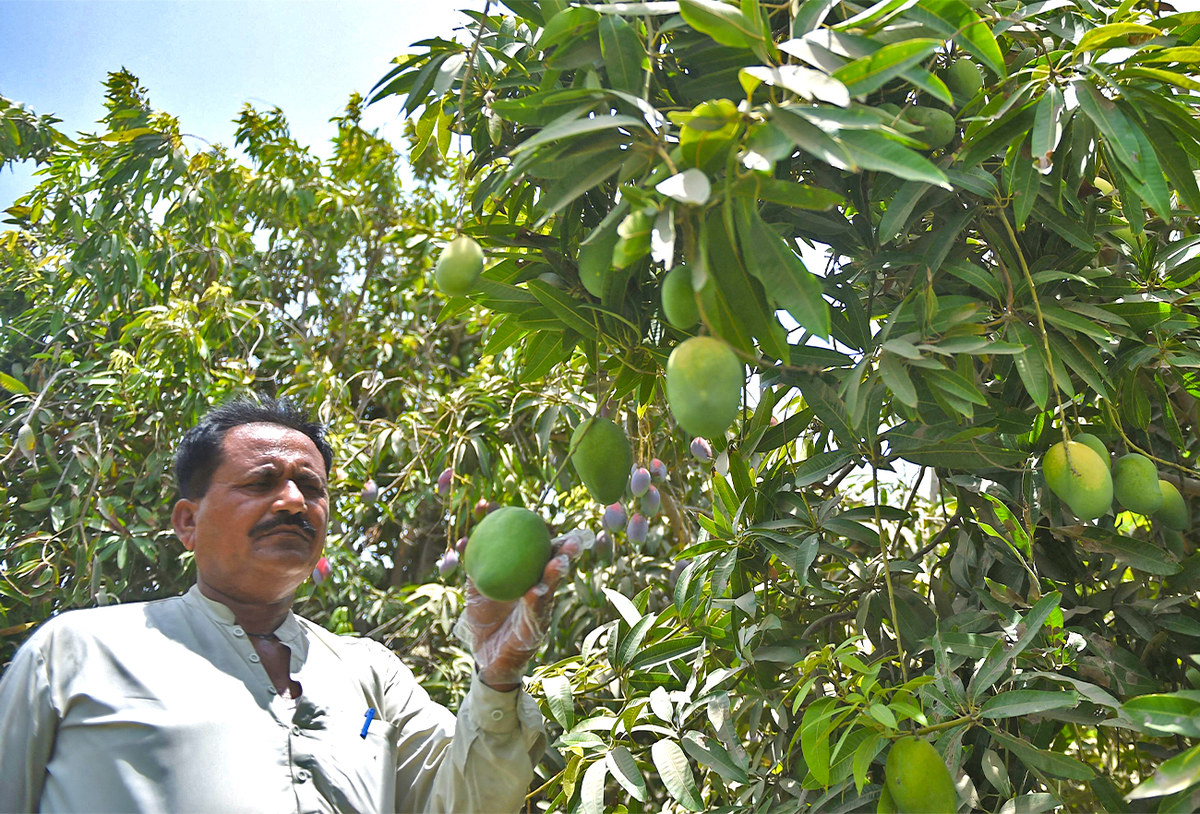


In this picture taken on June 14, 2022, a labourer sews sacks containing mangoes at a fruit market outside Mirpur Khas city in Pakistan's southern Sindh province. (AFP)

Pakistan is one of the most water-stressed countries in the world, a problem made worse by poor infrastructure and mismanagement of resources.

It also ranks as the country eighth most-vulnerable to extreme weather due to climate change, according to the Global Climate Risk Index compiled by environmental NGO Germanwatch.

Floods, droughts and cyclones in recent years have killed and displaced thousands, destroyed livelihoods and damaged infrastructure.

“The early rise of temperatures increased the water intake by crops. It became a contest among different crops for water consumption,” said food security expert Abid Suleri, head of the Sustainable Development Policy Institute (SDPI).

A rise in temperature is generally expected in the mango belt in early May, which helps the fruit ripen before picking starts in June and July.

But the arrival of summer as early as March damaged the mango flowers, a key part of the reproductive cycle.

“The mango should weigh over 750 grams but this year we picked very undersized fruit,” Elahi said.

Known in South Asia as the “king of fruits,” the mango originated in the Indian subcontinent.

The country’s most treasured variety is the golden-yellow Sindhri, known for its rich flavour and juicy pulp.


Government hails joining Gaza peace board as ‘diplomatic success’ amid opposition criticism

Updated 7 sec ago
Follow

Government hails joining Gaza peace board as ‘diplomatic success’ amid opposition criticism

  • Ahsan Iqbal says Pakistan took the decision after consulting other Muslim nations
  • Opposition objects to joining Trump-chaired forum without parliamentary consensus

ISLAMABAD: Pakistan on Friday described its decision to join a newly formed international body aimed at supporting peace efforts in Gaza as a “diplomatic success,” dismissing opposition criticism that the move was taken without parliamentary consensus.

The Gaza Board of Peace brings together participating states and international stakeholders seeking to support dialogue, stability and peace-related initiatives linked to the conflict in the Palestinian enclave.

Prime Minister Shehbaz Sharif signed the forum’s charter a day earlier on the sidelines of the World Economic Forum’s annual meeting in Davos.

Opposition lawmakers objected to the decision in parliament, saying the government joined the initiative without taking them into confidence or disclosing its terms.

“If Pakistan had not gone to the Board of Peace today, these honorable members would have been making the same forceful speeches that Pakistan has been isolated, that no one is engaging with Pakistan and asking why Pakistan was not included in such a major peace initiative,” Federal Minister for Planning Ahsan Iqbal said in a parliamentary address.

“If Pakistan has been given center stage today, enabling us to contribute to peace in Palestine and Gaza alongside our brotherly Islamic countries, then this is a major diplomatic success for Pakistan, one that we should welcome rather than standing aside,” he added.

Iqbal said Islamabad had taken the decision after consulting other Muslim nations and described the forum as part of an international initiative aimed at ending bloodshed in Gaza.

He added that the initiative had been welcomed by Palestinians, even as Pakistan’s decision to pursue it with other nations faced criticism at home.

Representatives of 19 countries signed the charter on Thursday alongside US President Donald Trump, who addressed the gathering but offered few details about the body’s mandate, how it would operate or how it might pursue conflict resolution efforts.

Pakistan and seven other Muslim countries said in a joint statement on Wednesday that they had accepted Trump’s invitation to join the board, expressing hope that it could contribute to a permanent ceasefire in Gaza.

Chaired by Trump, the board is expected to include US Secretary of State Marco Rubio, Trump’s special envoy Steve Witkoff, former British prime minister Tony Blair and Trump’s son-in-law Jared Kushner.

Israel announced on Wednesday that Prime Minister Benjamin Netanyahu would also be a member of the board.