In Pakistan's Sindh, a breeder raises goats known for 'pink' skin — and high prices

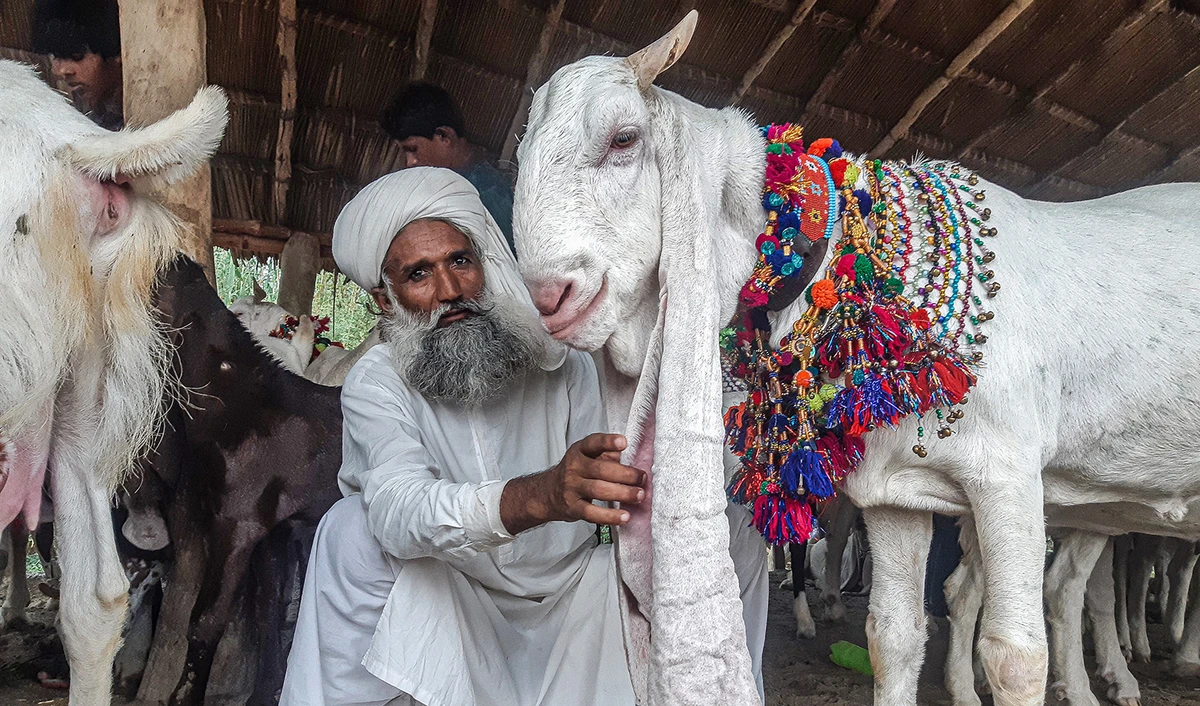
Breeder Mangal Khan Bugti with Malka, a female goat, in the Perumal area of Sanghar district, Pakistan, on July 07, 2022. (AN photo)
Short Url
Updated 13 July 2022
Follow

In Pakistan's Sindh, a breeder raises goats known for 'pink' skin — and high prices

  • Gulabi is a breed indigenous to Pakistan's southern Sindh province
  • Recognized for their beauty, the goats can cost even $12,000

SANGHAR, SINDH: Mangal Khan Bugti, a goat breeder from southern Pakistan, has had a special hobby since 2006: raising a popular goat breed known for its pure white hair, soft pink skin, and high price.
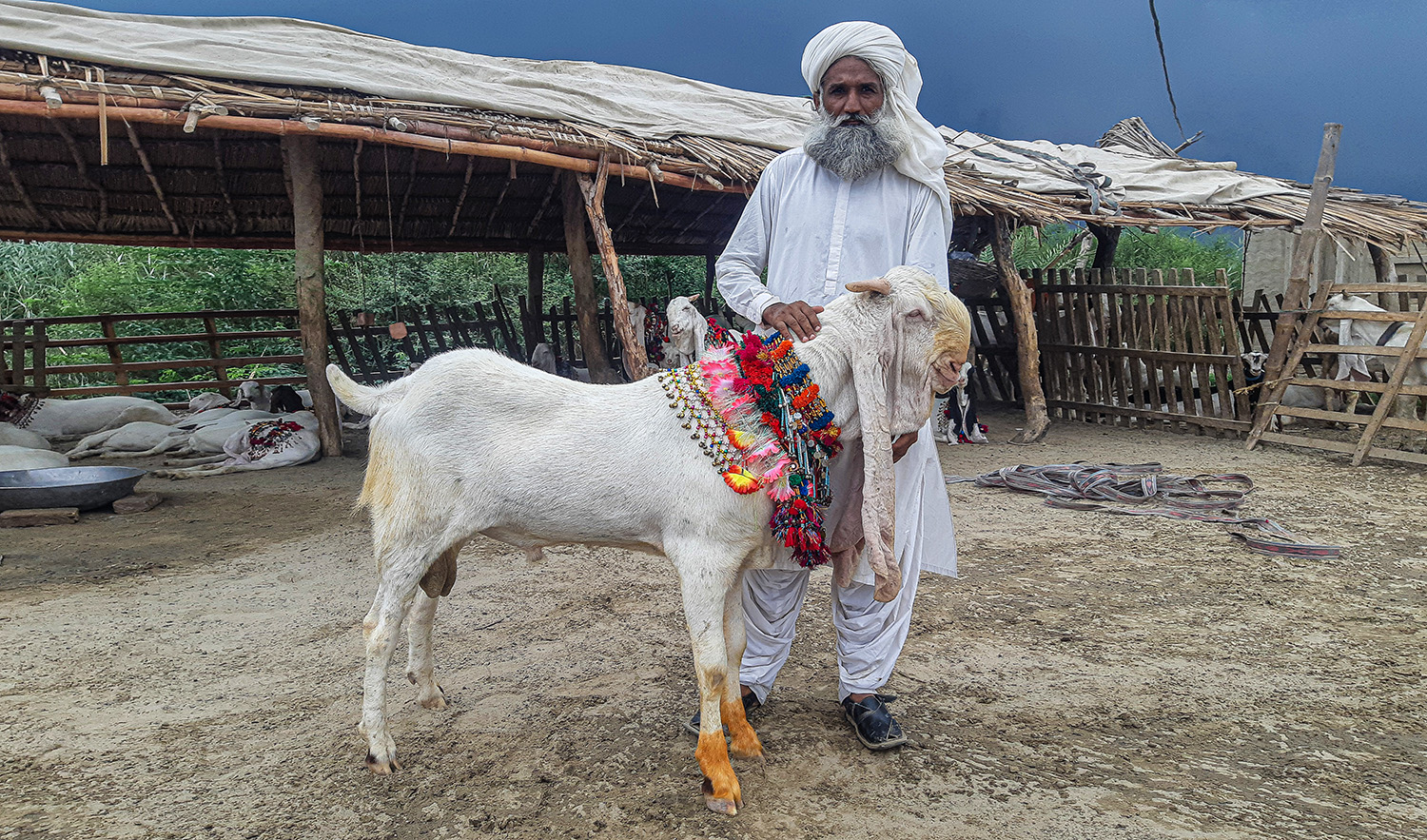


Breeder Mangal Khan Bugti with “Prince,” a male Gulabi breed goat, at his farm in the Perumal area of Sanghar district, Pakistan, on July 07, 2022.  (AN photo)

Gulabi, which means pink in Urdu, is a popular goat breed found in Pakistan's Sindh province. The goats have distinctive long ears and neck, a large body, and give off a pale pink sheen. Other features of the breed include a dewlap, or flap of skin that hangs beneath the lower jaw or neck, a parrot-like nose, and ears that can be as long as 28 inches.

“Twenty-two years ago, I started this hobby of keeping Gulabi breed. Today, by the grace of Allah, the Gulabi breed which I have is nowhere in Pakistan and even in the world,” Bugti, widely respected nationwide as a Gulabi breeder, told Arab News.
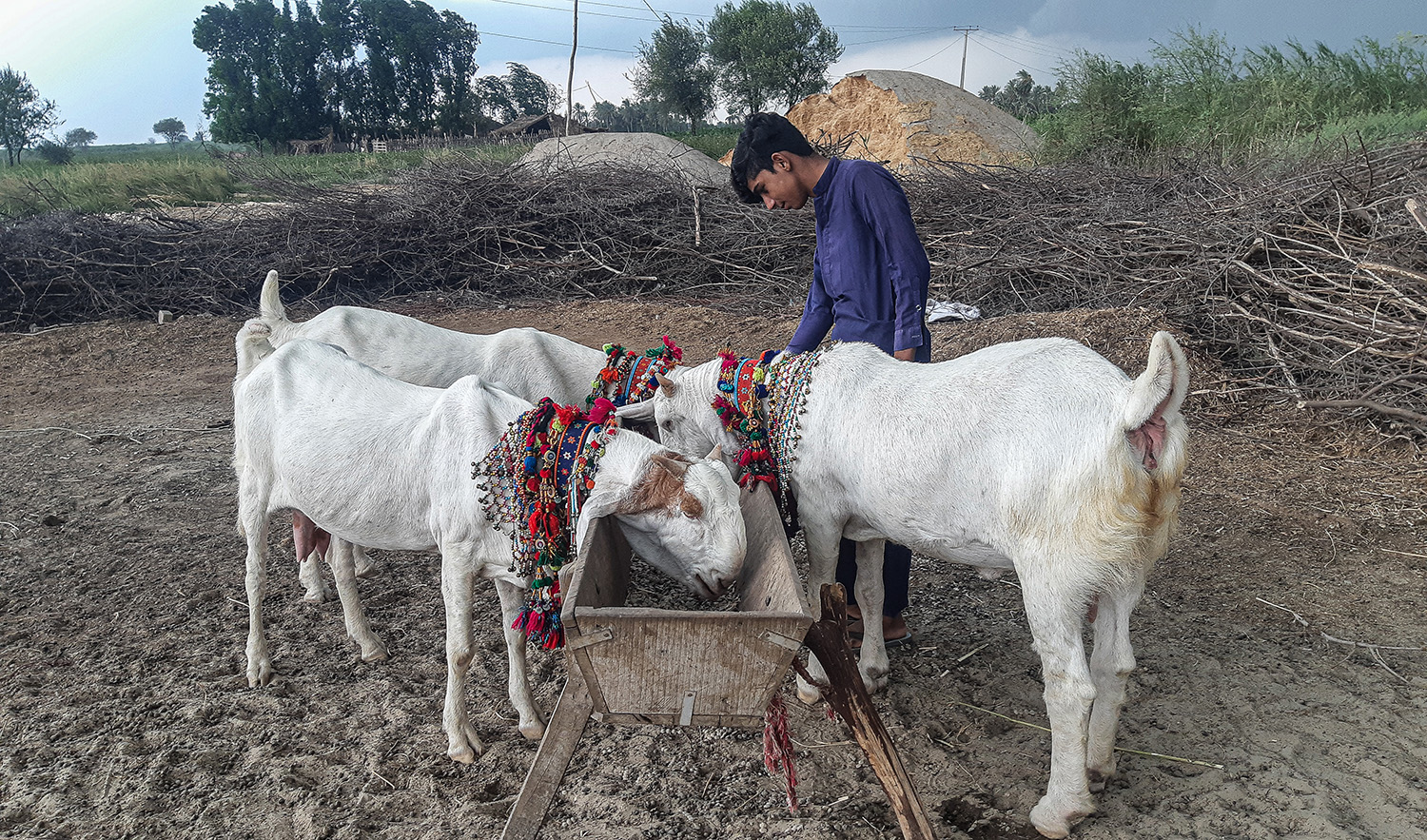


A boy feeds Gulabi breed goats at the farm of Mangal Khan Bugti in Sanghar district, Pakistan, on July 07, 2022. (AN photo)

The goats are not sold as sacrificial animals on Eid Al-Adha, he said, but rather are nourished for their beauty and considered a sign of wealth and status.

“I have purchased one goat breed for Rs2.5 million rupees ($12,000)," the breeder, who hails from Sanghar district, said. "One female goat which I have right now is three and half million rupees ... These animals are for hobby and only the rich can afford this hobby.”

At present, Bugti has 45 Gulabi goats which he said he raises “like my own kids.”

“I feed him with wheat, Acacia nilotica tree seeds, and small children are fed with mother’s milk,” said the breeder, who has given each goat a unique name: Lovely, Prince, Guddi (Doll), Dil Lagi (Beloved), Chambeli (Jasmine), Malka (Queen), Mastani (Intoxicated), Khushboo (Fragrance).
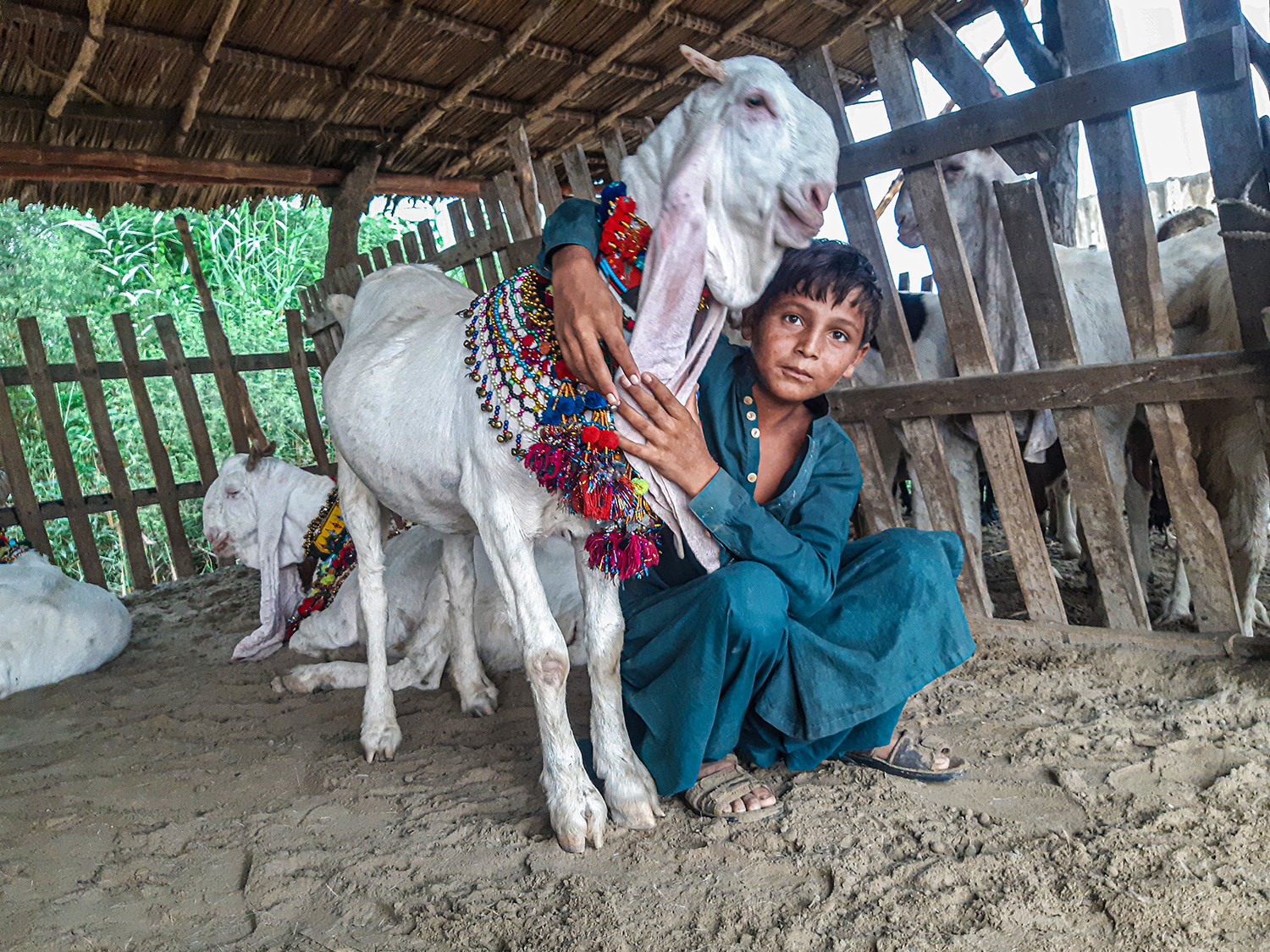


A boy with a Gulabi breed goat at the farm of Mangal Khan Bugti in Sanghar district, Pakistan, on July 07, 2022. (AN photo)

The goats have been named according to their personality, he said, smiling: "For instance Lovely is really lovely.”

Bugti puts so much effort into fostering his goals because their price depends on their beauty.

“I have one female Gulabi goat at my farm which I purchased three years ago for two and half million rupees. One of my goats, which died recently, its price offer was five million but I didn’t sell because of my passion.”
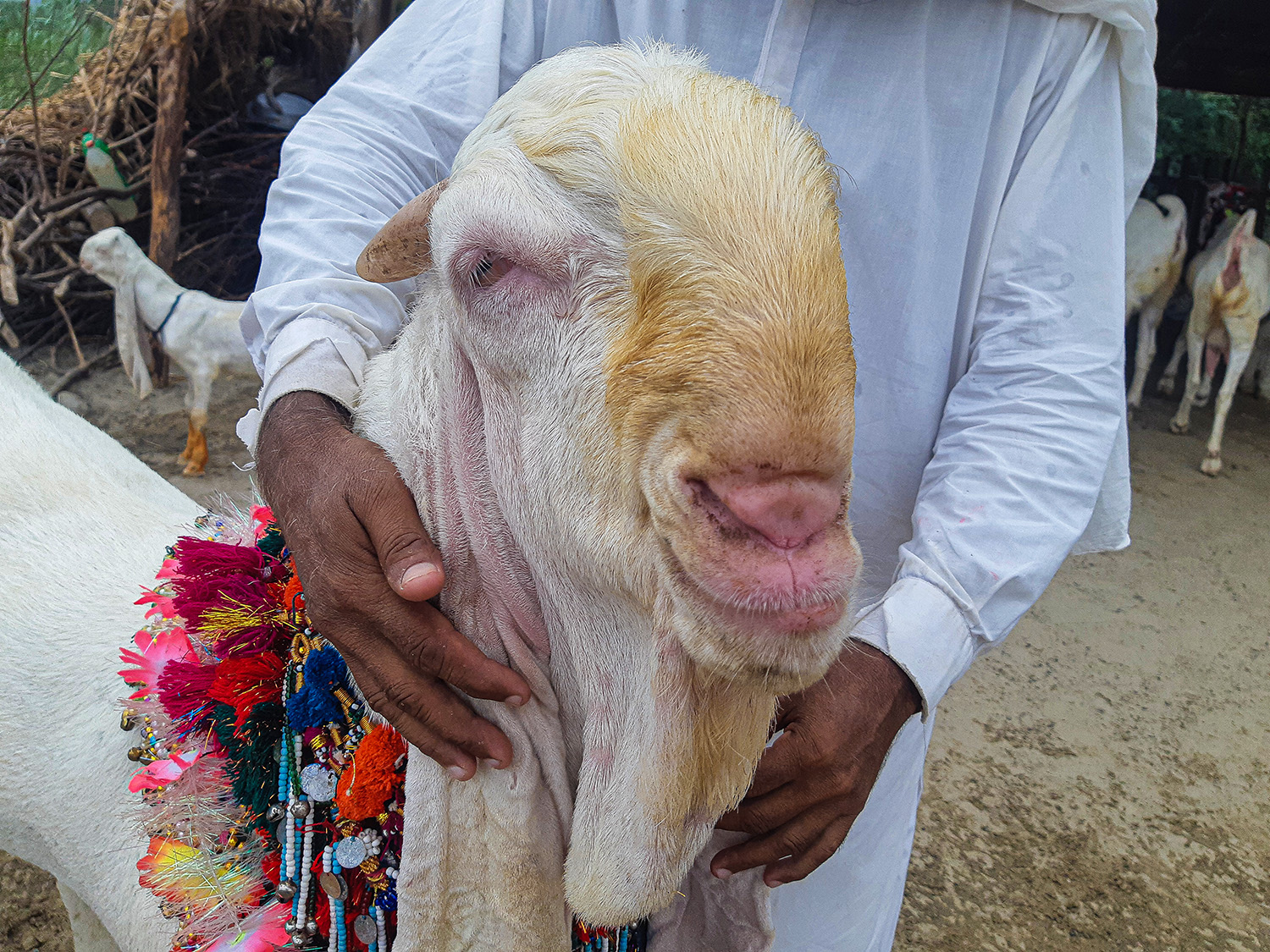


Breeder Mangal Khan Bugti with “Prince,” a male Gulabi breed goat, at his farm in the Perumal area of Sanghar district, Pakistan, on July 07, 2022.  (AN photo)

Bugti said he would not sell Prince, “even if someone offers me 5 million rupees.”

“I purchased him for Rs500,000 when he was a baby,” he said.

“I sell only those goats which have less beautiful characteristics or have flaws. Two years ago, one party came from Saudi Arabia, they offered me Rs25 million for 16 goats, out of which fifteen were female and one male. However, I didn’t sell them.”

“Many breeders from abroad contact me regularly and inquire about my breed ... People from Saudi Arabia, Dubai, Qatar and Iran also contact me. For this breed, the world knows me.”
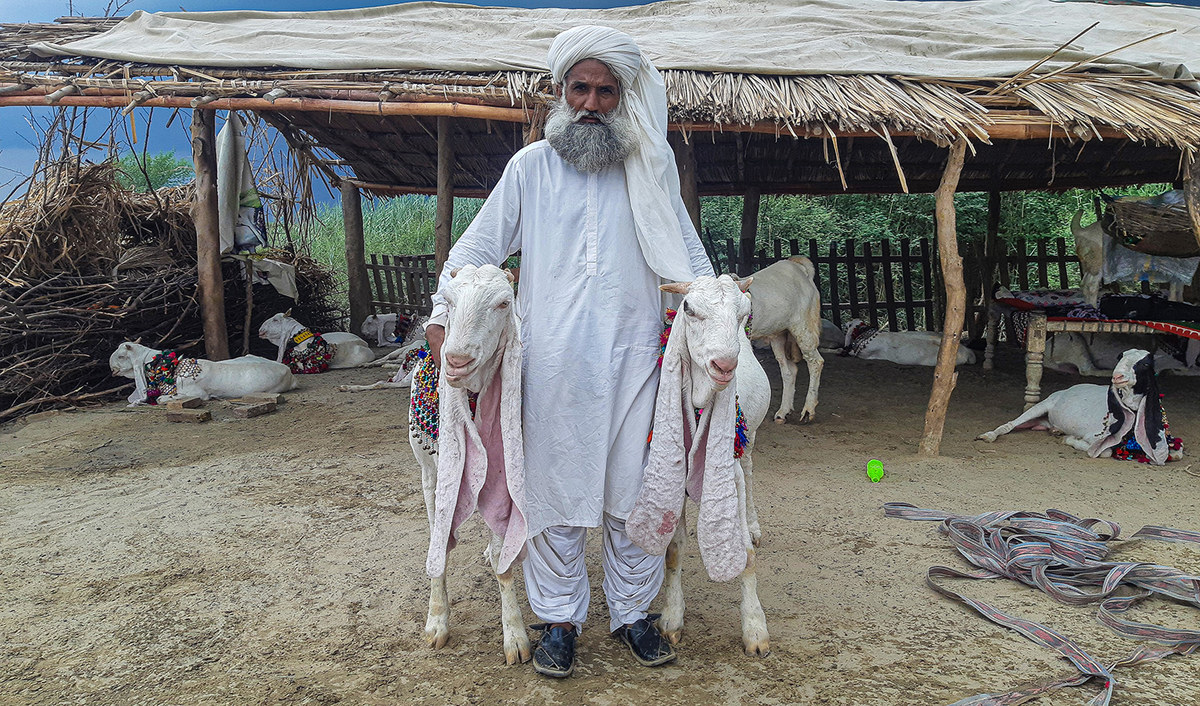


Breeder Mangal Khan Bugti with Guddi, on his right, and Malka on the left, both female goats, at his farm in the Perumal area of Sanghar district, Pakistan, on July 07, 2022. (AN photo)

Dr. Muhammad Mubarak Jatoi, a director of livestock research in Sindh, said Gulabi was a breed indigenous to Sindh and needed to be developed further.

“In the past people were not aware of this breed. Then at the Livestock Department’s Expo 2021 held in Hyderabad, Gulabi was exhibited as a local breed, and it created awareness,” he said.

“The Sindh government is also currently working to expand this breed through artificial insemination at Rohri. Since in the future people would be dependent on livestock farming, therefore it is the need of the hour that we should promote it.”

Mazhar Akbar Dars, another goat breeder from Umerkot in Sindh, said that though the Gulabi breed was known for its beauty, he did not believe the high prices were justified.

“There are rich people who keep different expansive breeds for their love,” he told Arab News.

"However, there is a logical question: what makes them so special and takes their price sky high as compared to other breeds? Perhaps no one has the perfect answer.”
IMF warns against policy slippage amid weak recovery as it clears $1.2 billion for Pakistan

Updated 11 December 2025
Follow

IMF warns against policy slippage amid weak recovery as it clears $1.2 billion for Pakistan

  • Pakistan rebuilt reserves, cut its deficit and slowed inflation sharply over the past one year
  • Fund says climate shocks, energy debt, stalled reforms threaten stability despite recent gains

ISLAMABAD: Pakistan’s economic recovery remains fragile despite a year of painful stabilization measures that helped pull the country back from the brink of default, the International Monetary Fund (IMF) warned on Thursday, after it approved a fresh $1.2 billion disbursement under its ongoing loan program.

The approval covers the second review of Pakistan’s Extended Fund Facility (EFF) and the first review of its climate-focused Resilience and Sustainability Facility (RSF), bringing total disbursements since last year to about $3.3 billion.

Pakistan entered the IMF program in September 2024 after years of weak revenues, soaring fiscal deficits, import controls, currency depletion and repeated climate shocks left the economy close to external default. A smaller stopgap arrangement earlier that year helped avert immediate default, but the current 37-month program was designed to restore macroeconomic stability through strict monetary tightening, currency adjustments, subsidy rationalization and aggressive revenue measures.

The IMF’s new review shows that Pakistan has delivered significant gains since then. Growth recovered to 3 percent last year after shrinking the year before. Inflation fell from over 23 percent to low single digits before rising again after this year’s floods. The current account posted its first surplus in 14 years, helped by stronger remittances and a sharp reduction in imports. And the government delivered a primary budget surplus of 1.3 percent of GDP, a key program requirement. Foreign exchange reserves, which had dropped dangerously low in 2023, rose from US$9.4 billion to US$14.5 billion by June.

“Pakistan’s reform implementation under the EFF arrangement has helped preserve macroeconomic stability in the face of several recent shocks,” IMF Deputy Managing Director Nigel Clarke said in a statement after the Board meeting.

But he warned that Islamabad must “maintain prudent policies” and accelerate reforms needed for private-sector-led and sustainable growth.

The Fund noted that the 2025 monsoon floods, affecting nearly seven million people, damaging housing, livestock and key crops, and displacing more than four million, have set back the recovery. The IMF now expects GDP growth in FY26 to be slightly lower and forecasts inflation to rise to 8–10 percent in the coming months as food prices adjust.

The review warns Pakistan against relaxing monetary or fiscal discipline prematurely. It urges the State Bank to keep policy “appropriately tight,” allow exchange-rate flexibility and improve communication. Islamabad must also continue raising revenues, broadening the tax base and protecting social spending, the Fund said.

Despite the progress, Pakistan’s structural weaknesses remain severe.

Power-sector circular debt stands at about $5.7 billion, and gas-sector arrears have climbed to $11.3 billion despite tariff adjustments. Reform of state-owned enterprises has slowed, including delays in privatizing loss-making electricity distributors and Pakistan International Airlines. Key governance and anti-corruption reforms have also been pushed back.

The IMF welcomed Pakistan’s expansion of its flagship Benazir Income Support Program, which raises cash transfers for low-income families and expands coverage, saying social protection is essential as climate shocks intensify. But it warned that high public debt, about 72 percent of GDP, thin external buffers and climate exposure leave the country vulnerable if reform momentum weakens.

The Fund said Pakistan’s challenge now is to convert short-term stabilization into sustained recovery after years of economic volatility, with its ability to maintain discipline, rather than the size of external financing alone, determining the durability of its gains.