

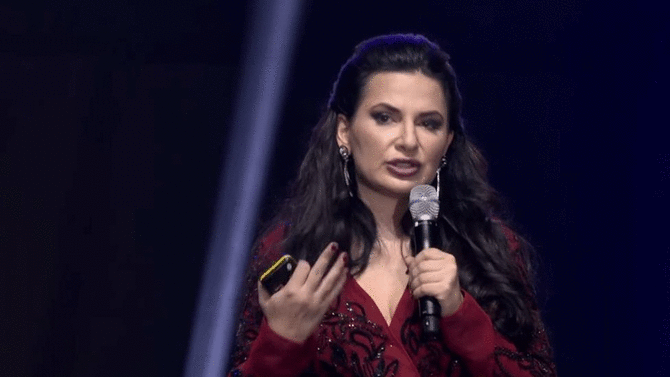

RIYADH: She is wanted in connection with an alleged $4 billion fraud case, and now, the self-proclaimed ‘Cryptoqueen’ Ruja Ignatova, has found herself on the Federal Bureau of Investigation’s top ten most wanted fugitives list.
The US law-enforcement body is even offering a $100,000 reward for information leading to her arrest, prompting internet detectives — dubbed ‘netizens’ — to search for clues for her whereabouts.
Who is Ruja Ignatova?
The Bulgarian-born Ignatova founded cryptocurrency OneCoin in 2014. Within two years, it had over 3 million members worldwide.
According to investigators, Ignatova’s Bulgarian-based project had no blockchain securing transactions and coins were minted out of thin air, unlike popular cryptocurrencies like Bitcoin which are secured by a global network of miners who maintain a public ledger, also known as the blockchain.
The FBI states that Ignatova allegedly made false statements and representations to individuals in order to solicit investments in OneCoin, which finally resulted in a $4 billion fraud case.
“She allegedly instructed victims to transmit investment funds to OneCoin accounts in order to purchase OneCoin packages, causing victims to send wire transfers representing these investments. Throughout the scheme, OneCoin is believed to have defrauded victims out of more than $4 billion,” according to the FBI’s website.
Where is Ignatova?
Amid these allegations, Ignatova was charged in the US District Court, Southern District of New York and a federal warrant was issued for her arrest on October 12, 2017.
Later, in February 2018, a superseding indictment was issued, and it charged Ignatova with one count each of conspiracy to commit wire fraud, money laundering, and securities fraud.
According to the FBI, Ignatova may have traveled from Sofia in Bulgaria to the Greek capital of Athens. Since then, she has absconded, and the FBI suspects that Ignatova might have traveled on a German passport to Bulgaria, Germany, Russia, Greece and/or Eastern Europe.
The FBI requested people inform her whereabouts to the bureau at tips.fbi.gov.


