



BANGKOK: Sri Lanka is desperate for help with weathering its worst crisis in recent memory. Its schools are closed for lack of fuel to get kids and teachers to classrooms. Its effort to arrange a bailout from the International Monetary Fund has been hindered by the severity of its financial crisis, its prime minister says.
But it’s not the only economy that’s in serious trouble as prices of food, fuel and other staples have soared with the war in Ukraine. Alarm bells are ringing for many economies around the world, from Laos and Pakistan to Venezuela and Guinea.
Some 1.6 billion people in 94 countries face at least one dimension of the crisis in food, energy and financial systems, and about 1.2 billion of them live in “perfect-storm” countries, severely vulnerable to a cost-of-living crisis plus other longer-term strains, according to a report last month by the Global Crisis Response Group of the United Nations Secretary-General.
The exact causes for their woes vary, but all share rising risks from surging costs for food and fuel, driven higher by Russia’s war on Ukraine, which hit just as disruptions to tourism and other business activity from the coronavirus pandemic were fading. As a result, the World Bank estimates that per capita incomes in developing economies will be 5 percent below pre-pandemic levels this year.
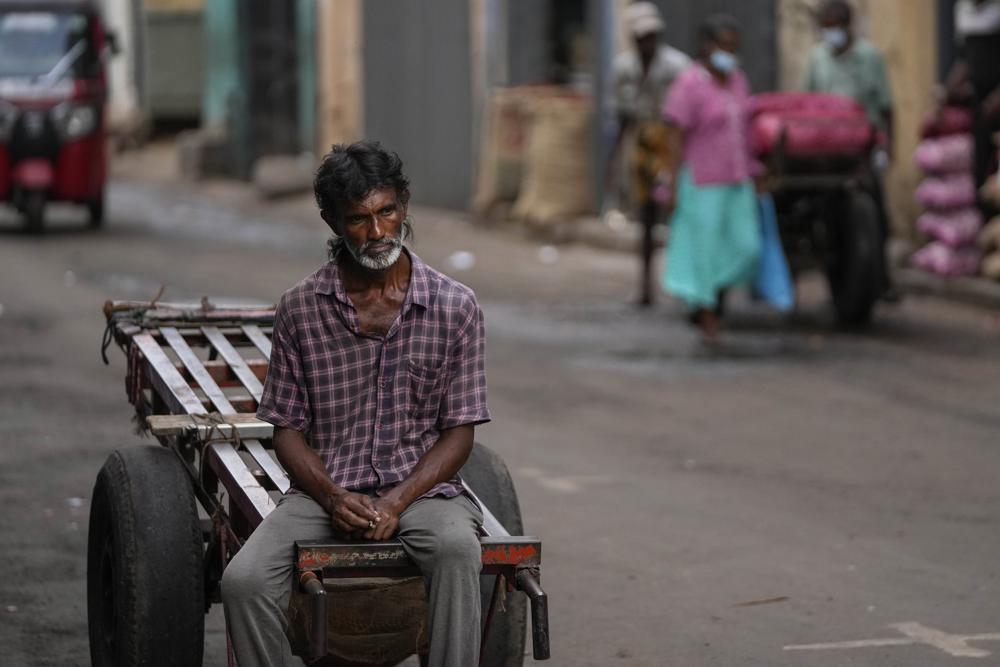
A daily wage laborer waits for work at a wholesale market in Colombo, Sri Lanka, Sunday, June 26, 2022. (AP)
The economic strains are fueling protests in many countries, as meanwhile, short-term, higher interest borrowing to help finance pandemic relief packages has heaped more debt on countries already struggling to meet repayment obligations. More than half of the world’s poorest countries are in debt distress or at high risk of it, according to the UN.
Some of the worst crises are in countries already devastated by corruption, civil war, coups or other calamities. They muddle along, but with an undue burden of suffering.
Here’s a look at a few of the economies that are in dire straits or at greatest risk.
PAKISTAN
Like Sri Lanka, Pakistan has been in urgent talks with the IMF, hoping to revive a $6 billion bailout package that was put on hold after Prime Minister Imran Khan’s government was ousted in April. Soaring crude oil prices pushed up fuel prices which in turn raised other costs, pushing inflation to over 21 percent. A government minister’s appeal to cut back on tea drinking to reduce the $600 million bill for imported tea angered many Pakistanis. Pakistan’s currency, the rupee, has fallen about 30 percent against the US dollar in the past year. To gain the IMF’s support, Prime Minister Shahbaz Sharif has raised fuel prices, abolished fuel subsidies and imposed a new, 10 percent “super tax” on major industries to help repair the country’s tattered finances. As of late March, Pakistan’s foreign exchange reserves had fallen to $13.5 billion, equivalent to just two months of imports. “Macroeconomic risks are strongly tilted to the downside,” the World Bank warned in its latest assessment.
AFGHANISTAN
Afghanistan has been reeling from a dire economic crisis since the Taliban took control as the US and its NATO allies withdrew their forces last year. Foreign aid — long a mainstay — stopped practically overnight and governments piled on sanctions, halted bank transfers and paralyzed trade, refusing to recognize the Taliban government. The Biden administration froze $7 billion in Afghanistan’s foreign currency reserves held in the United States. About half the country’s 39 million people face life-threatening levels of food insecurity and most civil servants, including doctors, nurses and teachers, have been unpaid for months. A recent earthquake killed more than 1,000 people, adding to those miseries.
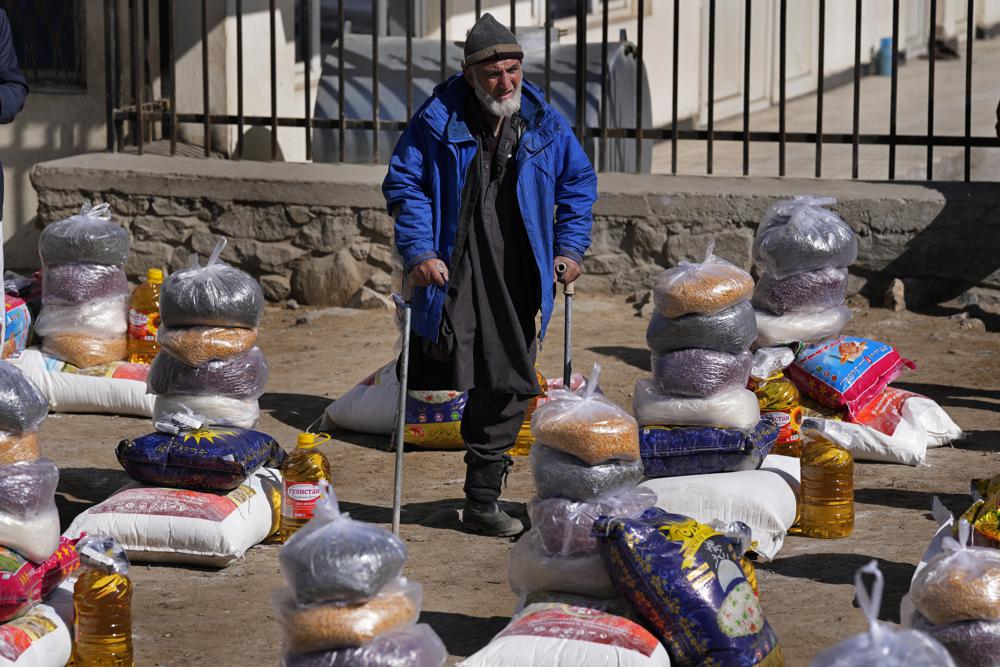
A man stands among piles of humanitarian food supplies in Kabul, Afghanistan, Wednesday, Feb. 16, 2022. (AP/FILE)
ARGENTINA
About four of every 10 Argentines are poor and its central bank is running perilously low on foreign reserves as its currency weakens. Inflation is forecast to exceed 70 percent this year. Millions of Argentines survive largely thanks to soup kitchens and state welfare programs, many of which are funneled through politically powerful social movements linked to the ruling party. A recent deal with the IMF to restructure $44 billion in debt faces questions over concessions that critics say will hinder a recovery.
EGYPT
Egypt’s inflation rate surged to almost 15 percent in April, causing privation especially for the nearly one-third of its 103 million people living in poverty. They were already suffering from an ambitious reform program that includes painful austerity measures like floating the national currency and slashing subsidies for fuel, water and electricity. The central bank raised interest rates to curb inflation and devalued the currency, adding to difficulties in repaying Egypt’s sizable foreign debt. Egypt’s net foreign reserves have fallen. Its neighbors Saudi Arabia, Qatar and the United Arab Emirates have pledged $22 billion in deposits and direct investments as assistance.
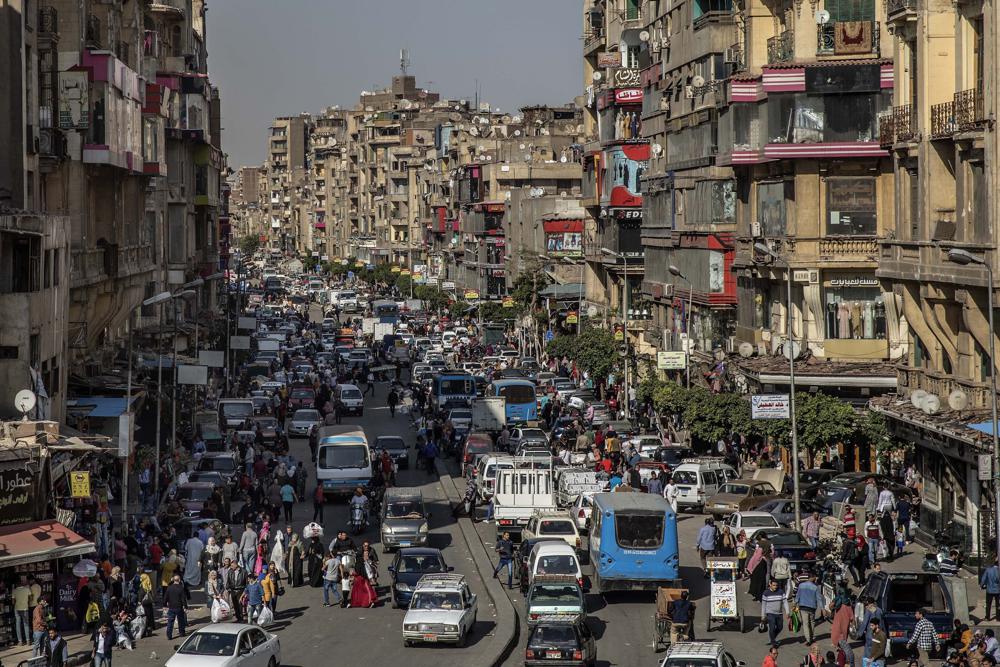
People crowd a msjor street in Cairo, Egypt, April 14, 2020. (AP/FILE)
LAOS
Tiny, landlocked Laos was one of the fastest growing economies until the pandemic hit. Its debt levels have surged and like Sri Lanka, it is in talks with creditors on how to repay billions of dollars worth of loans. That’s an urgent issue given the country’s weak government finances. Its foreign reserves are equal to less than two months of imports, the World Bank says. A 30 percent depreciation in the Lao currency, the kip, has worsened those woes. Rising prices and job losses due to the pandemic threaten to worsen poverty.
LEBANON
Lebanon shares with Sri Lanka a toxic combination of currency collapse, shortages, punishing levels of inflation and growing hunger, snaking queues for gas and a decimated middle class. It, too, endured a long civil war, its recovery hampered by government dysfunction and terror attacks.
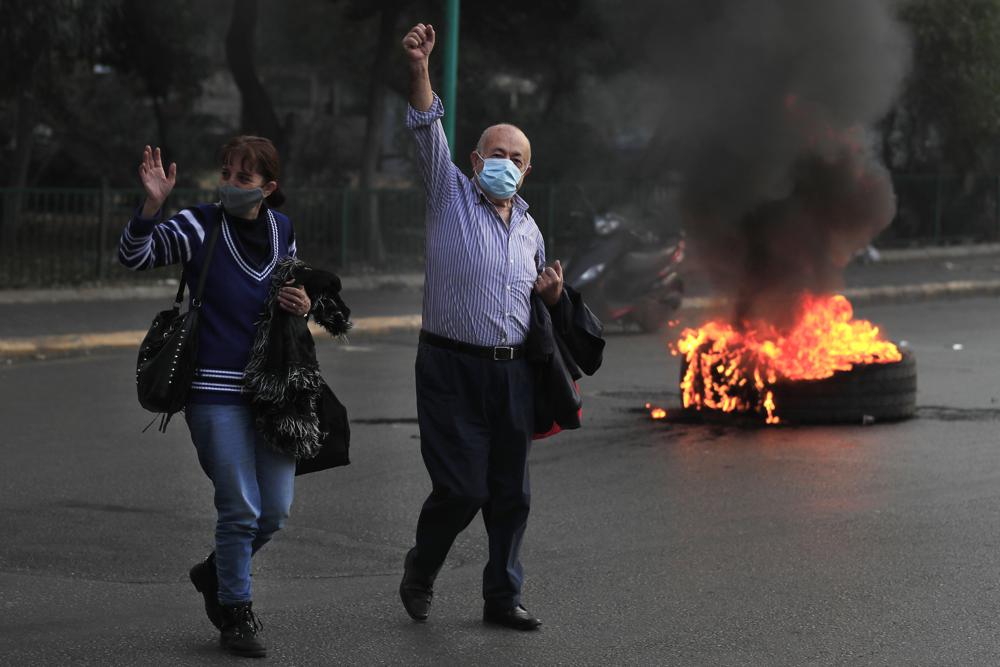
Residents raise their hands as they cross a street during a protest against rising prices of consumer goods and the crash of local currency in Beirut, Lebanon, Monday, Nov. 29, 2021. (AP/FILE)
Proposed taxes in late 2019 ignited longstanding anger against the ruling class and months of protests. The currency began to sink and Lebanon defaulted on paying back worth about $90 billion at the time, or 170 percent of GDP — one of the highest in the world. In June 2021, with the currency having lost nearly 90 percent of its value, the World Bank said the crisis ranked as one of the worst the world has seen in more than 150 years.
MYANMAR
The pandemic and political instability have buffeted Myanmar’s economy, especially after the army seized power in February 2021 from the elected government of Aung San Suu Kyi. That brought Western sanctions targeting commercial holdings controlled by the army, which dominate the economy. The economy contracted by 18 percent last year and is forecast to barely grow in 2022. More than 700,000 people have fled or been forced from their homes by armed conflicts and political violence. The situation is so uncertain, a recent global economic update from the World Bank excluded forecasts for Myanmar for 2022-2024.
TURKEY
Worsening government finances and a growing trade and capital account deficit have compounded Turkey’s troubles with high and rising debt, inflation — at over 60 percent — and high unemployment. The Central Bank resorted to using foreign reserves to fend off a currency crisis, after the beleaguered lira fell to all-time lows against the US dollar euro in late 2021. Tax cuts and fuel subsidies to cushion the blow from inflation have weakened government finances. Families are struggling to buy food and other goods, while Turkey’s foreign debt is about 54 percent of its GDP, an unsustainable level given the high level of government debt.
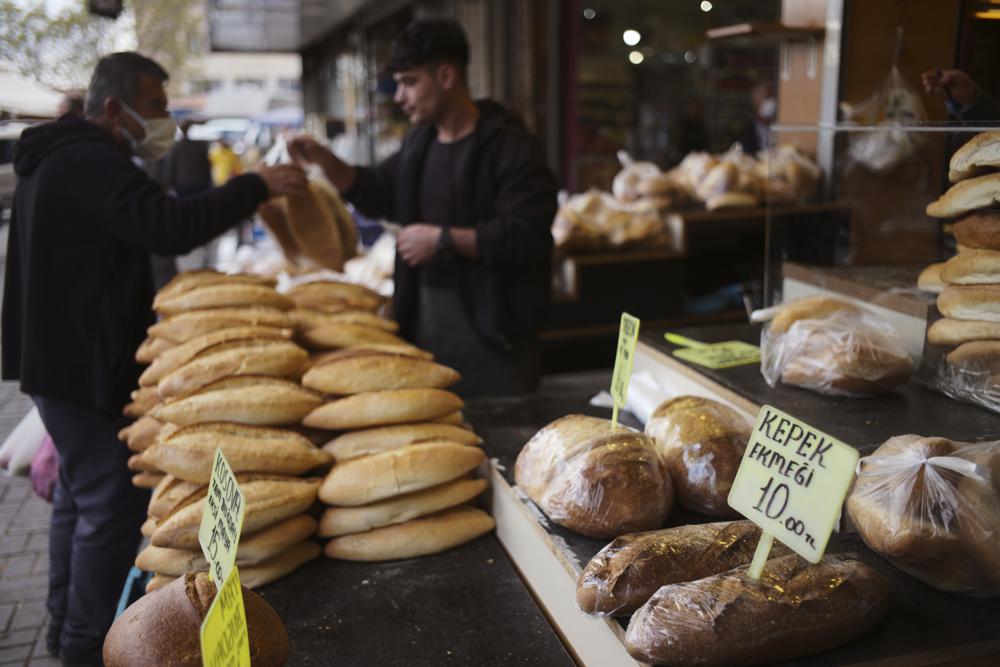
A man buys bread in Ulus district of the capital Ankara, Turkey, Thursday, May 5, 2022. (AP/FILE)
ZIMBABWE
Inflation in Zimbabwe has surged to more than 130 percent, raising fears the country could return to the hyperinflation of 2008 that reached 500 billion percent and heaping problems on its already fragile economy. Zimbabwe struggles to generate an adequate inflow of greenbacks needed for its largely dollarized local economy, which has been battered by years of de-industrialization, corruption, low investment, low exports and high debt. Inflation has left Zimbabweans distrustful of the currency, adding to demand for US dollars. And many skip meals as they struggle to make ends meet.


