

Dubai mango festival gives international spotlight to Pakistan’s king of fruits

Foreign guests taste Pakistani mango delicacies during Pakistan Mango Festival 2022 in Dubai, UAE, on July 1, 2022. (Photo courtesy: Pakistan Association Dubai)
Short Url
Updated 05 July 2022
Follow

Dubai mango festival gives international spotlight to Pakistan’s king of fruits

  • Pakistan Mango Festival 2022 was opened on by UAE minister of tolerance
  • South Asia has for centuries used the sweet fruit as a way to smoothen political relations

DUBAI: Pakistani mangoes drew international attention in Dubai over the weekend, during a festival organized to celebrate the South Asian king of fruits and boost the country’s exports and diplomacy.

Pakistan is the world’s fifth-largest producer of mangos after India, China, Thailand and Indonesia, with annual harvests of around 1.8 million tons. While most of the produce is consumed locally, it is also one of the top exporters of the yellow succulent fruit, especially to the Middle East, UK, US and some EU countries.
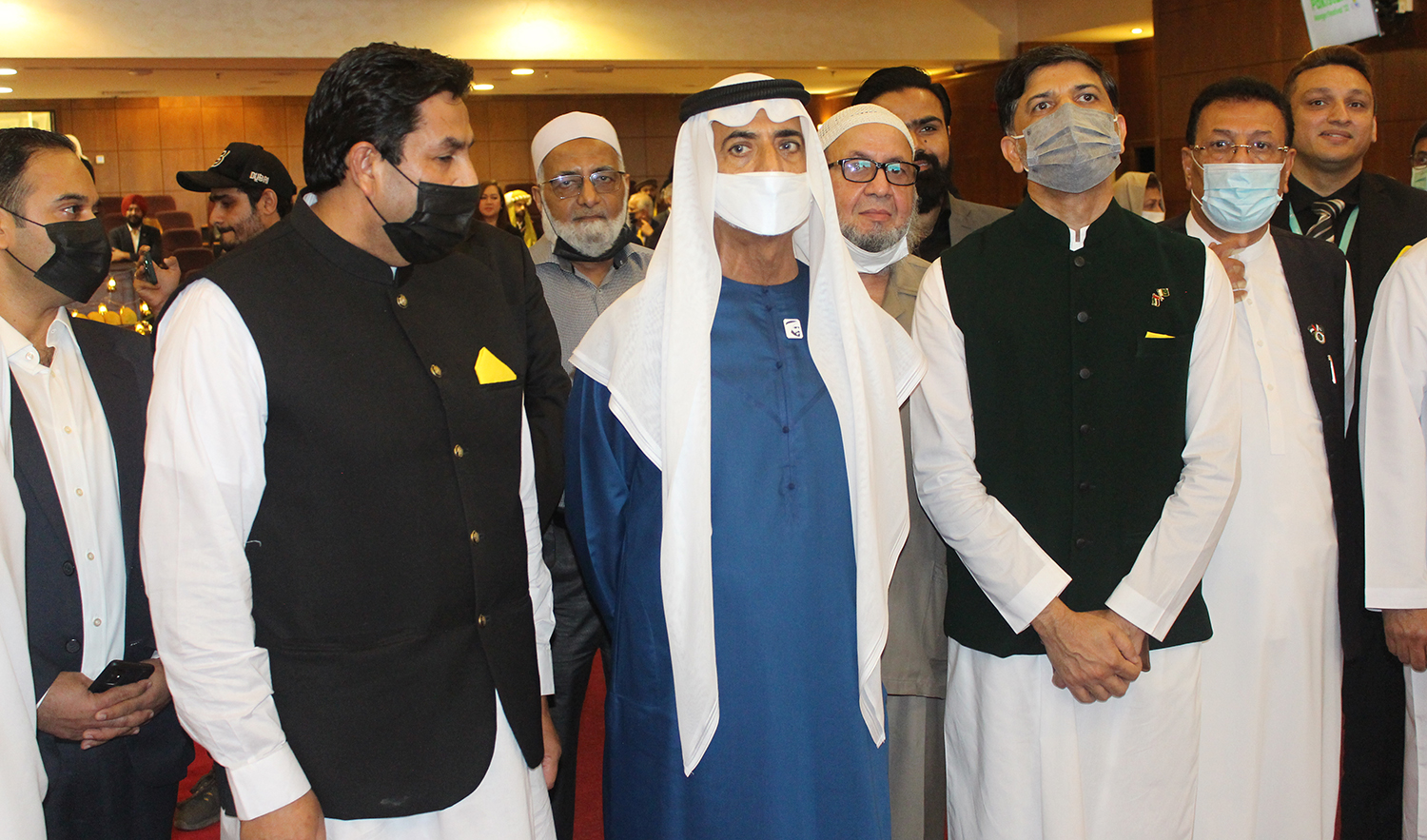


UAE Minister of Tolerance Sheikh Nahyan bin Mubarak Al-Nahyan opens Pakistan Mango Festival 2022 in Dubai on July 1, 2022. (AN Photo) 

The two-day Pakistan Mango Festival 2022, organized by the Pakistan Association Dubai, was opened on Friday by UAE Minister of Tolerance Sheikh Nahyan bin Mubarak Al-Nahyan, with guests including diplomats and business players not only from the Gulf state, but also the US, UK, Philippines, South Korea, Lithuania, Ghana, Egypt, and more.  
 
“The idea of this festival was to re-introduce some of the varieties that are not there or are not being introduced the way they should be,” Pakistan’s Consul General to the UAE, Hassan Afzaal Khan, told Arab News.  

He said 15 varieties of Pakistani mangoes, including Chaunsa, Langra, Sindhri, Anwar Ratool, Dusehri, Saroli, Almas, Fajri were up for degustation during the festival.  

“Only 150,000 ton of mangos are exported, so we still have a huge space, and we are able to package them and introduce them to the market in such ways. I am confident that we can claim a big market share,” Khan said.


Different varieties of Pakistani mangoes are presented to guests at Pakistan Mango Festival 2022 in Dubai, UAE, on July 1, 2022. (AN Photo)

Another purpose of the festival was diplomacy as South Asia has for centuries used the sweet fruit as a way to smoothen political relations. The fruits are often used as a gesture of friendship and goodwill and presented as gifts by national or political leaders.

“Pakistan has always used mangoes for diplomacy,” Dr. Faisel Ikram, president of the Pakistan Association Dubai, said. “Today’s event is a pure diplomacy event where we invited foreign missions, consul generals, business councils and government officials to come and see what Pakistan has to offer.”

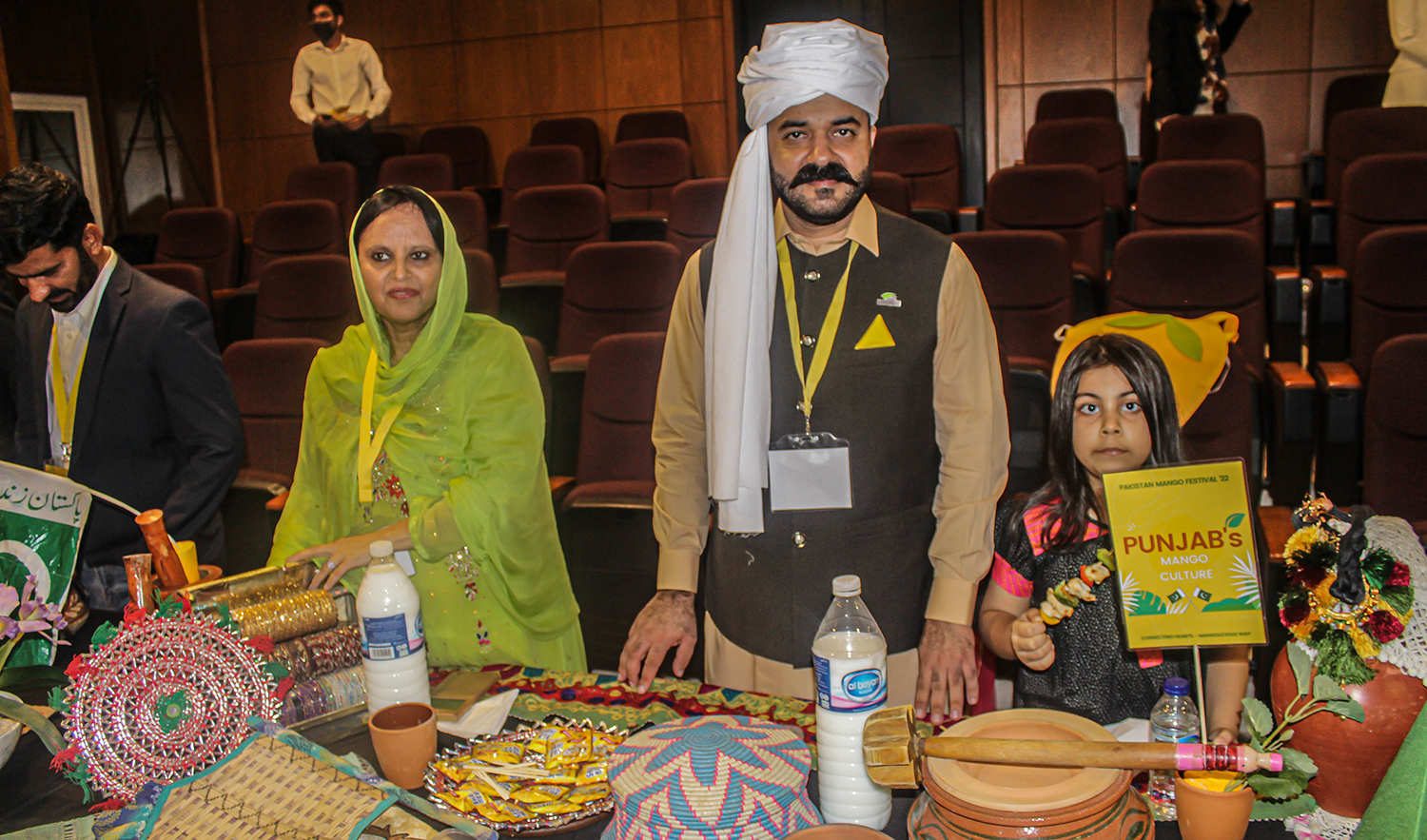
Stalls representing Pakistani provinces treated the guests to unique mango dishes that originating from each of the regions, including mango achar, chutneys, mango biryani, salads and desserts.
 
“I have tasted many mango varieties and dishes made of mangoes here today, (and) though I do not remember the names of all, I enjoyed them thoroughly,” Muslima Zhumabek, the wife of the consul general of Kazakhstan, told Arab News.

Another guest, Barry Bedford, COO of Mediclinic Dubai said the varieties of Pakistani mango he tried had “brilliant taste,” as he praised the festival initiative: “This event celebrates people coming together, which sets an amazing example.”


Pakistan awards 11 onshore oil and gas blocks to boost domestic production

Updated 5 sec ago
Follow

Pakistan awards 11 onshore oil and gas blocks to boost domestic production

  • Pakistan has faced a widening energy gap due to rising demand, limited domestic output, forcing it to import costly fuels
  • Successful joint venture partners include state-run enterprises as well as local and international explorations companies

KARACHI: Pakistan has awarded 11 onshore oil and gas blocks for exploration to state-owned and private firms to boost domestic production and reduce reliance on costly energy imports, the Pakistani information ministry said on Thursday.

Pakistan has faced a widening energy gap due to rising demand and limited domestic output, forcing it to import costly fuels and expose the economy to global price swings. Its petroleum, oil, and lubricants import bill fell 4.39 percent to $9.046 billion in July 2025-January 2026.

On Thursday, the Petroleum Division signed petroleum concession agreements (PCAs) and exploration licenses (ELs) to award 11 onshore blocks for exploration, marking a significant step forward in advancing oil and gas exploration activities across the South Asian country.

The successful joint venture partners include the state-run Oil and Gas Development Company Limited (OGDCL), Pakistan Petroleum Limited (PPL), Mari Energies Limited (MariEnergies), Pakistan Oilfields Limited (POL) and Prime Global Energies (Prime).

“Signing of agreements demonstrate strong investor confidence in Pakistan’s upstream potential,” Petroleum Minister Ali Pervaiz Malik said, adding it aimed to boost domestic exploration, attract investment and reduce reliance on imported energy.

MariEnergies will serve as operator for six blocks. The company has secured 100 percent working interest in five blocks, including Padag, Chagai, Dalbandin, Merui, and Merui West, and will lead the Ahmad Wal block as operator with a 60 percent working interest, alongside the

Oil and Gas Development Company Limited (OGDCL) that will be holding 40 percent.

OGDCL will operate three blocks, including Kalat North with 100 percent working interest. It will also lead two joint venture blocks: Naing Sharif (OGDCL 70 percent as operator, Prime 30 percent) and Khiu-II (OGDCL 60 percent as operator, MariEnergies 40 percent).

PPL emerged as the highest bidder for the Kalat South block and will operate it with a 40 percent working interest, in partnership with OGDCL (30 percent) and MariEnergies (30 percent). POL secured the Jherruk block with 100 percent working interest.

“The minimum committed investment by the successful bidders exceeds USD31 million (approximately Rs8.66 billion) over the next three years,” the information ministry said. “In addition, more than Rs276 million ($987,133) has been committed toward social welfare initiatives in the respective areas.”

In the event of commercial hydrocarbon discoveries, substantial additional investments amounting to millions of dollars are anticipated for field development and production activities, according to the ministry.

Pakistan has announced new oil and gas discoveries in recent months. Islamabad this month announced a discovery at an exploratory well that produced 225 barrels of oil per day (BOPD) and 1.01 million standard cubic feet per day (MMSCFD) of gas.

In January, a discovery regarding an exploratory well, flowing at the rate of 4,100 barrels of oil per day (BOPD) and 10.5 million standard cubic feet per day (MMSCFD) of gas, was made in Kohat. In September 2025, Pakistan Petroleum Limited announced a discovery in Attock district, while Mari Energies reported a new gas find in North Waziristan.

“Recent discoveries would lead to further investments in development and production, create employment opportunities, stimulate economic activity in the regions and will contribute meaningfully to reducing reliance on imported energy,” Malik added.