Pakistan inflation at 13-year high as government raises fuel prices on IMF demand

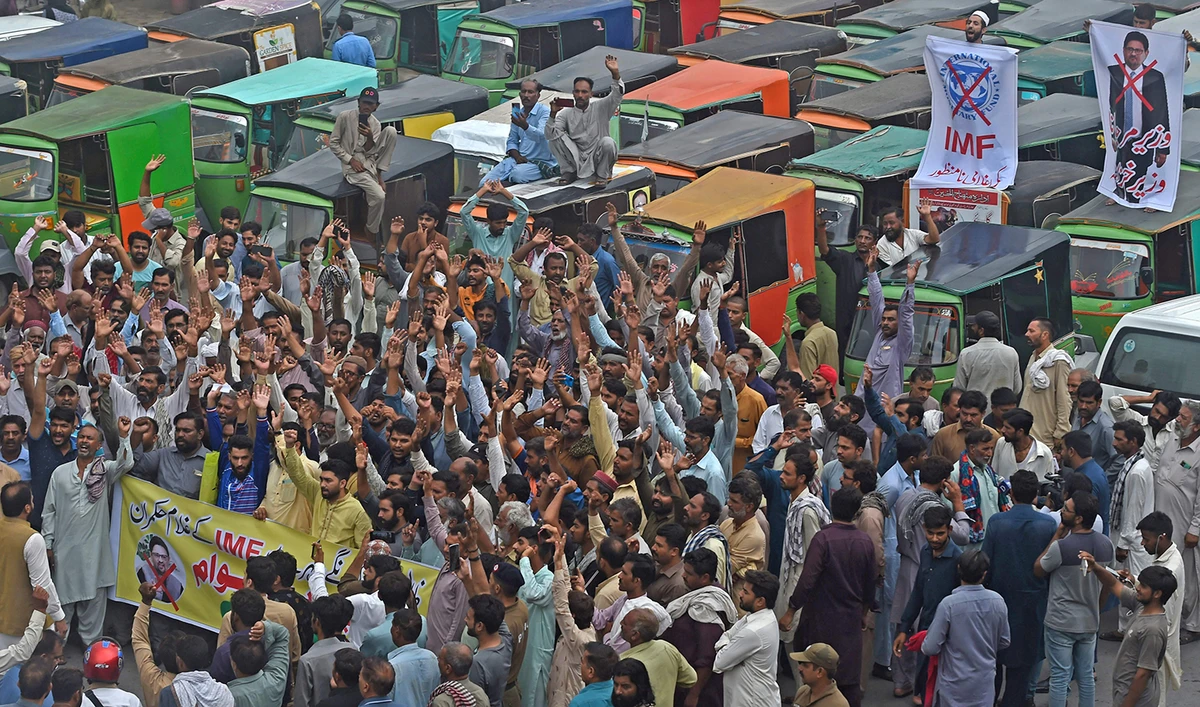
Autorickshaw drivers shout slogans as they protest against the rising fuel price during an anti-government demonstration in Lahore, Pakistan, on July 1, 2022. (AFP)
Short Url
Updated 02 July 2022
Follow

Pakistan inflation at 13-year high as government raises fuel prices on IMF demand

  • Economist says ‘surprising and worrisome’ inflation numbers would hit lower and middle-income segments
  • Industrialists, transporters say rising fuel costs make it difficult to keep the industries and vehicles running

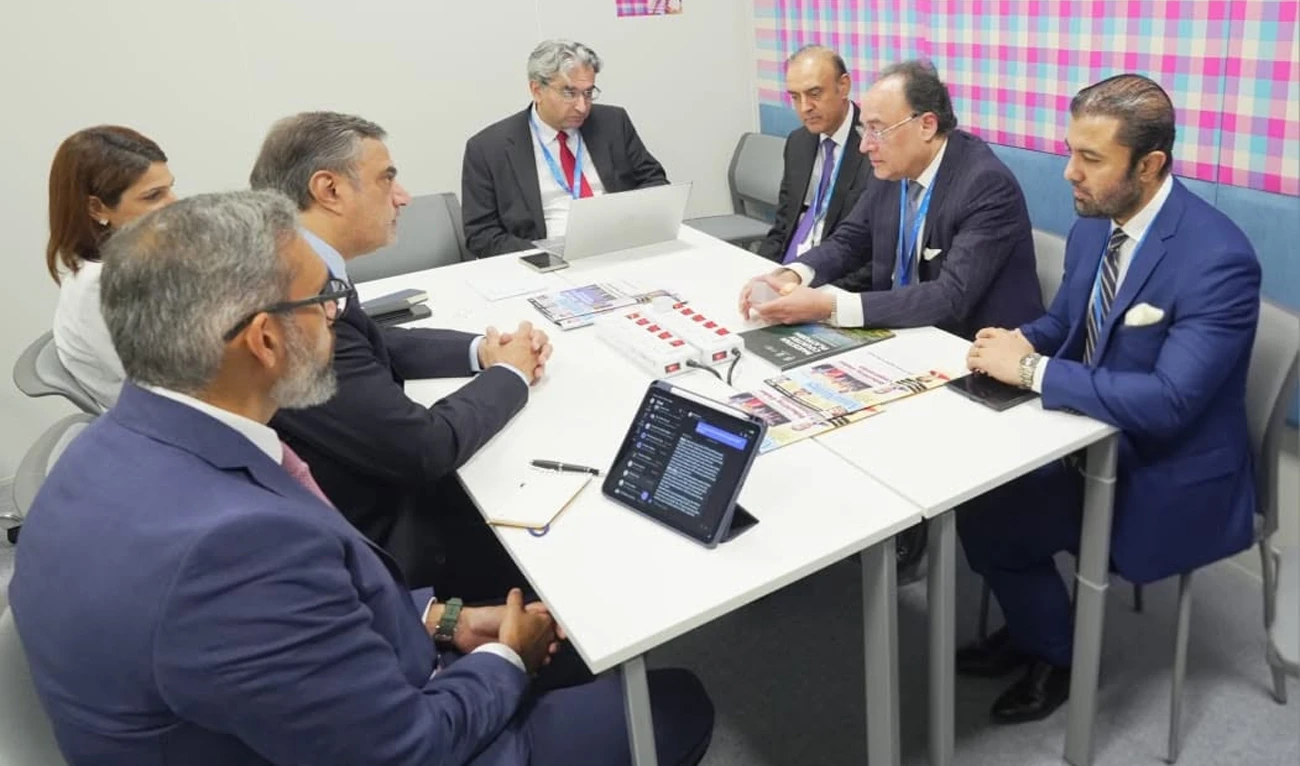
KARACHI: Pakistan’s inflation rate increased to 21.3 percent in June, the highest in 13 years, after the government of Prime Minister Shehbaz Sharif raised prices of petroleum products by over 90 percent as prior action to meet International Monetary Fund's (IMF) conditions for the revival of $6 billion loan program. 

Inflation in Pakistan stood at 13.8 percent in May and 9.7 percent in June 2021. On a month-on-month basis, it increased by 6.3 percent in June as compared to an increase of 0.4 percent in the previous month, the Pakistan Bureau of Statistics (PBS) said.   

The South Asian country has thrice increased the prices of petrol and diesel, eventually taking the two commodities to Rs248.74 and Rs276.54 per litre respectively. since coming into power after ouster of the former Prime minister Imran Khan in April 2022. Former PM Imran Khan had frozen petroleum prices contrary to the conditions agreed with the IMF, which had increased the fuel subsidy amid rising oil prices in the international market.   

“Inflation numbers for June are indeed a surprise on the upside, especially the number of 32.01 percent on food inflation represented by Sensitive Price Index is worrisome,” Dr Khaqan Najeeb, former advisor to the Pakistani finance ministry, told Arab News.  

“We must also remember that the CPI number of 21.3 percent still does not account for the energy price increase of both electricity and gas as are expected from the first of July 2022. These numbers show elevated commodity prices seeping into Pakistan’s inflation as well as the adjustment of the rupee, which has been 30 percent (lower against dollar) in FY22.”   

Economists fear inflation in the country would go further up with the increase in freight and interest rates.   

“This inflation rate is too much. It will destroy the poor and even the middle-income segment of the country,” said Dr Ashfaque Hassan Khan, a senior economist.  

“Now when the transport charges will increase and the central bank will increase interest rates, food inflation will further jump up because everything in the agriculture sector is running on diesel from a tubewell to a tractor.”  

Dr Khan held the IMF loan facility responsible for higher inflation in Pakistan and termed it the "most brutal" program for any country. “The is the most brutal IMF program ever given to any country in the world.”     

The rising fuel costs have largely impacted operations of public transport in Pakistan, but transporters are reluctant to increase fares as they fear the public wrath.   

“The rising fuel costs have devastated the transport sector as the situation is leading to suspension of operations. We are unable to further raise fares to match the fuel price hike due to dwindling purchasing power of poor masses who travel via public transport,” Irshad Bukhari, president of Karachi transport alliance, told Arab News.   

“People from working class are struggling with their limited income to survive. We have raised fares by Rs10 but now it is becoming tough to further raise the fares as people may resort to violence against transporters.”   

Pakistani industrialists face the brunt of fuel price hike at a time when the country’s commercial hub is facing unprecedented power outages.   

“The cost of production is running out of control due to the substantial increase in energy prices and majority of industries are keeping the mills running through power generators that burn petrol and diesel,” Muhammad Idrees, president of Karachi Chambers of Commerce and Industry (KCCI), told Arab News.   

“We are analyzing the true impact of energy rate hikes on businesses and will come up with the exact data. It is getting difficult to timely honor export orders due to rising costs of production as compared to the rates at the time of booking of orders.”   

Economists say the government must ensure a smooth supply of food products to contain the sufferings of the lower-income groups.  

“Moving forward, the government has to ensure that the supply side, especially of perishable and non-perishable goods, is maintained so that citizens who spend more than half of their income on food are protected,” Najeeb said.   

“It is highly important to manage the rate of monetary expansion to low double digits as well as to ensure the supply of cheaper fuels and conservation measures in the country.” 

Pakistan’s central bank is scheduled to announce its monetary policy next week, which majority of experts believe would raise the policy rate.     

“As per the survey, 80 percent of the participants expect an increase in policy rate in the upcoming monetary policy,” Topline Securities, a Karachi-based brokerage house, said on Friday. 

“Around 45 percent of the participants expect policy rate to increase by 100bps (basis points), 30 percent anticipate an increase of 150bps and 5 percent expect an increase of more than 150bps.” 

Islamabad puts drivers on notice as smog crisis worsens

Updated 12 sec ago
Follow

Islamabad puts drivers on notice as smog crisis worsens

  • Police checkpoints have issued over 300 fines and impounded 80 vehicles as Islamabad rolls out roadside emissions checks
  • Transport accounts for over half of the capital’s toxic PM2.5, with air quality this month repeatedly breaching WHO safety limits

ISLAMABAD: Truck driver Muhammad Afzal was not expecting to be stopped by police, let alone fined, as he drove into Islamabad this week because of the thick diesel fumes emanating from his exhaust pipe.

“This is unfair,” he said after being told to pay 1,000 rupees ($3.60), with the threat of having his truck impounded if he did not “fix” the problem.

“I was coming from Lahore after getting my vehicle repaired. They pressed the accelerator to make it release smoke. It’s an injustice,” he told AFP.

This picture taken on December 10, 2025, shows residents examining their cars at an emission testing point in Islamabad. (AFP)

Checkpoints set up this month are part of a crackdown by authorities to combat the city’s soaring smog levels, with winter months the worst due to atmospheric inversions that trap pollutants at ground level.

“We have already warned the owners of stern action, and we will stop their entry into the city if they don’t comply with the orders,” said Dr. Zaigham Abbas of Pakistan’s Environmental Protection Agency (EPA), as he surveyed the checkpoint at the southeast edge of the capital.

For Waleed Ahmed, a technician inspecting the vehicles at the site, “just like a human being, a vehicle has a life cycle. Those that cross it release smoke that is dangerous to human health.”

This picture taken on December 10, 2025, shows technician Waleed Ahmed examining a vehicle to test its emissions on road, on the outskirts of Islamabad. (AFP)

‘SELF-INFLICTED CRISIS’

While not yet at the extreme winter levels of Lahore or the megacity Karachi, where heavy industry and brick kilns spew tons of pollutants each year, Islamabad is steadily closing the gap.

So far in December it has already registered seven “very unhealthy” days for PM2.5 particulates of more than 150 micrograms per cubic meter, according to the Swiss-based monitoring firm IQAir.

Intraday PM2.5 levels in Islamabad often exceed those in Karachi and Lahore, and in 2024 the city’s average PM2.5 reading for the year was 52.3 micrograms — surpassing the 46.2 for Lahore.

Those annual readings are far beyond the safe level of five micrograms recommended by the World Health Organization.

An aerial picture shows dense smog in Islamabad on December 12, 2025. (AFP)

Built from scratch as Pakistan’s capital in the 1960s, the city was envisioned as an urban model for the rapidly growing nation, with wide avenues and ample green spaces abutting the Himalayan foothills.

But the expansive layout discourages walking and public transport remains limited, meaning cars — mostly older models — are essential for residents to get around.

“The capital region is choked overwhelmingly by its transport sector,” which produces 53 percent of its toxic PM2.5 particles, the Pakistan Air Quality Initiative, a research group, said in a recent report.

“The haze over Islamabad... is not the smoke of industry, but the exhaust of a million private journeys — a self-inflicted crisis,” it said.

‘HER BASIC RIGHT’

Announcing the crackdown on December 7, EPA chief Nazia Zaib Ali said over 300 fines were issued at checkpoints in the first week, with 80 vehicles impounded.

“We cannot allow non-compliant vehicles at any cost to poison the city’s air and endanger public health,” she said in a statement.

This picture taken on December 10, 2025, shows a technician pasting a certified sticker on a car after it cleared an emission test in Islamabad. (AFP)

The city has also begun setting up stations where drivers can have their emissions inspected, with those passing receiving a green sticker on their windshield.

“We were worried for Lahore, but now it’s Islamabad. And that’s all because of vehicles emitting pollution,” said Iftikhar Sarwar, 51, as he had his car checked on a busy road near an Islamabad park.

“I never needed medicine before but now I get allergies if I don’t take a tablet in the morning. The same is happening with my family,” he added.

Other residents say they worry the government’s measures will not be enough to counter the worsening winter smog.

“This is not the Islamabad I came to 20 years ago,” said Sulaman Ijaz, an anthropologist.

“I feel uneasy when I think about what I will say if my daughter asks for clean air — that is her basic right.”