


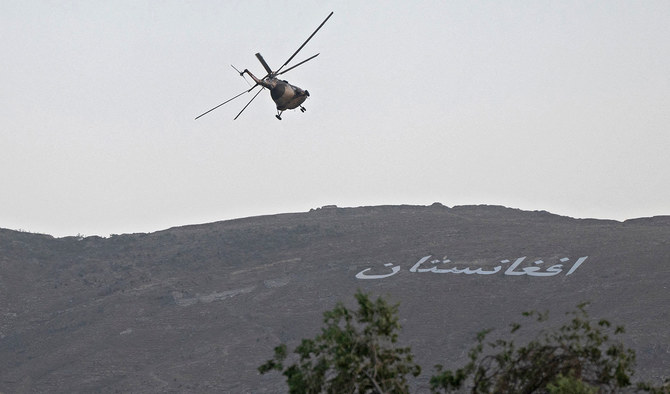

KABUL: Around 3,500 scholars and tribal elders from throughout Afghanistan gathered in Kabul on Thursday for a grand assembly meeting, the first such session since the Taliban takeover of Afghanistan last year.
Known as the loya jirga, grand assemblies are a centuries-old Afghan institution, a forum attended by various parties to discuss and reach a consensus on important political issues.
The conference, expected to end by July 2, was called by the Taliban, as unacknowledged by foreign governments they have been under mounting pressure to form an inclusive government to win international recognition.
Participants in Thursday’s session included non-Taliban local leaders, members of the minority Shiite community, as well as representatives of Afghan refugees in Iran and Pakistan. No female delegates were present.
Mullah Mohammad Hasan Akhund, acting prime minister of Afghanistan, opened the session by calling on the representatives of all Afghan groups to help uphold the Islamic system of governance, which the Taliban introduced as they took control of the country in August, following the withdrawal of US-led forces after two decades of war.
“We all should work to strengthen it,” Akhund said. “The Islamic Emirate is trying in all aspects to address all issues. There might be problems in some places, but if they are shared with us, we will take steps to solve them.”
Mawlawi Mohammed Omar Khattabi, from the southern Afghan city of Kandahar, who runs a network of madrasas and Islamic radios in southern Afghanistan, urged Taliban authorities to seek consultations with religious scholars when it came to the Islamic system, “because they know the nature of it,” but in professional and technical issues they, “must consult with experts.”
The issue of reopening of schools for girls was raised by Shiite scholar Sayed Nasrullah Waezi, from Bamyan in central Afghanistan.
Since the Taliban assumed power, they have introduced a series of restrictions on women, including on their clothing and choice of profession. Secondary school girls have been barred from education.
Waezi, who belongs to the Hazara community that had been targeted during the first Taliban rule from 1996 to 2001, said he hoped that under the current Taliban leadership Afghans could create in their country, “an atmosphere of harmony, sincerity, brotherhood, and fraternity.”
Despite heavy security surrounding the meeting’s venue, the Loya Jirga Tent at Kabul’s Polytechnic University, gunshots were heard during a lunch break. State broadcaster RTA reported that two assailants were killed.
The first loya jirga since the Taliban takeover, the meeting has so far raised hopes that some of the country’s current challenges can be addressed.
“It is a very positive step that the Taliban called for this gathering of scholars and tribal elders from all provinces of Afghanistan. Jirga has historically played a vital role in discussing and solving major national issues,” Hekmatullah Zaland, a member of the Center for Strategic and Regional Studies, told Arab News.
He said it was important that critical issues such as girls’ education, political reconciliation, people’s participation, and engagement with the international community be raised, as such discussions could, “help in addressing the challenges that we are facing right now.”


