AMMAN: Saudi Crown Prince Mohammed bin Salman’s Jordan trip will bolster economic and political cooperation vital to Arab unity, and is particularly important ahead of the regional meeting with US President Joe Biden, according to former Jordanian Deputy Prime Minister Mamdouh Al-Abadi.
“This is the first round of visits by Prince Mohammed bin Salman, which will be followed up with meetings with leaders in the Jeddah summit with US President Biden,” he told Arab News.
Al-Abadi’s remarks came during the crown prince’s foreign tour. Prince Mohammed landed in Amman on Tuesday evening after visiting Egypt and before heading to Turkey. The tour is aimed at coordinating regional issues prior to the summit in Jeddah between regional Arab leaders and Biden.
HRH Crown Prince Arrives in Hashemite Kingdom of Jordan.#SPAGOV pic.twitter.com/yCELDMYYf2
— SPAENG (@Spa_Eng) June 21, 2022
Al-Abadi, who served as one of the most popular and effective members of parliament and as the mayor of Amman, was the deputy prime minister in the Hani Mulki government, and is credited with carrying out important reforms in Jordan. As a veteran politician, he understands the value of face-to-face meetings.
“When leaders meet face to face without filters and others intervening, it allows for a more direct opportunity to agree on priorities of mutual interest,” he explained.
Economic issues are the current priority for Jordan, according to Al-Abadi. “Our relations with Gulf countries are usually focused on economic cooperation, with political issues playing a lower role,” he said.
Infrastructure projects such as railroads are critically in need of support, Al-Abadi remarked. “Transport is a big problem around the world but in Jordan, our problem is that the population … has increased quickly because of the Syrian crisis.” Of the 10 million people living in the country, only 6.5 million are Jordanians, he said.
“The increase happened at a much quicker pace than we were able to deal with,” said Al-Abadi. “We had an effective railroad system during the Ottoman period, and now we need to revisit this important means of transportation both for local and regional cooperation and the ability of easily moving people and goods.”
Politically, Al-Abadi predicted that the Palestinian-Israeli conflict would not be a priority in the current round of talks. Al-Abadi calls himself a pan-Arabist, adding that Palestine is a unifying issue for Arabs. “For me Palestine is the key. I support everyone who supports Palestine.”
HRH Crown Prince, King of Jordan Hold Bilateral Meeting and Expanded Talks.https://t.co/xnXrQlzVYb#SPAGOV pic.twitter.com/sX2YFf2Q9U
— SPAENG (@Spa_Eng) June 21, 2022
According to Al-Abadi, it is not clear “whether they will agree on having Israel be part of the coalition against Iran, or whether the emphasis will be solely on helping US President Biden in his domestic problems, especially the need to increase production of oil in order to stem the results of the rise in gasoline prices in the United States.”
Al-Abadi spoke candidly to Arab News about the strengths and weaknesses of Jordan. “Our balanced foreign policy is effective and efficient, but we need help in having similar success in our domestic issues, especially in terms of our economy.”
On the subject of inter-Arab trade, Abadi explained that “we buy less than 10 percent from each other. We should all be buying more Saudi and Egyptian and Jordanian and Palestinian … products. We need a common market. Why is Europe which had world wars and has different languages and cultures able to have a common market, while we talk but do nothing to make it happen?”

Former Jordanian Deputy Prime Minister Mamdouh Al-Abadi. (Supplied)
Jordan, similar to its Saudi neighbor, is in the process of implementing new modernizing reforms. As the country begins to apply recommendations of the Royal Commission on Political Modernization, which will see the country run by a government consisting of elected parties, Al-Abadi is concerned that “no restrictions will be placed on the choices that the elected government will decide on.”
Al-Abadi, though, is certain that Arab unity is a vital goal. “A vacuum invites outside parties to intervene in our affairs; if we unite, our individual countries will be stronger and collectively we can be stronger.”
He remains confident Jordan and Saudi Arabia would be able to forge ahead after the crown prince’s visit to Jordan. “It is important that this ice-breaking visit is followed up by more visits in both directions. Our unity as Arabs is the most important weapon we have, and we need to strengthen our home front as Arabs to defend ourselves from external forces.”
Jordanian Senator Mohammad Momani also sees the bilateral and regional significance of the crown prince’s visit. “On the bilateral level, different files are due to be discussed, including investment, transportation energy, and other bilateral issues. All of them will be discussed directly and frankly by officials from both countries,” he told Arab News.
Momani, who served as the Jordanian minister of media affairs in successive past governments, highlighted the depth of the two countries’ relationship. “Needless to say, the relationship is very deep. Jordan sees eye to eye with Saudi Arabia and the Saudis see the importance of Jordan in regional and international issues,” he explained.
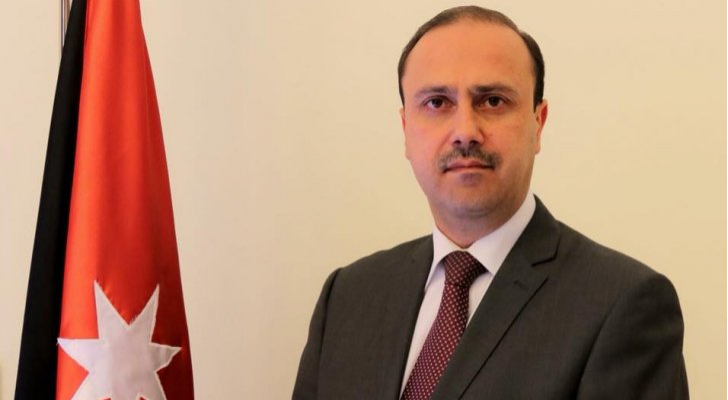
Senator Mohammad Momani. (Supplied)
“We have the same positions on the importance of a strategic alliance,” he continued, adding that “our common history in the area and our friendly brotherly relationship are the cornerstones of the discussions on the bilateral level.”
On the regional level, Momani believes that the discussions will include talks about the Palestinian issue, and the need for a significant push for the peace process which is crucial for regional stability and security. He added that “the issue of Iran will certainly be discussed and opinions will be honestly exchanged.”
He said it was important to have talks on critical issues because of the upcoming regional gathering with Biden, “and so it is extremely significant to have that discussion ahead of the summit to coordinate positions beforehand.”
“Jordan is committed to peace and security and is committed to using its status to defend Arab positions; we have done that before and we will continue to do that. His Majesty King Abdullah will use his ability and contacts to support our closest allies Saudi Arabia and the United Arab Emirates.”