Tunisia urges IMF to consider social impact of reforms

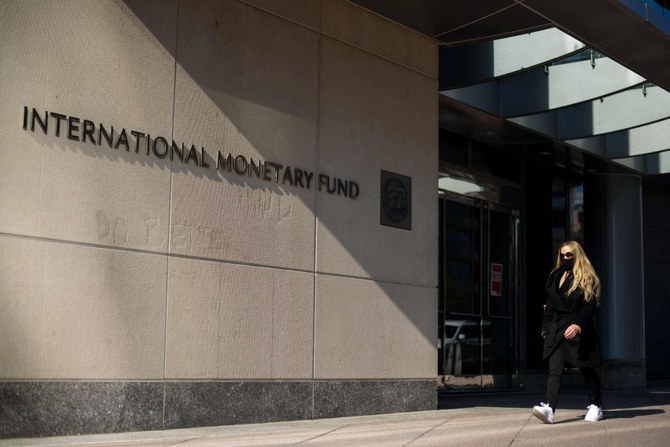
Tunisian President Kais Saied urged the IMF to take into account the social impact of any economic reforms it may demand as part of a bailout package. (AFP)
Short Url
Updated 21 June 2022
Follow

Tunisia urges IMF to consider social impact of reforms

  • Tunisia has been in preliminary discussions with the global lender for a new loan to save an economy ravaged by years of high unemployment
  • People "have certain rights, such as to health and education, which cannot be made subservient to measures of profit and loss", Saied said

TUNIS: Tunisian President Kais Saied on Tuesday urged the International Monetary Fund to take into account the social impact of any economic reforms it may demand as part of a bailout package.
The North African country has been in preliminary discussions with the global lender for a new loan to save an economy ravaged by years of high unemployment, inflation and public debt even pre-dating its 2011 revolution.
Saied met the IMF’s regional chief Jihad Azour on Tuesday, telling him he “recognized the need to introduce major reforms” but insisted that such changes must “take social impacts into account,” according to a statement from the president’s office.
People “have certain rights, such as to health and education, which cannot be made subservient to measures of profit and loss,” he added.
Ahead of formal negotiations that are expected to start soon, the government has presented a reform plan to the global lender that includes a freeze on the public sector wage bill, some subsidy cuts and a restructuring of state firms.
Tunisia’s powerful UGTT trade union, which staged a nationwide public-sector strike last week to demand pay rises, has warned against “painful reforms” made to please the IMF.
In a video message published by the presidency, Azour said he and Saied had discussed “aspects of cooperation and liaison between the IMF and the Tunisian government as well as future economic developments in Tunisia, the region and the world.”
Tunisia’s central bank chief said in May that a new IMF deal — the third in a decade — was “indispensable” given Tunisia’s public debt and gaping budget deficit, exacerbated by a spike in energy and food prices due to the war in Ukraine.
An IMF team said in March that the country faced “major structural challenges,” with low growth and investment along with high unemployment and gaping inequality.


Palestinians attempt to use Gaza’s Rafah Border crossing amidst delays

Updated 4 sec ago
Follow

Palestinians attempt to use Gaza’s Rafah Border crossing amidst delays

CAIRO: Palestinians on both sides of the crossing between Gaza and Egypt, which opened last week for the first time since 2024, were making their way to the border on Sunday in hopes of crossing, one of the main requirements for the US-backed ceasefire. The opening comes as Prime Minister Benjamin Netanyahu is expected to travel to Washington this week, though the major subject of discussion will be Iran, his office said.
The Rafah Crossing opened to a few Palestinians in each direction last week, after Israel retrieved the body of the last hostage held in Gaza and several American officials visited Israel to press for the opening. Over the first four days of the crossing’s opening, just 36 Palestinians requiring medical care were allowed to leave for Egypt, plus 62 companions, according to United Nations data.
Palestinian officials say nearly 20,000 people in Gaza are seeking to leave for medical care that they say is not available in the war-shattered territory. The few who have succeeded in crossing described delays and allegations of mistreatment by Israeli forces and other groups involved in the crossing, including and an Israeli-backed Palestinian armed group, Abu Shabab.
A group of Palestinian patients and wounded gathered Sunday morning in the courtyard of a Red Crescent hospital in Gaza’s southern city of Khan Younis, before making their way to the Rafah crossing with Egypt for treatment abroad, family members told The Associated Press.
Amjad Abu Jedian, who was injured in the war, was scheduled to leave Gaza for medical treatment on the first day of the crossing’s reopening, but only five patients were allowed to travel that day, his mother, Raja Abu Jedian, said. Abu Jedian was shot by an Israeli sniper while he was building traditional bathrooms in the central Bureij refugee camp in July 2024, she said.
On Saturday, his family received a call from the World Health Organization notifying them that he is included in the group that will travel on Sunday, she said.
“We want them to take care of the patients (during their evacuation),” she said. “We want the Israeli military not to burden them.”
The Israeli defense branch that oversees the operation of the crossing did not immediately confirm the opening.
A group of Palestinians also arrived Sunday morning at the Egyptian side of the Rafah crossing border to return to the Gaza Strip, Egypt’s state-run Al-Qahera News satellite television reported.
Palestinians who returned to Gaza in the first few days of the crossing’s operation described hours of delays and invasive searches by Israeli authorities and an Israeli-backed Palestinian armed group, Abu Shabab. A European Union mission and Palestinian officials run the border crossing, and Israel has its screening facility some distance away.
The crossing was reopened on Feb. 2 as part of a fragile ceasefire deal that stopped the war between Israel and Hamas. Amid confusion around the reopening, the Rafah crossing was closed Friday and Saturday.
The Rafah crossing, an essential lifeline for Palestinians in Gaza, was the only crossing not controlled by Israel prior to the war. Israel seized the Palestinian side of Rafah in May 2024, though traffic through the crossing was heavily restricted even before that.
Restrictions negotiated by Israeli, Egyptian, Palestinian and international officials meant that only 50 people would be allowed to return to Gaza each day and 50 medical patients — along with two companions for each — would be allowed to leave, but far fewer people than expected have crossed in both directions.