

Tokyo closes books on costly, pandemic-delayed Olympics

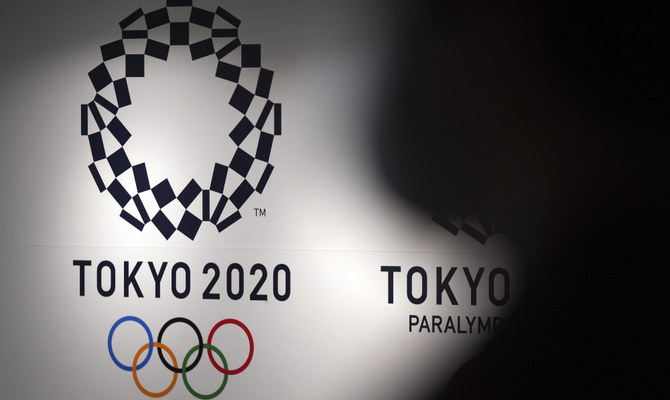
Tokyo Olympic officials, meeting Tuesday, June 21, 2022, before the body is dissolved at the end of the month, were to detail the final numbers that were driven up by the pandemic, but were in record range even before that. (AP)
Short Url
Updated 21 June 2022
Follow

Tokyo closes books on costly, pandemic-delayed Olympics

  • Tokyo will be remembered as the first Games that were postponed for a year, and then held mostly without fans in a so-called bubble

TOKYO: Organizers of last year’s COVID-delayed Tokyo Olympics were expected to place the final cost of the Games at 1.42 trillion yen, about twice what was forecast when the IOC awarded them in 2013.

Tokyo Olympic officials, meeting Tuesday before the body dissolves at the end of the month, were to detail final numbers, which were increased by the pandemic, but were in record range long before that.

Calculating the costs is challenging because of recent fluctuations in the exchange rate between the dollar and the Japanese yen. When the Olympics opened a year ago, $1 bought 110 yen. On Monday, $1 bought 135 yen, the dollar’s highest level against the yen in about 25 years.

The fall in the yen’s value means the cost of the Olympics quoted in dollars is now about $10.5 billion. A year ago, the price was about $13 billion.

Victor Matheson, a sports economist at the College of the Holy Cross who has written extensively on the Olympics, suggested by email to AP that most of “the expenses and revenues are in yen, so the exchange rate changing the dollar amounts doesn’t affect how the event ‘feels’ to the organizers.”

In the runup to the Tokyo Games, organizers often used the exchange rate of 107. At that rate, the equivalent of 1.42 trillion yen would be $13.33 billion as final price tag.

Matheson and fellow American Robert Baade researched Olympic costs and benefits in a study called “Going for Gold: The Economics of the Olympics.”

They write “the overwhelming conclusion is that in most cases the Olympics are a money-losing proposition for host cities; they result in positive net benefits only under very specific and unusual circumstances.”

Accurately tracking Olympic costs — who pays, who benefits, and what are and are not Games’ expenses — is a moving maze.

Olympic organizers estimated the official costs when the Games closed at year ago at $15.4 billion.

Four months later, organizers said the costs had fallen to $13.6 billion. They said there had been a large saving because no fans were allowed to attend, dropping security costs, venue maintenance and so forth.

However, organizers lost at least $800 million in income from no ticket sales, which fell to the Tokyo Metropolitan Government to cover.

A University of Oxford study in 2020 said Tokyo was the most expensive Olympics on record.

There is one undeniable fact: more than half of the costs were paid for by public money — Tokyo’s government, the national government and other government entities.

In the several years prior to the Olympics, government audits found official costs might have been twice as much as stated, meaning the public portion of the bill might be far more than half.

The International Olympic Committee in its annual report says it contributed about $1.9 billion to cover Tokyo costs.

It’s impossible to assess the long-term impact of the Tokyo Olympics, particularly in a sprawling city like the Japanese capital where change is constant. The pandemic erased any short-term tourism bounce. Local sponsors, who paid more than $3 billion to be linked to the Olympics, didn’t seem very happy according to local reports.

Dentsu Inc., the giant Japanese advertising and public relations company, may have benefited. It directed marketing for Tokyo 2020, received commissions for lining up sponsors, and has been linked to an IOC vote-buying scandal that was tied to Tokyo getting the Games.

The scandal forced the resignation of Tsunekazu Takeda in 2019, an IOC member who also headed the Japanese Olympic Committee.

The Games were hit with other scandals, including the resignation of Yoshiro Mori, the president of the organizing committee who made sexist remarks about women. The former Japanese prime minister stepped down five month before the Games opened.

Tokyo had billed itself as a “safe pair of hands” in its bid to get the Games.

Tokyo will also be remembered as the first Games that were postponed for a year, and then held mostly without fans in a so-called bubble.

The most important legacy is surely the $1.4 billion National Stadium designed by Japanese architect Kengo Kuma.

“The goal should be that the costs of hosting are matched by benefits that are shared in a way to include ordinary citizens who fund the event through their tax dollars,” Matheson and Baade wrote. “In the current arrangement, it is often far easier for the athletes to achieve gold than it is for the hosts.”


Saudi rally driver sets her sights on the fast lane 

Updated 38 min 45 sec ago
Follow

Saudi rally driver sets her sights on the fast lane 

  • With podium finishes at home and ambitions abroad, Mashael Al-Saad is ready for the next race
  • Rally Jameel remained a defining chapter in Al-Saad’s journey, exposing her to the demands of desert racing and pushing her beyond familiar limits

MAKKAH: What began as a chance encounter with motorsport has evolved into a growing rallying career for Saudi driver Mashael Al-Saad.

With a growing list of domestic achievements and ambitions that extend beyond the Kingdom’s borders, Al-Saad is carving out her place in a discipline defined by endurance, precision and mental resilience.

Her first exposure to rally driving came as she emceed the second Rally Jameel in 2023, the region’s first women-only navigational rally. 

Witnessing the participants’ determination and competitiveness sparked Al-Saad’s curiosity about motorsport and encouraged her to explore the possibility of competing herself. 

A recommendation from Saudi rally driver Abdullah Bakhashab opened the door to her first professional opportunity with Lexus, marking the start of her rally career during the fourth Rally Jameel in 2024.

That quickly translated into results. As a Lexus team driver, Al-Saad secured first place in her category and sixth overall among more than 40 participants. 

Rally Jameel remained a defining chapter in her journey, exposing her to the demands of desert racing and pushing her beyond familiar limits. She continued to compete in subsequent editions, later earning second place overall and first in her category, before taking part in events at other race circuits across Saudi Arabia and the wider Middle East and North Africa region.

Despite entering a traditionally male-dominated sport, Al-Saad says she did not perceive her path as a challenging one. 

Instead, she highlights the extensive support she received on multiple fronts, from Saudi Arabia’s leadership and the Saudi Automobile and Motorcycle Federation to corporate backing from Lexus. 

She also credits her family, particularly her mother, for playing a vital role in shaping her confidence and determination long before she entered competitive racing.

Among her domestic successes, Al-Saad considers her Time Attack victory in Jeddah last year as one of the most significant milestones of her career. One of her earliest races, it saw her progress steadily to first place in the Women’s Cup, reinforcing her belief in her own capabilities. 

Another pivotal moment came in 2024, during the Racing Hill Climb, where she raced on mountainous terrain for the first time in Taif. The unfamiliar conditions tested her technical skills and adaptability, ultimately accelerating her development as a driver.

Competing at a high level has reshaped Al-Saad both on and off the track. Racing alongside experienced champions has, she says, been both humbling and motivating. 

Over time, she has developed a deeper understanding of the technical side of motorsport, spending increasing amounts of time studying vehicle dynamics and kinematics to better synchronize her driving style with the car. Personally, the sport has made her more confident in facing uncertainty, strengthening her ability to approach new challenges with focus rather than fear.

Al-Saad is often viewed as a role model for Saudi women entering motorsport, something which makes her feel humble. She says she would be honored to inspire just one woman but believes role models exist across all levels of the industry. For her, progress comes from observing the strengths of others and applying those lessons to one’s own journey — a philosophy she sees as relevant far beyond motorsports.

Managing pressure and risk is an integral part of rallying, and Al-Saad relies on preparation and composure to navigate intense stages. Planning ahead helps her mitigate challenges, while calm decision-making becomes crucial when conditions change unexpectedly. 

In a sport where every second counts, she emphasizes that clarity and decisiveness often make the difference between success and setback.

Looking ahead, Al-Saad has set her sights firmly on international competition. She aims to compete in the Middle East Rally Championship and hopes one day to line up at the start of the Dakar Rally in Saudi Arabia. 

She is also eager to explore other racing formats, viewing the learning process itself as one of the most rewarding aspects of her career.

To young Saudi women who aspire to follow a similar path but hesitate because they fear failing, Al-Saad offers a simple word of advice — start. 

She believes progress begins with the first step, learning through experience and allowing confidence to grow over time. 

In a rapidly evolving motorsports scene, her journey stands as a reflection of what is increasingly possible in Saudi Arabia — both on the road and beyond it.