CANBERRA: Australian Prime Minister Anthony Albanese on Monday rejected calls for him to publicly demand the United States drop its prosecution of WikiLeaks founder and Australian citizen Julian Assange.
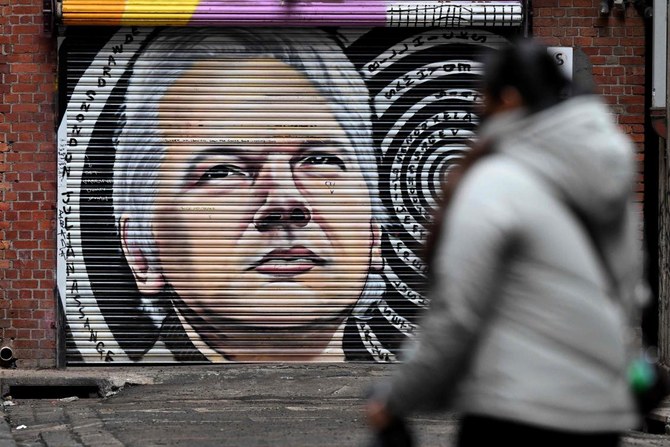
The Australian government has been under mounting pressure to intervene since the British government last week ordered Assange’s extradition to the United States on spying charges. Assange’s supporters and lawyers say his actions were protected by the US Constitution.
Albanese, who came to power at elections a month ago, declined to say whether he had spoken to President Joe Biden about the case.
“There are some people who think that if you put things in capital letters on Twitter and put an exclamation mark, that somehow makes it more important. It doesn’t,” Albanese told reporters.
“I intend to lead a government that engages diplomatically and appropriately with our partners,” Albanese added.
Attorney General Mark Dreyfus and Foreign Minister Penny Wong responded to the British government’s decision by saying Assange’s “case has dragged on for too long and ... should be brought to a close.”
They said they would continue to express that view to the UK and US governments, but their joint statement fell short of calling for the United States to drop the case.
Assange supporters calling for Australian government intervention include his wife Stella Assange.
“The Australian government can and should be speaking to its closest ally to bring this matter to a close,” she told Australian Broadcasting Corp.
Bob Carr, who was foreign minister when Albanese’s center-left Labour Party was last in power in 2012 and 2013, wrote in an opinion piece in The Sydney Morning Herald on Monday that an Australian request to drop Assange’s prosecution was “small change” in Australia’s defense alliance with the United States.
American prosecutors say Assange helped US Army intelligence analyst Chelsea Manning steal classified diplomatic cables and military files that WikiLeaks later published, putting lives at risk.
Carr noted that Manning’s sentence was commuted in 2017.
“It looks like one rule for Americans, another for citizens of its ally,” Carr wrote.
Carr told AuBC that Assange going on trial in the United States would “ignite anti-Americanism in Australia in a way we haven’t seen.”
He said hostility to the Australian-American alliance wasn’t “in the interests of either country.”
Assange’s lawyers plan to appeal, extending the process by months or even years.
His wife Stella Assange said her husband was being prosecuted for exposing war crimes and abuses of power.
“The only goal here is to free Julian because this has been going on since 2010. He’s been in prison for over three years and the case against him is a travesty,” Stella Assange said.


![]()

Australian leader refuses to publicly intervene on WikiLeak’s Julian Assange
Short Url
https://arab.news/9mwvp
Australian leader refuses to publicly intervene on WikiLeak’s Julian Assange
- Australian government has been under mounting pressure to intervene since the British government last week ordered Assange’s extradition to the US on spying charges


Latest updates


© 2026 SAUDI RESEARCH & PUBLISHING COMPANY, All Rights Reserved And subject to Terms of Use Agreement.