

Pakistan’s Khyber Pakhtunkhwa province launches tourism police to facilitate backpackers

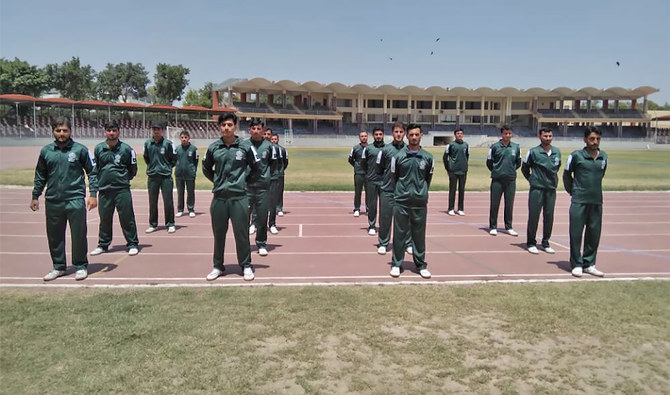
A group of newly trained personnel of Khyber Pakhtunkhwa tourism police force poses for a photograph in Peshawar, Pakistan, on June 1, 2022. (Photo courtesy: KP Tourism Authority)
Short Url
Updated 16 June 2022
Follow

Pakistan’s Khyber Pakhtunkhwa province launches tourism police to facilitate backpackers

  • The province has attractive tourism destinations that lure thousands of people every year in summer
  • Officials believe the initiative will promote tourism and help generate revenue for the province

PESHAWAR: The provincial administration of Khyber Pakhtunkhwa has launched tourism police to provide better security and services to people who are expected to arrive in the region on sightseeing tours in the coming months, officials said on Thursday.

Pakistan’s northwestern province has some of the most attractive tourist destinations in the country that lure thousands of backpackers and people vacationing with their families every year in summer.

“As you know, our province has immense tourism potential,” commandant tourism police Gul Said Khan Afridi told Arab News. “This requires us to have a specialized force that only performs tourism related duties.”
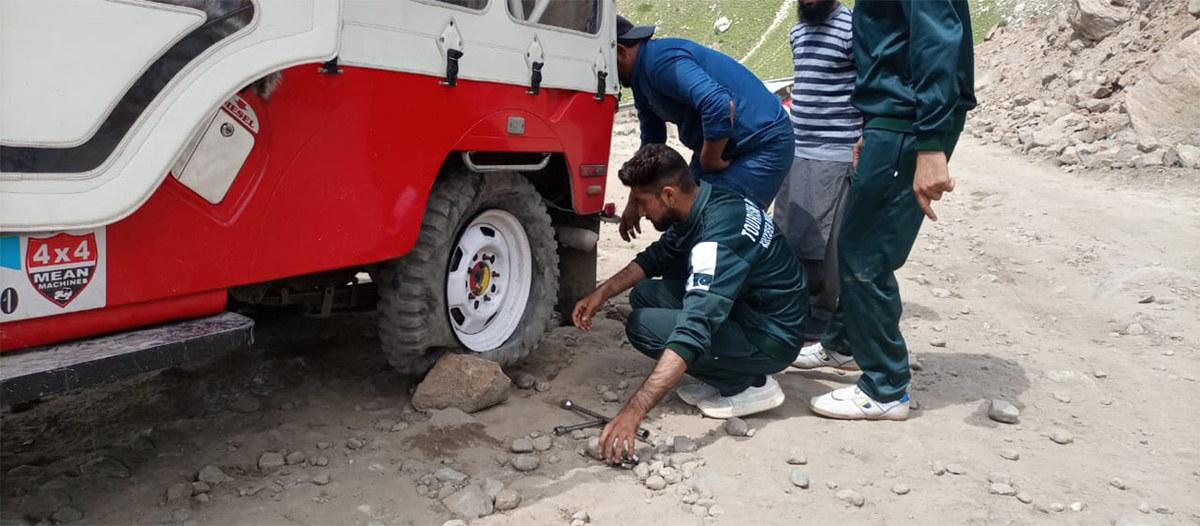


Officers of Khyber Pakhtunkhwa tourism police can be seen fixing the tire of a jeep in the province in this undated photo. (Photo courtesy: KP Tourism Authority)

He maintained that local police departments had to deal with a lot of work even on regular days, making it difficult for them to give exclusive attention to tourists in their cities.

“The new force will play a vital role in boosting the provincial tourism industry,” Afridi added. “This initiative will bring more tourists and help generate more revenue.”

According to the provincial tourism authority, about 180 recruits were provided tourism police uniforms on Wednesday.

“Those who are part of the force have already started facilitating tourists,” said Saad bin Awais, who works as the media officer with the authority. “They will also help ensure smooth flow of traffic on Eid and other holidays while providing security to visitors.”



A group of newly trained personnel of Khyber Pakhtunkhwa tourism police force poses for a photograph in Peshawar, Pakistan, on June 1, 2022. (Photo courtesy: KP Tourism Authority)

Awais informed the force would function as a special wing of the province’s culture and tourism authority, adding its personnel had initially been deployed at popular destinations like Swat, Chitral, Abbottabad and Mansehra.

Speaking to Arab News, Riaz Gujjar, head of the Lahore chapter of Pakistan Bikers’ Travel Association, praised the development, saying it would promote tourism in Khyber Pakhtunkhwa.

“Sometimes we witness accidents in these tourist areas,” he said. “This initiative will hopefully change that and spur tourism.”

Gujjar maintained the government should widely publicize the development so the region also manages to attract foreign tourists.


Authorities begin action against vehicles without e-tags in Pakistani capital

Updated 5 sec ago
Follow

Authorities begin action against vehicles without e-tags in Pakistani capital

  • Capital administration made e-tags mandatory for all vehicles in Islamabad in Nov.
  • Vehicles already equipped with a motorway tag, or m-tag, do not require an e-tag

ISLAMABAD: Authorities have begun action against vehicles plying roads in the Pakistani capital of Islamabad without electronic tags, or e-tags, the Islamabad administration said on Sunday, in a move aimed at streamlining traffic management and improving monitoring at the city’s entry and exit points.

The capital administration made e-tags mandatory for all vehicles in Islamabad in Nov. last year to enhance security in the city. Vehicles already equipped with a motorway tag, or m-tag, do not require an e-tag.

The move is aimed at regulating traffic flow, improving record-keeping, and ensuring that vehicles entering the federal capital are properly registered within the system, according to the officials.

The enforcement relies on e-tag readers installed at entry and check points across the capital, which automatically identify untagged vehicles and allow authorities to take action without manual checks.

“Vehicles without m-tags are being stopped at various checkpoints,” the Islamabad administration said in a statement, citing a top excise official. “Citizens are requested to get the tags installed as soon as possible to avoid legal trouble.”

Readers are fully operational at various check points across the city to identify vehicles without e-tags, according to the statement. Installation of e-tags is also underway at 17 points set up in different areas.

“A total of 166,888 vehicles have so far been successfully issued m-tags,” the statement read.

Last month, Interior Minister Mohsin Naqvi also reviewed Islamabad’s monitoring system and said reforms in Safe City project operations and the effective use of technology were the “need of the hour,” according to his ministry.

“Under the Capital Smart City initiative, citizen services such as Rescue 1122, traffic management, security, and the Capital Development Authority (CDA) would be integrated into a centralized system,” Naqvi said.