

Pakistan’s Khyber Pakhtunkhwa province launches tourism police to facilitate backpackers

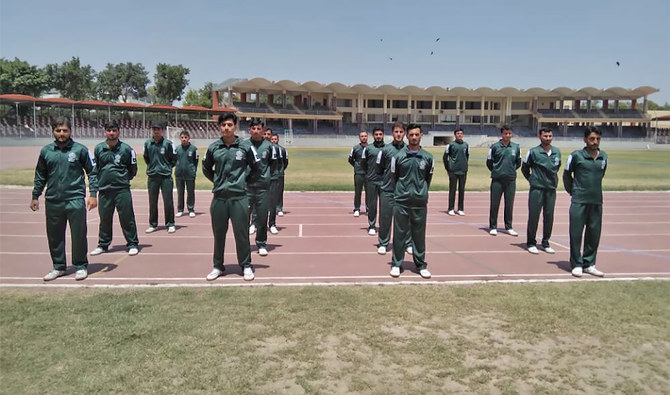
A group of newly trained personnel of Khyber Pakhtunkhwa tourism police force poses for a photograph in Peshawar, Pakistan, on June 1, 2022. (Photo courtesy: KP Tourism Authority)
Short Url
Updated 16 June 2022
Follow

Pakistan’s Khyber Pakhtunkhwa province launches tourism police to facilitate backpackers

  • The province has attractive tourism destinations that lure thousands of people every year in summer
  • Officials believe the initiative will promote tourism and help generate revenue for the province

PESHAWAR: The provincial administration of Khyber Pakhtunkhwa has launched tourism police to provide better security and services to people who are expected to arrive in the region on sightseeing tours in the coming months, officials said on Thursday.

Pakistan’s northwestern province has some of the most attractive tourist destinations in the country that lure thousands of backpackers and people vacationing with their families every year in summer.

“As you know, our province has immense tourism potential,” commandant tourism police Gul Said Khan Afridi told Arab News. “This requires us to have a specialized force that only performs tourism related duties.”
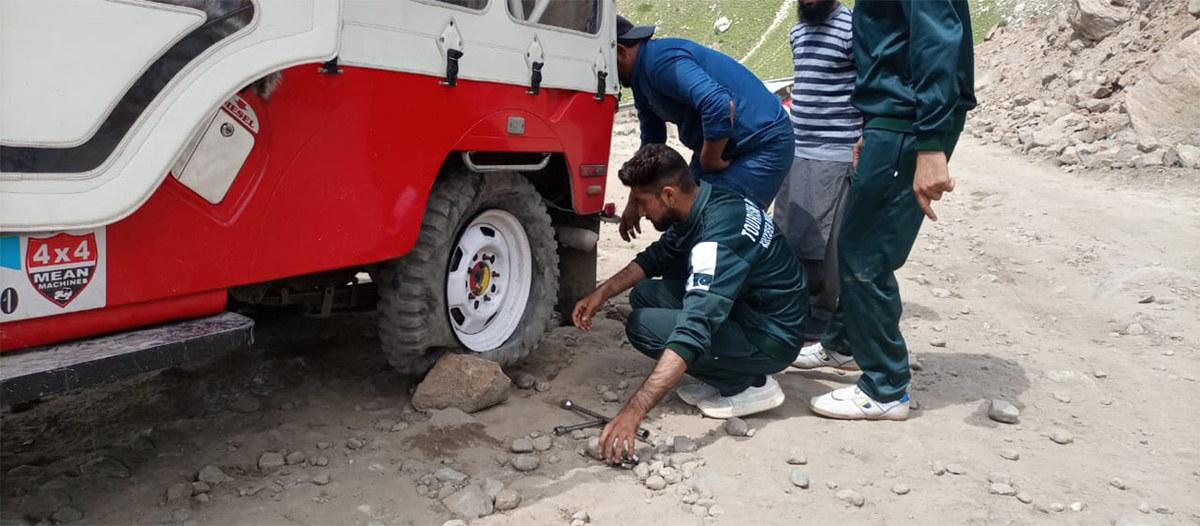


Officers of Khyber Pakhtunkhwa tourism police can be seen fixing the tire of a jeep in the province in this undated photo. (Photo courtesy: KP Tourism Authority)

He maintained that local police departments had to deal with a lot of work even on regular days, making it difficult for them to give exclusive attention to tourists in their cities.

“The new force will play a vital role in boosting the provincial tourism industry,” Afridi added. “This initiative will bring more tourists and help generate more revenue.”

According to the provincial tourism authority, about 180 recruits were provided tourism police uniforms on Wednesday.

“Those who are part of the force have already started facilitating tourists,” said Saad bin Awais, who works as the media officer with the authority. “They will also help ensure smooth flow of traffic on Eid and other holidays while providing security to visitors.”



A group of newly trained personnel of Khyber Pakhtunkhwa tourism police force poses for a photograph in Peshawar, Pakistan, on June 1, 2022. (Photo courtesy: KP Tourism Authority)

Awais informed the force would function as a special wing of the province’s culture and tourism authority, adding its personnel had initially been deployed at popular destinations like Swat, Chitral, Abbottabad and Mansehra.

Speaking to Arab News, Riaz Gujjar, head of the Lahore chapter of Pakistan Bikers’ Travel Association, praised the development, saying it would promote tourism in Khyber Pakhtunkhwa.

“Sometimes we witness accidents in these tourist areas,” he said. “This initiative will hopefully change that and spur tourism.”

Gujjar maintained the government should widely publicize the development so the region also manages to attract foreign tourists.


Pakistan warns of heightened glacial lake flood risk as temperatures rise

Updated 6 sec ago
Follow

Pakistan warns of heightened glacial lake flood risk as temperatures rise

  • NDMA says early heatwave conditions could accelerate glacier melt in northern Pakistan
  • Authorities urge contingency planning, early warnings and evacuations in at-risk areas

PESHAWAR: Pakistan’s disaster management authority warned on Thursday of an elevated risk of glacial lake outburst floods (GLOFs) starting next month as rising temperatures threaten to accelerate snow and glacier melt in the country’s northern regions.

The National Disaster Management Authority (NDMA) said seasonal forecasts point to higher-than-normal temperatures and possible early heatwave conditions that could destabilize glacial lakes in Gilgit-Baltistan and upper Khyber Pakhtunkhwa.

GLOFs occur when water from melting glaciers breaches natural barriers and is suddenly released, triggering fast-moving floods downstream.

“Increasing temperatures during March to June 2026 may accelerate snow and glacier melt in Gilgit Baltistan and Upper Khyber Pakhtunkhwa, heightening the risk of GLOF incidents,” the NDMA said in a statement. “Such events can trigger flash floods, causing damage to homes, infrastructure, agriculture, communication networks and may result in human casualties in vulnerable downstream communities.”

The advisory identified several potentially exposed areas, including valleys in Gilgit-Baltistan such as Ishkoman, Gulkin and Gulmit, as well as parts of Chitral and Upper Dir in Khyber Pakhtunkhwa.

The NDMA urged provincial and local authorities to review contingency plans, strengthen early warning systems and prepare evacuation arrangements where necessary.

Communities living near glacial streams were advised to remain vigilant, avoid unnecessary movement in high-risk zones and follow official instructions.

Climate change has become a major concern for Pakistan, which is frequently ranked among the world’s most vulnerable countries to global warming despite contributing less than 1 percent of global greenhouse gas emissions.

In recent years, the country has endured devastating floods, prolonged droughts and record-breaking heatwaves that have killed thousands of people, damaged critical infrastructure and deepened food security challenges.