

Disabled Pakistani athlete knocks down stereotypes to pursue martial arts

Shoukat Khan, a karate player without arms, can be seen in a training session at a martial arts academy in Quetta, Pakistan, on June 13, 2022. (AN photo)
Short Url
Updated 17 June 2022
Follow

Disabled Pakistani athlete knocks down stereotypes to pursue martial arts

  • Shoukat Khan is the first person with disability in Balochistan province who chose to become a karate player
  • His decision to select such a hard sport discipline was influence by ‘sarcastic remarks’ of people around him

QUETTA: As students of martial arts started gathering at Dr. Muhammad Khan Sports Academy in Quetta, the capital of Pakistan’s southwestern Balochistan province, a boy without arms entered the hall with a small bag on his shoulders.

Shoukat Khan, a young martial artist, sat on the floor before taking off his shirt with his feet and getting dressed in his white karate kit and green belt.

He then joined other academy members to carry out the usual warm-up routine.

“I have been practicing karate for the last 11 years,” Khan told Arab News earlier this week. “I have learnt Shotokan, Taekwondo, kickboxing and gymnastic which have helped me develop my strength and made my body much stronger. I am now able to protect myself in most situations.”
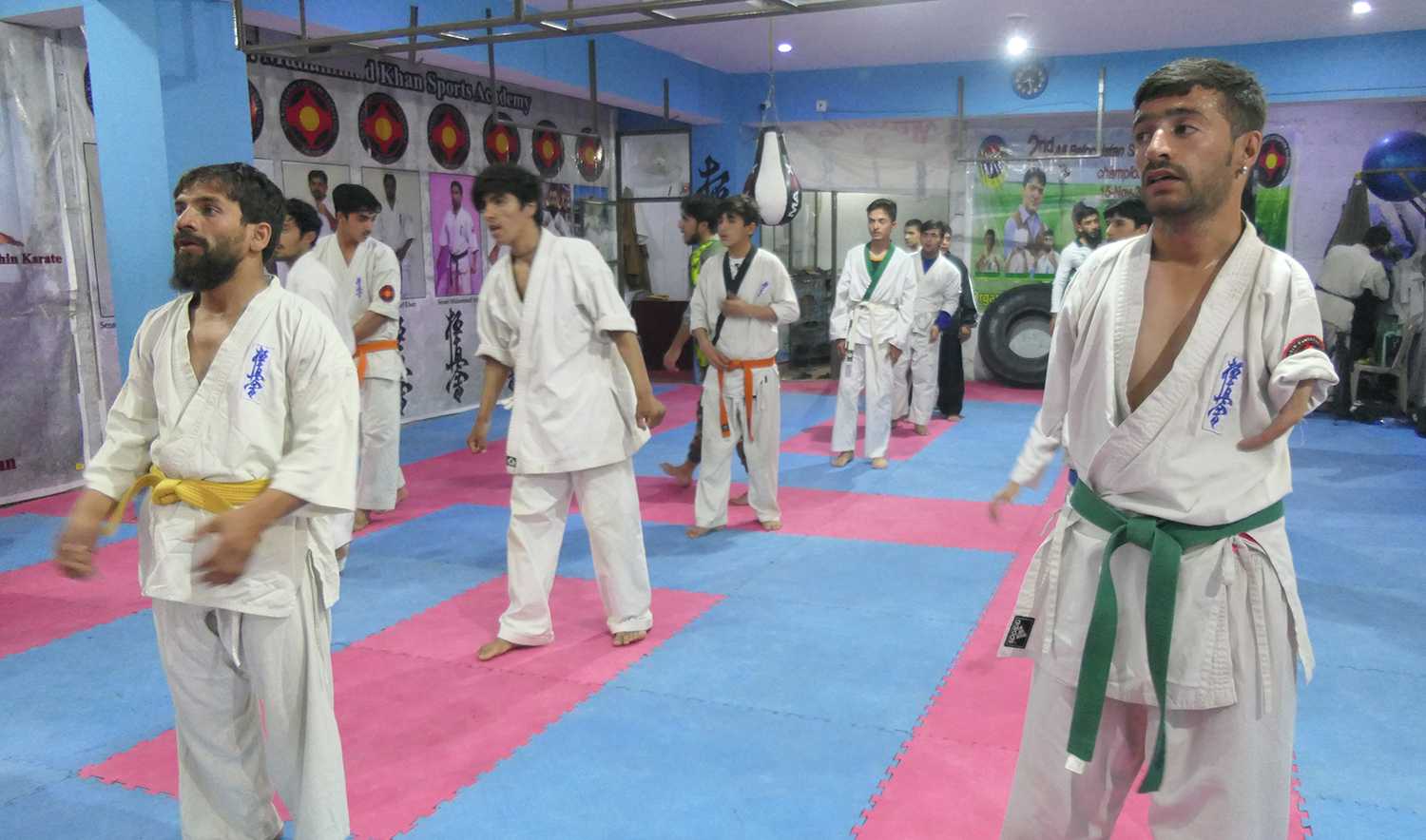


Shoukat Khan, a karate player without arms, stands with other members of his martial arts academy in Quetta, Pakistan, on June 13, 2022. (AN photo)

The 22-year-old athlete said he chose to become a professional karate player due to the “sarcastic remarks” of people around him. HIs sense of indignation also led him to become the first person with disability in his province to opt for such a hard sport discipline.

He won a silver medal in gymnastics at an inter-district championship held in March. Prior to that, he also secured a gold medal for his club when he was asked to fight with another disabled martial artist in a local karate competition in Quetta.

Khan's coach, Zakir Khilji, described him as one of his most disciplined and hardworking students.

“I wondered how an armless boy could practice karate,” he said while remembering his first encounter with Khan. “But Shoukat astonished me with his courage and passion for martial arts.”

“Today he can perform stunts which most able-bodied people cannot do,” he continued. “He has set a new precedent for other persons with disabilities who sometimes give up hope and find it difficult to face the hardships in their lives.”

Khan has not participated in national level competitions since he could not find an opponent in his category, though this has not stopped him from preparing for Paralympics.
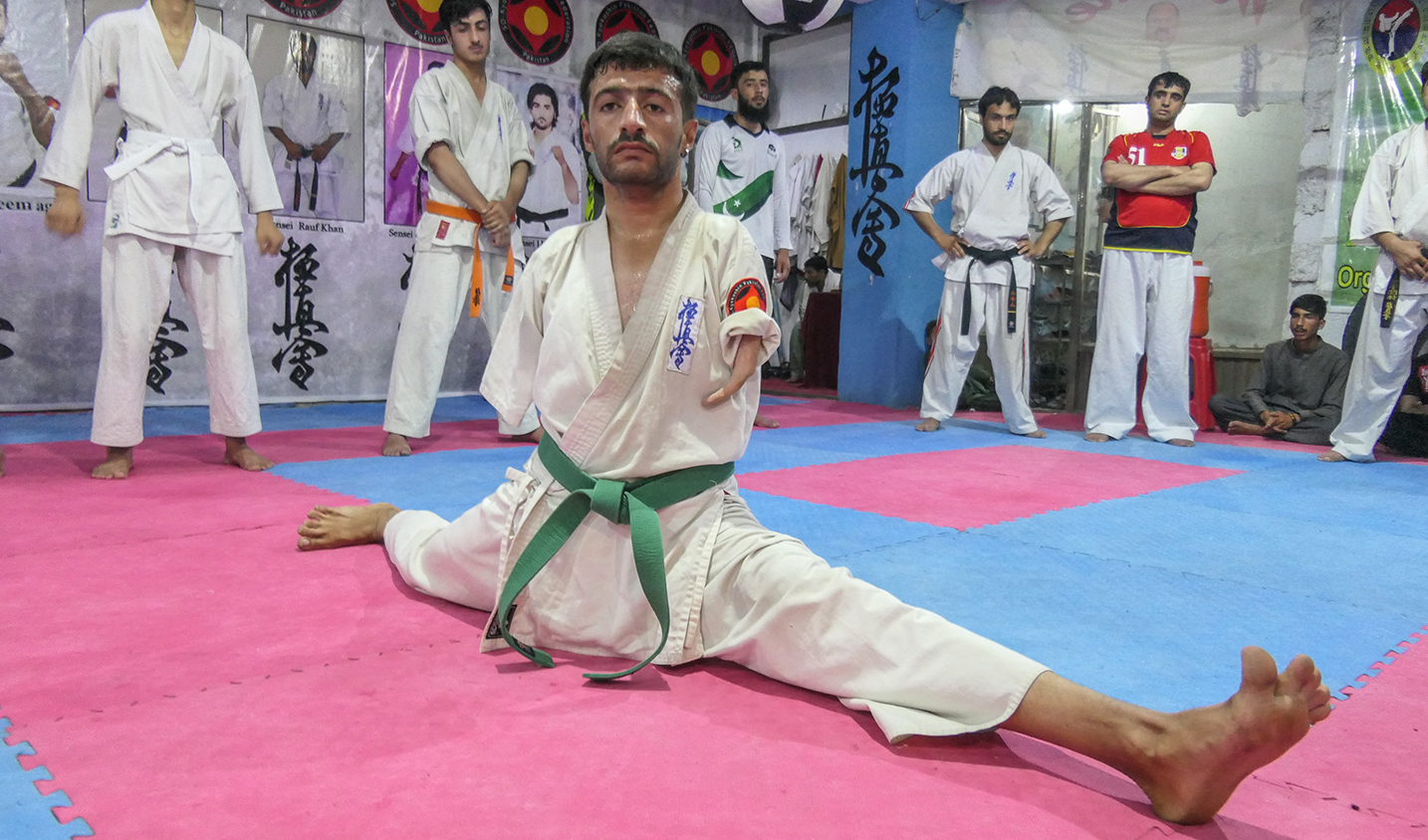


Shoukat Khan, a karate player without arms, can be seen in a training session at a martial arts academy in Quetta, Pakistan, on June 13, 2022. (AN photo)

Speaking to Arab News, his elder brother, Zahir, recalled a day when Khan entered the home with a bleeding head after taking up a fight with another boy. Back then, he was only nine years old, but the incident later compelled him to become a karate player.

“Our family and his fellow club members have been campaigning for donations to get prosthetic arms for Shoukat which can cost over Rs1.8 million,” he said.

As a child, Khan also enjoyed playing soccer. In fact, he left his studies at a local seminary since he was obsessed with the sport.

“I was the captain of the soccer team of our street,” he recollected. “We played a match with the team of disabled football players from Mastung, though they managed to defeat us by 2-0.”
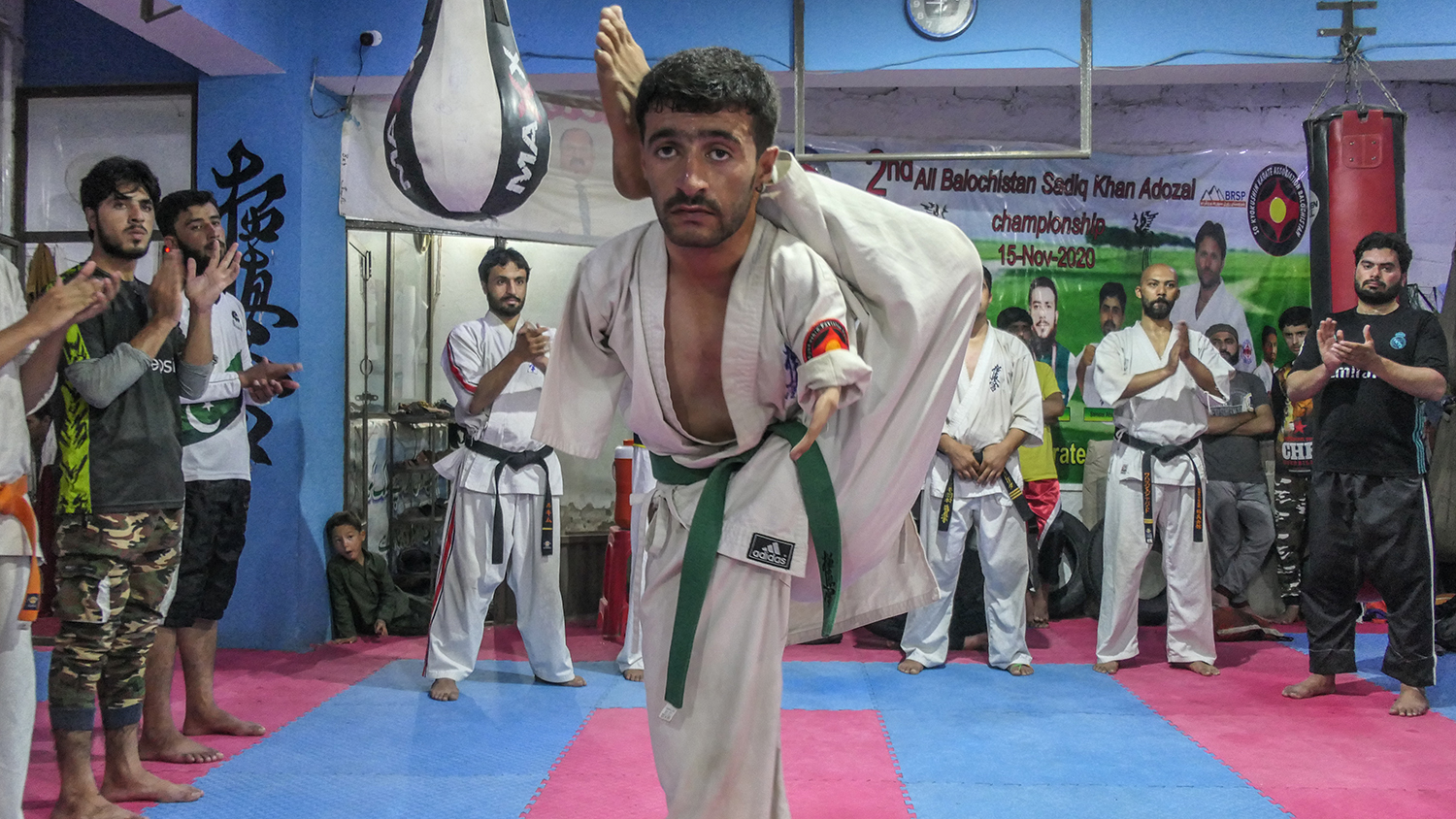


Shoukat Khan, a karate player without arms, shows the flexibility of his body while practicing at a martial arts academy in Quetta, Pakistan, on June 13, 2022. (AN photo)

Khan said he had seen many people with disabilities who were begging in different street corners.

“I often share my story with such individuals and encourage them to join any sport that they like to play,” he continued. “This helps people face social pressures and live a more colorful life.”

The provincial sports secretary of Balochistan, Ishaq Jamali, said the government had organized indoor sports activities for persons with disabilities.

“This is the first time I have heard about the armless karate boy,” he continued. “But I will definitely want to meet him and promote him on national level where he may get a chance to represent the province in martial arts competitions for persons with disabilities.”


Anti-fuel smuggling drive boosts Pakistan revenues 82%, PM office says

Updated 19 December 2025
Follow

Anti-fuel smuggling drive boosts Pakistan revenues 82%, PM office says

  • Crackdown targets illegal petroleum trade using GPS tracking and pump registration
  • July–November gains cited as government intensifies tax, customs enforcement

ISLAMABAD: The Pakistani prime minister’s office said on Friday revenues from petroleum products rose 82% between July and November 2025 after a nationwide crackdown on fuel smuggling, as the government steps up enforcement to curb tax evasion and losses that have long strained public finances.

The increase was cited during a weekly performance review of the Federal Board of Revenue (FBR), where Prime Minister Shehbaz Sharif directed authorities to accelerate action against smuggling and tax evasion, according to a statement issued by the PM’s Office.

Fuel smuggling has been a persistent problem in Pakistan, where subsidised or untaxed petroleum products are often trafficked across borders or sold through unregistered pumps, depriving the state of revenue and distorting domestic energy markets. Successive governments have blamed the practice for billions of rupees in annual losses, while international lenders have repeatedly urged tighter enforcement as part of broader fiscal reforms.

“Every year the nation loses billions due to smuggling,” Sharif was quoted as saying in a statement, praising customs authorities for successful operations and noting that revenues from petroleum products increased by 82% from July to November 2025 compared with the same period last year.

The PM said stricter enforcement had brought several goods back into the formal economy, adding that there would be “no leniency” toward those involved in tax evasion or illegal trade.

Officials briefed the prime minister that Pakistan Customs has rolled out a nationwide enforcement framework, including GPS tracking of petroleum product transportation, registration of fuel stations through a digital monitoring system, and legal action against illegal machinery under updated petroleum laws.

The government has also instructed provincial administrations to cooperate fully with federal authorities in shutting down illegal petrol pumps, the statement said.

Sharif said enforcement efforts would continue until smuggling networks were dismantled and tax compliance improved, as the government seeks to strengthen revenues amid ongoing economic reforms.

Pakistan has struggled for years with weak tax collection and a narrow revenue base, forcing repeated bailouts from the International Monetary Fund. Smuggling of fuel, cigarettes, electronics and consumer goods has been identified by policymakers as a major obstacle to improving revenues and stabilising the economy.

Independent research shows that Pakistan loses an estimated Rs750 billion (about $2.7 billion) annually in tax revenue due to illicit trade and smuggling across sectors such as petroleum, tobacco and pharmaceuticals. Broader analyzes suggest total tax revenue losses linked to the informal economy and smuggling may reach as high as Rs3.4 trillion (around $12.1 billion) a year, roughly a quarter of the government’s annual tax targets.

Smuggled petroleum products alone are thought to cost the state about Rs270 billion (around $960 million) a year in lost revenue, underscoring why authorities have focused recent enforcement efforts on fuel tracking and pump registration.