



JEDDAH: Artist Abdullah Suyan has taken his love for nature to the next level by creating miniature terrariums in small glass containers.
House plants have several benefits, including improved air quality, heightened productivity, and better mental health. Suyan wants to bring these benefits to more people with his jarred terrariums, creating a functioning and thriving ecosystem in glass containers.
The terrariums are created with soil, wood, rocks and plants. The designer has created a mini version of a waterfall, a hanging green planet and pathways through dense forests. Other similar projects that Suyan has worked on include a fish aquarium with plants that served as food for the fish and a natural filter.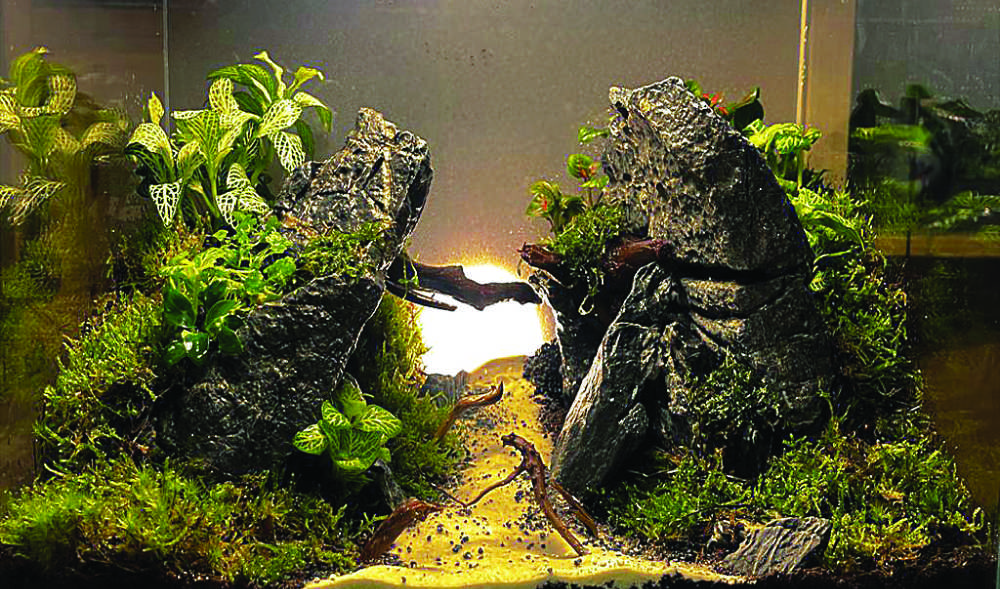
Suyan’s love for nature has always been deeply rooted in him: “I always enjoyed natural sceneries, ever since I was a child. I always wished that I could mimic these sceneries as a kid in my house or my workplace. When I grew up, I started researching on the topic and gained so much knowledge from different sources.”
The first miniature terrariums can be traced back to the 19th century. English botanist Dr. Nathaniel Bagshaw Ward created them in 1842. He accidentally created terrariums while monitoring the life cycle of caterpillars and moths in a closed jar filled with soil. Now they are commonly found in homes, adding a slice of nature to interior decoration.
I always enjoyed natural sceneries, ever since I was a child. I always wished that I could mimic these sceneries as a kid in my house or my workplace. When I grew up, I started researching on the topic and gained so much knowledge from different sources.
Abdullah Suyan, Artist
Suyan said that the process of creating terrariums has two major steps: Hardscape and softscape.
He described hardscaping as “the process that focuses on the placement of wood and rocks, hard components basically. While softscape is the process of planting. So, it deals with the soil, seeds and the plants themselves. The addition of plants gives aesthetic perfection to the landscape.”
The 28-year-old said he is still working to gain more knowledge about plants as he still has a long way to go to enhance his hobby.
Suyan said that the most challenging part of creating terrariums is the imaginative concept that inspires the jar.
“To do that, I look at real landscapes carefully, and after choosing the landscape, I look for the part that speaks to me and represents the essence of the scene. It is difficult for me because this part requires inspiration, calmness and focus.”
The process includes creating a similar environment that is found on a bigger scale. Suyan usually creates a layer that drains excess water before the first layer, which consists of volcanic stone or sand. There is then a level of agricultural soil. After the ground has been set, Suyan works with woods and rocks to mimic the landscape he is trying to recreate. The last step comprises growing and taking care of the plants.
Suyan believes that these landscapes triumph over other interior decorations for one simple reason: “Because it is natural and it has life, which makes them so much more beautiful to look at.”


