Sindh police chief calls for ‘extraordinary security’ for Chinese nationals in Pakistan

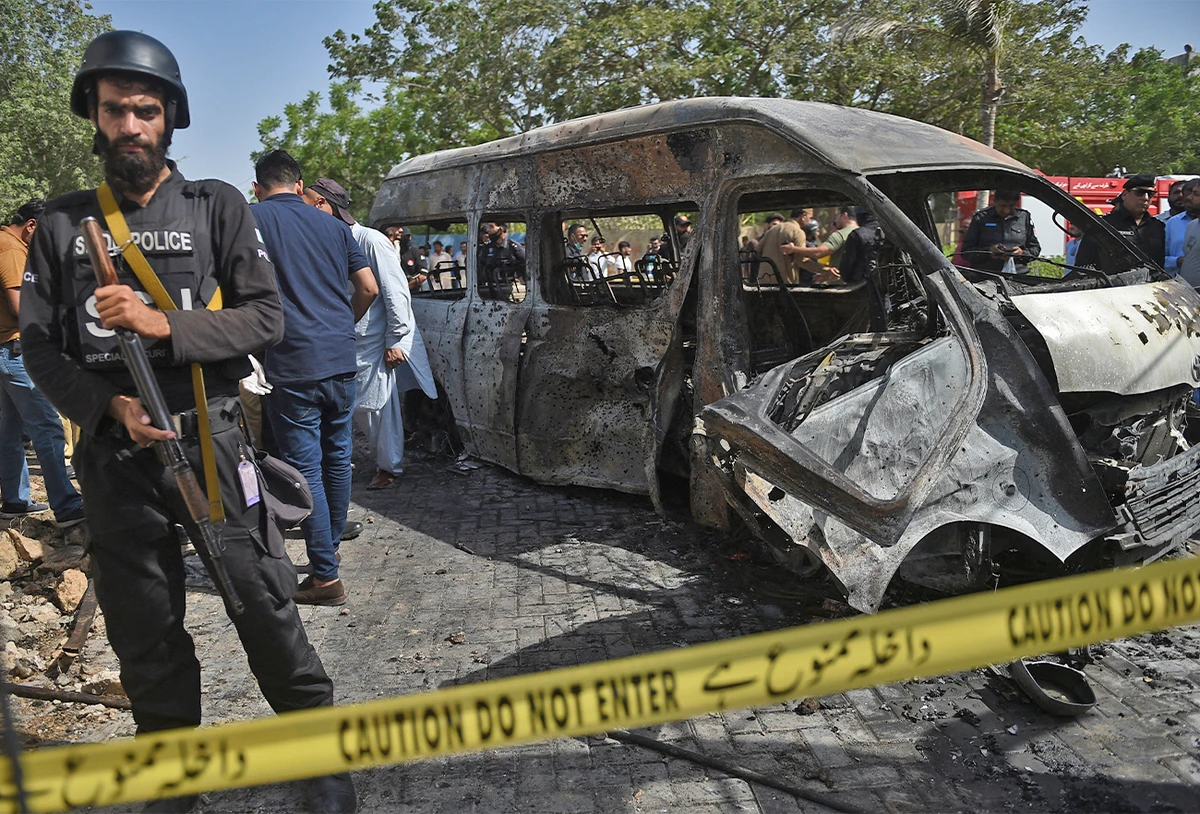
Police inspect a site around damaged vehicles following a suicide bombing near the Confucious Institute affiliated with the Karachi University, in Karachi, Pakistan, on April 26, 2022. (AFP/File)
Short Url
Updated 05 June 2022
Follow

Sindh police chief calls for ‘extraordinary security’ for Chinese nationals in Pakistan

  • The province’s top cop issued the statement while reviewing security arrangements for Chinese workers
  • Baloch separatist outfits in recent weeks have stepped up attacks against Chinese interests in Pakistan

ISLAMABAD: The police chief in Pakistan’s southern Sindh province on Sunday directed officials to take special security measures to ensure the protection of Chinese nationals working on different projects after recent attacks on them in the region.

Militant groups from Pakistan’s southwestern Balochistan province have frequently targeted Chinese interests in the country.

Beijing has invested heavily in several projects in Balochistan that are part of a multibillion-dollar joint regional connectivity initiative taken by the two countries called the China-Pakistan Economic Corridor (CPEC).

In April, three Chinese nationals were among four people killed when a suicide bomber blew herself up near at a university campus in the southern port city of Karachi. The separatist Baloch Liberation Army claimed responsibility for the attack.

“The Sindh inspector general police (IGP) has issued instructions to prepare a list of all CPEC and private projects in the province involving Chinese nationals and citizens,” said a statement issued by the central police office in Karachi, “and ensure extraordinary security measures as part of a contingency plan.”
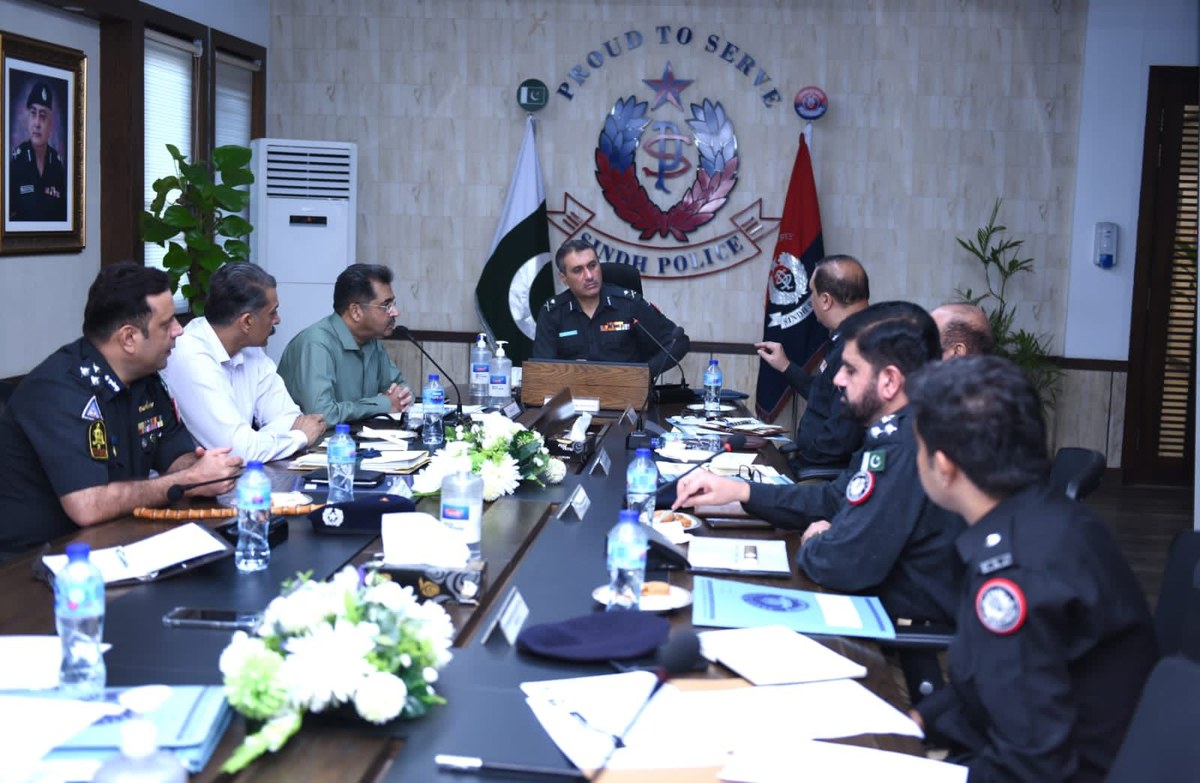


Sindh police IGP Ghulam Nabi Memon (center) hold a meeting to review security arrangements for Chinese workers in Karachi, Pakistan, on June 5, 2022. (Karachi Police)

The statement came after IGP Ghulam Nabi Memon chaired a meeting attended by top Sindh police officials to review security measures in place to protect the Chinese workers.

Last year, a suicide bomber blew up a passenger bus, killing 13 people, including nine Chinese workers employed at the Dasu Hydropower Project in northwestern Khyber Pakhtunkhwa province.

China has pledged over $60 billion for infrastructure projects in Pakistan under the CPEC framework. However, separatist militant groups in Balochistan have also targeted Chinese workers after taking up arms against the state.
EU, Pakistan sign €60 million loan agreement for clean drinking water in Karachi

Updated 17 December 2025
Follow

EU, Pakistan sign €60 million loan agreement for clean drinking water in Karachi

  • Project will finance rehabilitation, construction of water treatment facilities in Karachi city, says European Investment Bank
  • As per a report in 2023, 90 percent of water samples collected from various places in city was deemed unfit for drinking

ISLAMABAD: The European Investment Bank (EIB) and Pakistan’s government on Wednesday signed a €60 million loan agreement, the first between the two sides in a decade, to support the delivery of clean drinking water in Karachi, the EU said in a statement. 

The Karachi Water Infrastructure Framework, approved in August this year by the EIB, will finance the rehabilitation and construction of water treatment facilities in Pakistan’s most populous city of Karachi to increase safe water supply and improve water security. 

The agreement was signed between the two sides at the sidelines of the 15th Pak-EU Joint Commission in Brussels, state broadcaster Radio Pakistan reported. 

“Today, the @EIB signed its first loan agreement with Pakistan in a decade: a €60 million loan supporting the delivery of clean drinking water for #Karachi,” the EU said on social media platform X. 

Radio Pakistan said the agreement reflects Pakistan’s commitment to modernize essential urban services and promote climate-resilient infrastructure.

“The declaration demonstrates the continued momentum in Pakistan-EU cooperation and highlights shared priorities in sustainable development, public service delivery, and climate and environmental resilience,” it said. 

Karachi has a chronic clean drinking water problem. As per a Karachi Water and Sewerage Corporation (KWSC) study conducted in 2023, 90 percent of water from samples collected from various places in the city was deemed unsafe for drinking purposes, contaminated with E. coli, coliform bacteria, and other harmful pathogens. 

The problem has forced most residents of the city to get their water through drilled motor-operated wells (known as ‘bores’), even as groundwater in the coastal city tends to be salty and unfit for human consumption.

Other options for residents include either buying unfiltered water from private water tanker operators, who fill up at a network of legal and illegal water hydrants across the city, or buying it from reverse osmosis plants that they visit to fill up bottles or have delivered to their homes.

The EU provides Pakistan about €100 million annually in grants for development and cooperation. This includes efforts to achieve green inclusive growth, increase education and employment skills, promote good governance, human rights, rule of law and ensure sustainable management of natural resources.