

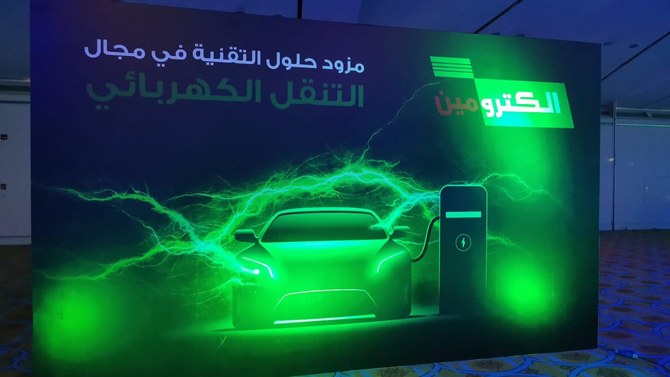

RIYADH: Petromin’s new venture Electromin aims to kick-start confidence in customers’ minds to buy electric vehicles, even as the company recently opened 100 EV charging stations in Saudi Arabia, according to its group CEO.
In an exclusive interview with Arab News, Kalyana Sivagnanam, group CEO of Petromin, called it a bold move since customers in the Kingdom are still reluctant to buy EVs.
“While it is a bold move, I think it is very timely. We also have plans to expand this further beyond 100 stations and, in due course, we will make that announcement as well,” Sivagnanam told Arab News.
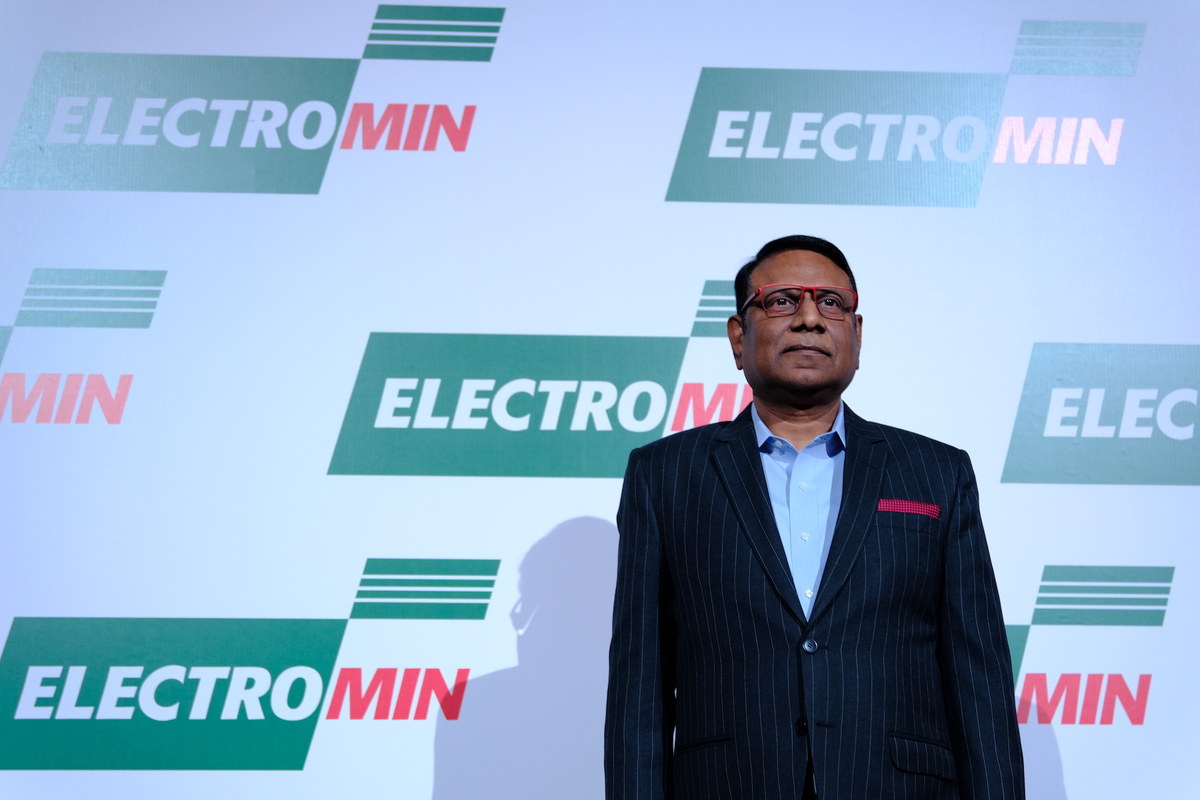
Petromin Group CEO (AN: Mohammed Albiejan)
Mobile charging solution
During the interview, Sivagnanam revealed that the most critical concern of people who wish to buy EVs is charging their vehicles if they run out of storage and get stuck on the road.
Addressing this concern, the company is providing a mobile charging service for EV users if they get stuck on the road.
SPEEDREAD
• Kalyana Sivagnanam predicted that the Kingdom would eventually need more charging stations as people will soon embrace EVs.
• By installing 100 EV charging stations, the company aims to possess a national network of electric vehicle chargers.
• The company also plans to introduce direct current fast chargers as the market grows and more customers start buying EVs in the Kingdom.
“Range anxiety is one of the big obstacles to the adoption of EVs. What if I run out of charge and get stuck on the road? So we’re also launching a mobile charger. So if you’re stuck on the road, give us a call. We will bring a mobile charger to assist you on the spot,” added Sivagnanam.
Strategic locations for charging
Sivagnanam predicted that the Kingdom would eventually need more charging stations as people will soon embrace EVs.
By installing 100 EV charging stations, the company aims to possess a national network of electric vehicle chargers.

Kalyana Sivagnanam, group CEO of Petromin talking to Arab News
“These 100 locations have been strategically mapped out. So, of course, Riyadh, Jeddah, and Dammam would have a majority of these. But we are also ensuring that there’s national coverage,” he further added.
The road ahead
Sivagnanam further noted that the company considers Electromin charging stations a long-term investment in the Kingdom, as he strongly believes in the future of EVs.
“We see this as a strategic investment, something that is very long term and important to us as a company. We’ve always been leaders. We’ve always been pioneers. So it is only natural that we go from Petromin to Electromin,” he said.
Advent of DC chargers
The company also plans to introduce direct current fast chargers as the market grows and more customers start buying EVs in the Kingdom.
“We have started with AC chargers. As the market evolves and if there is a demand for DC fast chargers, Electromin will install them. As the demand grows and we see newer vehicles come into the market, we will upgrade our chargers,” added Sivagnanam.
Vision 2030 influence
Sivagnanam also made it clear that the adoption of electric vehicles in the country will be driven by government policy. He stated that the adoption of EVs in the Kingdom would be much higher than in other countries in the coming years.
“Vision 2030 talks about sustainability. Riyadh has said that they will go for a 30 percent sale of electric vehicles by 2030. We are guided by these numbers. We think there is a strong push for a sustainable ecosystem,” he further added.
Lubricant market will continue to grow
The company also expects the lubricant industry to grow during this EV transformation period.
“Petromin is a lubricant company. We are now evolving into a future industry. We also expect the lubricant market to continue to grow. The lubricant market is not just about automotive; lubricants are also industrial and commercial,” he said.
Sivagnanam added that Petromin wants to strengthen its existing portfolio, and the company is also making sure that it is well-positioned for the future.
Talking about sustainability, he said, “Petromin will continue reducing carbon footprint. On the other hand, Electromin, as a company focused purely on EVs, will continue toward a zero-emission sustainable world.”
Toward newer horizons
Sivagnanam also added that Petromin is planning to expand into different segments and geographies. Calling India a big market, he revealed that the company is looking at opportunities in the region besides assessing prospects in Africa and other Arab markets.
“As a Saudi company, we also have a big presence outside Saudi Arabia. Petromin exports lubricants to over 40 countries. We have big ambitions to grow into many other markets. So the core business will continue to expand. We have new markets, we have growth markets, and we have new segments. Lubricants are being used in a variety of industries, and that business will continue to grow,” added Sivagnanam.


