KYIV: Ukraine’s embattled eastern region of Donetsk will not fall quickly to Russia’s assault, but it needs the world to supply more weapons to keep the offensive at bay, its governor told Reuters on Friday.
Russian troops are poised just 15 km (nine miles) north of Sloviansk, the second biggest Ukrainian-controlled city in Donetsk region, said Governor Pavlo Kyrylenko. Seizing the regions of Donetsk and neighboring Luhansk is a key Russian military objective.
While Russia is close to capturing full control of Luhansk region, just under 50 percent of Donetsk region still remains in Ukrainian hands, Kyrylenko said, a sign of how far Russia is from achieving its aim of controlling all the lands known as the Donbas.
“I am sure that they will not advance quickly. In the longer term, it all depends on the concentration of our forces,” the regional governor said in an online interview.
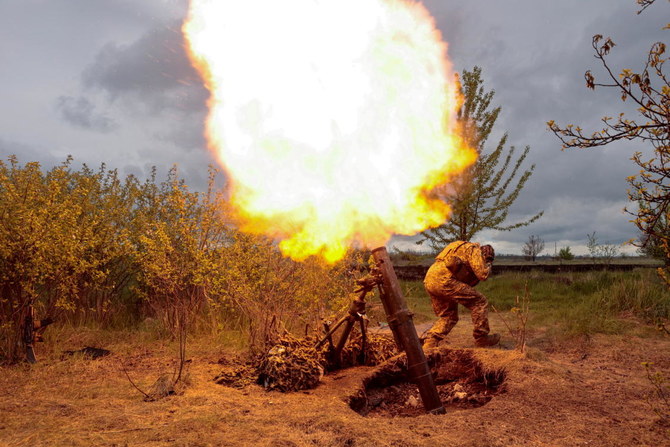
Kyrylenko said he hoped the new supply of US weapons announced on Wednesday, which includes multiple rocket launch systems, would allow Ukraine to conduct effective counter-offensives, but he emphasized that the support should not stop there.
“The world must do even more. I am sorry for this word, but it must. To give us weapons and everything we need that was announced,” said the 36-year-old Donbas native, briefly growing emotional.
He offered a bleak outlook for the region’s towns that have fallen under Russian control. By far the most prominent is the once-thriving port city of Mariupol that Russia captured after a long siege. Mariupol and the town of Volnovakha are 90 percent destroyed, he said.
“(The Russians) don’t care that nobody will be able to live in these places, nobody will be able to develop them, and rebuilding them will be very difficult,” he said.
The 100,000 remaining residents in Mariupol, 70 percent of whom are pensioners, do not have working gas, water, electricity or sewage systems, he said. Of the city’s 2,600 apartment blocks, he estimated that 1,300 had been levelled.
Russia denies targeting civilians. It calls its actions in Ukraine a “special military operation.”
The Donbas has been at war since 2014 when Russia backed a pro-Moscow insurgency that carved out a swathe of territory in a conflict that killed thousands.
Kyrylenko’s own personal story shows the complexity of the war for many Ukrainians in the area. He said his parents and elder brother chose in 2014 to stay in the part of Donetsk region that was captured by Russia-backed separatists who are now fighting alongside Russia against Ukraine.
While he said this family circumstance does not affect his work, he called the situation a “serious tribulation” on a personal level.
“Our views are completely different, I do not speak to them, but I say this frankly: I have nothing to say to (them).”


![]()

Ukraine’s eastern Donetsk region calls for more weapons to defeat Russia
Short Url
https://arab.news/mhkw4
Ukraine’s eastern Donetsk region calls for more weapons to defeat Russia
- Russian troops are poised just 15 km north of Sloviansk
- "I am sure that they will not advance quickly," the regional governor said

Latest updates


© 2026 SAUDI RESEARCH & PUBLISHING COMPANY, All Rights Reserved And subject to Terms of Use Agreement.