Pak-Afghan barter trade mechanism's implementation “within few days” - joint chamber of commerce

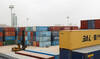
A general view of the busy Torkham border crossing between Pakistan and Afghanistan on September 18, 2019. (AN Photo)
Short Url
Updated 25 May 2022
Follow

Pak-Afghan barter trade mechanism's implementation “within few days” - joint chamber of commerce

  • Flow of Afghan transit trade, exports to Afghanistan saw steep drop since Taliban seized control of Kabul in August 2021
  • Cargo flow fell 16 percent in August 2021, further decline of 73 percent in September due to political uncertainty in wake of Taliban takeover

KARACHI: Pakistani traders this week expressed confidence bilateral trade with Afghanistan would increase after Islamabad announced it would open additional border crossings, saying a comprehensive mechanism for barter trade with Kabul had been devised and would be implemented “within the next few days.”

Pakistan’s special representative for Afghanistan, Mohammad Sadiq, announced on Monday Islamabad had decided to open new border crossings with Afghanistan in addition to five fully operational existing border crossings at Torkham, Ghulam Khan, Kharlachi, Angoor Adda and Chaman-Spin Buldok and one partially opened Dalbnadeen crossing.

“Trade volume is expected to increase after border openings,” Zubair Motiwala, the chairman of the Pakistan Afghanistan Joint Chambers of Commerce and Industry (PAJCCI), told Arab News on Tuesday, saying the barter trade mechanism would be implemented “within the next few days.”

“There are no banking channels functional at the moment and the border crossings are being opened to enhance barter trade between Pakistan and Afghanistan,” Motiwala said. “So far the comprehensive mechanism for barter trade has not been announced, which is needed for increasing bilateral trade in the absence of an international banking system in Afghanistan.”

The flow of Afghan transit trade and Pakistani exports to Afghanistan saw a steep drop after the Taliban seized control of Kabul in August 2021 in the wake of the withdrawal of United States and allied forces.

Exports from Pakistan stood at $990 million compared to imports worth $185 million during the last fiscal year, FY21, but suffered in the first quarter of the current fiscal year, FY22, according to PAJCCI data. The flow of cargo fell by 16 percent in August 2021 and saw a further decline of 73 percent in September from last year due to political uncertainty in the wake of the Taliban takeover.

The flow of cargo dipped 73 percent to 4,212 containers in September 2021 from 15,846 containers in the same month last year. In August 2021, container flow fell to 7,864 containers from 9,312 containers last year, indicating a decline of 16 percent, PAJCCI data showed.

In April 2021, the flow of transit cargo had posted growth of 169 percent, followed by a 115 percent increase in May 2021, 32 percent in June 2021, and 60 percent in July 2021 respectively, prior to the takeover by the Taliban, after which bilateral trade dropped below $1 billion.

Pakistan exported goods worth $340 million to Afghanistan and imported goods worth $122 million between September 2021 and April 2022, according to the central bank of Pakistan. 

Kabul is facing severe financial problems since the Taliban takeover which prompted foreign governments, led by the United States, to cut development and security aid, and the strict enforcement of sanctions has debilitated the country’s banking sector.

The World Bank said last month the outlook for Afghanistan’s economy was dire with per capita income having fallen by over a third in the last four months of 2021.

“One of the poorest countries in the world has become much poorer,” Tobias Haque, World Bank Senior Country Economist for Afghanistan, had said.

“The isolation of the Afghan economy following last August’s political crisis risks...leading to grave poverty, displacement, fragility, and extremism threats,” he told a briefing in April for the release of the World Bank’s first development update on the country since August.

The World Bank update said that incomes had dropped so starkly that around 37 percent of Afghan households did not have enough money to cover food while 33 percent could afford food but nothing more.

A Taliban failure to meet Western conditions, in particular access to education for all girls, has led the international community to withhold international assistance and keep financial sanctions in place, with exceptions for humanitarian aid.


Pakistan, China call for more ‘visible, verifiable’ actions to dismantle ‘terrorist’ groups in Afghanistan 

Updated 5 sec ago
Follow

Pakistan, China call for more ‘visible, verifiable’ actions to dismantle ‘terrorist’ groups in Afghanistan 

  • Foreign ministers of China, Pakistan co-chair seventh round of strategic dialogue in Beijing to review bilateral cooperation, regional situation
  • Pakistan accuses Kabul of facilitating attacks launched by militant outfits from Afghanistan’s soil, a charge Kabul has repeatedly denied

ISLAMABAD: Pakistan and China on Monday urged Afghanistan to take more visible actions to dismantle “terrorist organizations” based in its country, vowing to work with world powers to encourage Kabul to adopt moderate policies and integrate into the international community. 

Ties between Pakistan and Afghanistan remain strained as Islamabad alleges militant outfits, mainly the Tehreek-e-Taliban Pakistan (TTP) group, uses Afghan soil to launch attacks against Pakistan. Islamabad accuses the Afghan Taliban government of facilitating these attacks against Pakistan, charges Kabul have repeatedly denied. 

The joint statement by China and Pakistan was released after a meeting of both countries’ foreign ministers, Ishaq Dar and Wang Yi, in Beijing. Dar and his Chinese counterpart co-chaired the Seventh Round of China-Pakistan Foreign Ministers’ Strategic Dialogue in Beijing on Jan. 4 where they reviewed cooperation in trade, investment, economic sectors, counterterrorism, defense and regional matters. 

“The two sides called for more visible and verifiable actions to dismantle and eliminate all terrorist organizations based in Afghanistan which continue to pose serious threats to regional and global security, and prevent terrorist organizations from using the Afghan territory for terrorism against any other country and to endanger any other country,” the statement read. 

The joint statement said the two countries will work with world powers to encourage Kabul to adopt an inclusive political framework, moderate policies, and pursue good neighborliness. 

On bilateral cooperation, China and Pakistan said they had agreed to focus on industry, agriculture and mining, and also promote the building and operation of the Gwadar Port in southwestern Pakistan. 

“The two sides will deepen cooperation in areas such as trade and investment, information technology, science and technology, cybersecurity, technical and vocational training and education, and people-to-people and cultural exchanges,” the statement said. 

“The two sides agreed to further strengthen cooperation in the financial and banking sectors, including extending mutual support at regional and international multilateral financial forums. Pakistan appreciated China for providing support for its fiscal and financial sectors.”

The joint statement said China commended Pakistan’s “comprehensive measures” to combat “terrorism” and protect Chinese personnel, projects and institutions in the country.

“The two sides reiterated their commitment to combating terrorism in all its forms and manifestations with zero tolerance, and agreed to further deepen all-round cooperation on counter-terrorism and security, and make concerted efforts to ensure that the China-Pakistan Belt and Road cooperation advance in a secure and smooth manner,” the statement said. 

Pakistan and China expressed their willingness to conduct a transboundary water resources cooperation, stressing the importance of fulfilling international legal obligations. The statement comes as Pakistan frequently accuses India of violating a water-sharing agreement between the two neighbors, claiming New Delhi purposefully diverts the flow of water away from its territory. 

Islamabad has warned that any move by New Delhi to stop or divert the flow of Indus rivers to Pakistan will be considered an “act of war.”

Pakistan and China also demanded an unconditional, comprehensive and permanent ceasefire in Gaza in their joint statement, reaffirming their support for the Palestinian people’s right to self-determination and for the implementation of a two-state solution in the Middle East. 

“The two sides also expressed their concern at the situation in the occupied West Bank, and urged the need for urgently addressing it,” the statement said.