BEIJING/SHANGHAI: Shanghai cautiously pushed ahead on Saturday with plans to restore part of its transport network in a major step toward exiting a weeks-long COVID-19 lockdown, while Beijing kept up its defenses in an outbreak that has persisted for a month.
Shanghai’s lockdown since the beginning of April has dealt a heavy economic blow to China’s most populous city, stirred debate over the sustainability of the nation’s zero COVID-19 policy and stoked fears of future lockdowns and disruptions.
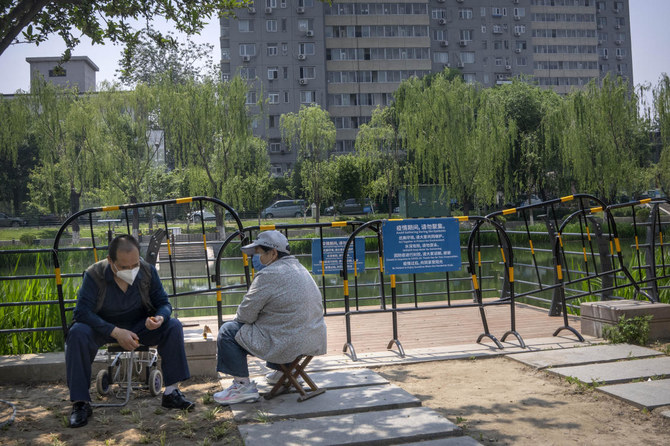
Unlike the financial hub, Beijing has refrained from imposing a city-wide lockdown, reporting dozens of new cases a day, versus tens of thousands in Shanghai at its peak. Still, the curbs and endless mass testing imposed on China’s capital have unsettled its economy and upended the lives of its people.
As Beijing remained in COVID-19 angst, workers in Shanghai were disinfecting subway stations and trains before planned restoration of four metro lines on Sunday.
While service will be for limited hours, it will allow residents to move between districts and meet the need for connections to railway stations and one of the city’s two airports. More than 200 bus routes will also reopen.
Underlining the level of caution, Shanghai officials said commuters would be scanned for abnormally high body temperatures and would need to show negative results of PCR tests taken within 48 hours.
Shanghai found 868 new local cases on Friday, compared with 858 a day earlier, municipal health authorities said on Saturday, a far cry from the peak in daily caseloads last month.
No new cases were found outside quarantined areas, down from three a day earlier, health authorities added.
The city of 25 million has gradually reopened shopping malls, convenience stores and wholesale markets and allowed more people to walk out of their homes, with community transmissions largely eliminated in recent days.
Still, Shanghai tightened stringent curbs on two of its 16 districts on Friday.
The authorities “urge enterprises to strictly implement safe production, which is their responsibility, especially in meeting some epidemic prevention and control requirements,” an official from the city’s emergency bureau told a news conference on Saturday.
Delta Airlines said on Friday it would resume one daily flight to Detroit from Shanghai via Seoul on Wednesday.
Most of Beijing’s recent cases have been in areas already sealed up, but authorities remained on edge and quick to act under China’s ultra-strict policy.
In Fengtai, a district of 2 million people at the center of Beijing’s counter-COVID-19 efforts, bus and metro stations have been mostly shut since Friday and residents told to stay home.
A Fengtai resident was stocking up on groceries at a nearby Carrefour on Saturday, uncertain whether restrictions would continue.
“I’m not sure if I can do more shopping over the next week or so, so I’ve bought a lot of stuff today and even bought some dumplings for the Dragon Boat holiday” in early June, she said, asking not to be identified.
On Friday, thousands of residents from a neighborhood in Chaoyang, Beijing’s most populous district, were moved to hotel quarantine after some cases were detected, according to state-run China Youth Daily.
Social media users on China’s Twitter-like Weibo were swift to draw parallels with Shanghai, where entire residential buildings were taken to centralized quarantine facilities in response to a single positive COVID-19 case in some instances.


![]()

Shanghai inches toward COVID-19 lockdown exit, Beijing plays defense
Short Url
https://arab.news/ceqym
Shanghai inches toward COVID-19 lockdown exit, Beijing plays defense
- Shanghai’s lockdown since the beginning of April has dealt a heavy economic blow to China’s most populous city


Latest updates


© 2026 SAUDI RESEARCH & PUBLISHING COMPANY, All Rights Reserved And subject to Terms of Use Agreement.