

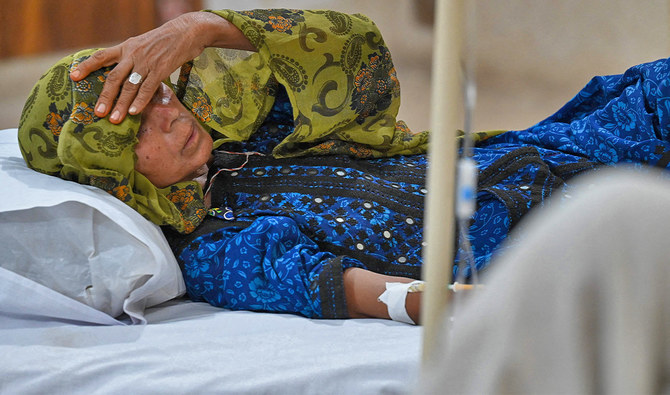

ISLAMABAD: The scorching spell of a record-breaking heatwave in Pakistan has led to an increase in acute kidney injury (AKI), diarrhoea and gastroenteritis cases among people, particularly in southern parts of Punjab and Sindh province, the National Institute of Health (NIH) said on Monday.
A heatstroke is a medical emergency that can be fatal if not managed properly, the research facility said, describing it as a form of hyperthermia in which the body temperature is elevated rapidly. It results in the failure of the sweating mechanism and makes the body unable to cool down.
Pakistan has been smothered by high temperatures since late April, in extreme weather the World Meteorological Organization (WMO) has warned is consistent with climate change. The situation compelled Prime Minister Shehbaz Sharif to preside over an emergency session on Monday and constitute a task force to chalk out a comprehensive plan to mitigate the impacts of climate change.
“In the wake of recent wave of high environmental temperatures in different parts of the country, the morbidity and mortality attributable to heatstroke may increase,” Dr. Mumtaz Ali Khan, a focal person at the NIH, told Arab News.
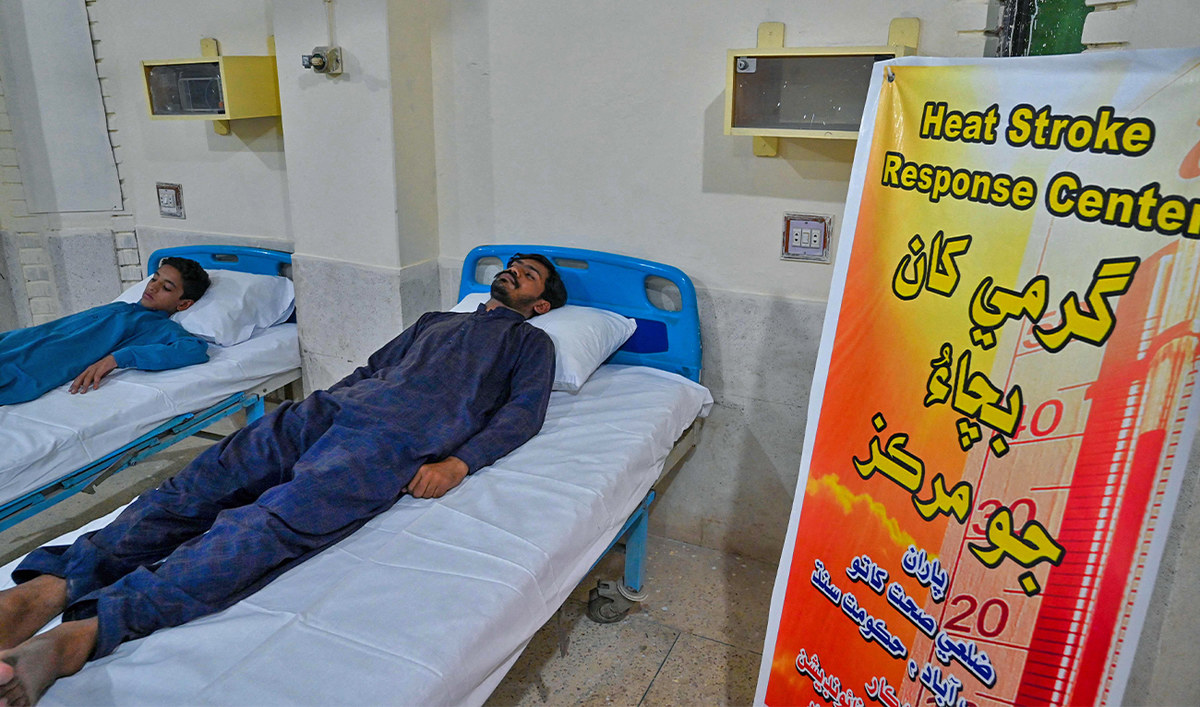
In this picture taken on May 11, 2022, patients suffering from heat stroke are treated at a hospital in Jacobabad, in the southern Sindh province. (AFP)
As a heatstroke could result in death of a person or damage their organs, the NIH had issued instructions to all federating units to establish “heatstroke centers” at all hospitals and publicize their contact details for the public, he said.
“It is a fact that a heatstroke can cause death or damage organs, including kidney, if it is not managed properly in time,” Khan said.
“Some hospitals have set up these centers and some are in the process to establish them in order to deal with any emergency.”
Diarrhoea and gastroenteritis are common diseases caused by dehydration amid extreme temperatures, according to Khan. A dehydrated person may not be able to sweat fast enough to dissipate heat, which causes the body temperature to rise.
Khan said the NIH had advised provincial governments and all public hospitals to ensure enough stockpile of supplies, including intravenous fluids, to deal with issues like heatstroke in their respective areas.
“We are continuously advising public to stay hydrated,” he said, adding the issue of heatstroke would automatically subside with the drop in temperatures in the coming weeks.
Dr. Zaheer Babar, a director at the Pakistan Meteorological Department (PMD), said the current spell of hot weather would persist in southern parts of Punjab and Sindh over the next week, with temperatures rising 7-9 degrees Centigrade above the normal.
“People should avoid direct sun exposure and keep hydrated to avoid the sunstroke,” he told Arab News.
Babar said temperatures were expected to drop a bit in central Punjab this week, mainly due to dust storms/gusty winds, and rain-thunderstorms at scattered places, but they would rise again next week.
“Day temperatures are likely to rise again from Wednesday,” he said. “We are issuing advisories to general public and all public and private institutions to keep them abreast of the latest on heatwave and its possible impacts on our daily lives.”


