DUBAI: Spreading protests across Iran over a cut in state subsidies on food have turned political with slogans calling for top leaders to step down, according to posts on social media, and unconfirmed reports said at least four protesters were killed.
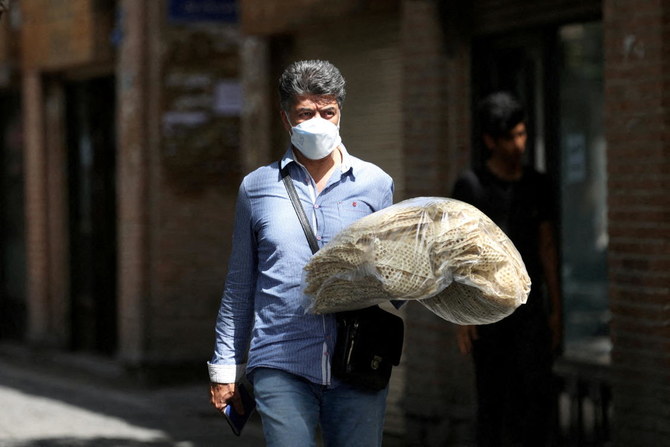
Protests began in some cities last week sparked by the government’s subsidy cut decision that caused price hikes in Iran by as much as 300 percent for a variety of flour-based staples.
The government also raised prices of some basic goods such as cooking oil and dairy products in Iran, where almost half of its 85 million population is under the poverty line, according to official figures.
Now protesters have expanded their demands, calling for more political freedom, an end to the Islamic Republic and the downfall of its leaders, according to witnesses and social media posts.
Videos posted online showed demonstrators burned images of Iran’s top authority, Supreme Leader Ayatollah Ali Khamenei, and called for the return of Reza Pahlavi, the exiled son of the toppled Shah of Iran.
Footage on Twitter showed protests in dozens of provinces such as Ardabil, Khuzestan, Lorestan and Razavi Khorasan. Some state-affiliated media, meanwhile, said calm had been restored in the country.
However, Protests continued on early Sunday in at least 40 cities and towns across Iran, including in the town of Quchan near the Turkmen border, the northern city of Rasht and the western city of Hamedan, according to videos posted on social media.
Reuters could not independently confirm authenticity of social media posts and videos. Iran’s state news agency IRNA said on Friday that some shops were “set on fire in some cities,” prompting police to arrest scores of “provocateurs.”
The semi-official ILNA news agency on Saturday, citing a lawmaker, said one protester was killed in Dezful, a city in the oil producing southwestern province of Khuzestan. But videos on Twitter showed at least four demonstrators were killed by security forces.
Residents of the capital, contacted by Reuters on Sunday, reported a heavy presence of security forces across Tehran.
Global Internet monitor NetBlocks on Saturday reported a disruption lasting hours in Iran amid protests, a potential move by the authorities to prevent protesters from communicating with each other and sharing video on social media.
The latest unrest adds to mounting pressure on Iran’s rulers, who are struggling to keep the crippled economy afloat under US sanctions, reimposed since 2018 when Washington ditched Tehran’s 2015 nuclear deal with major powers. Talks to revive the pact have stalled since March.
Fearing a revival of protests in recent years that seemed to shed light on the establishment’s vulnerability to popular anger over the economy, the government has described its decision as “fair redistribution” of subsidies to lower-income people.
In 2019, what began as scattered protests over a surprise increase in fuel prices, quickly spread into one of the biggest challenges to Iran’s rulers, sparking the bloodiest crackdown in the 40-year history of the Islamic Republic.
The reported death toll in 2019 has varied between a Reuters account of 1,500 dead and an Amnesty International figure of more than 300. Both have been dismissed by Iranian authorities.

Price protests turn political in Iran as rallies spread
Short Url
https://arab.news/8cqz9
Price protests turn political in Iran as rallies spread
- Protests began in some cities last week sparked by the government’s subsidy cut decision that caused price hikes by as much as 300% for a variety of flour-based staples
- Protesters have expanded their demands, calling for more political freedom, an end to the Islamic Republic and the downfall of its leaders, according to social media posts
US presses missile issue as new Iran talks to open in Geneva
- New round of negotiations in Geneva comes after the US carried out a massive military build-up in the region
- The dispute between the countries mostly revolves around Iran’s nuclear program
GENEVA: The United States and Iran are set to hold indirect talks in Switzerland on Thursday aiming to strike a deal to avert fresh conflict and bring an end to weeks of threats.
The new round of negotiations in Geneva comes after the US carried out a massive military build-up in the region and President Donald Trump repeatedly threatened to strike Iran if a deal is not reached.
In his State of the Union address on Tuesday, Trump accused Iran of “pursuing sinister nuclear ambitions.”
He also claimed Tehran had “already developed missiles that can threaten Europe and our bases overseas, and they’re working to build missiles that will soon reach the United States of America.”
The Iranian foreign ministry called these claims “big lies.”
The maximum range of Iran’s missiles is 2,000 kilometers (1,200 miles) according to what Tehran has publicly disclosed. However the US Congressional Research Service estimates they top out at about 3,000 kilometers — less than a third of the distance to the continental United States.
The dispute between the countries mostly revolves around Iran’s nuclear program, which the West believes is aimed at building an atomic bomb but Tehran insists is peaceful.
However the US has also been pushing to discuss Iran’s ballistic missile program, as well as Tehran’s support for armed groups hostile toward Israel.
Secretary of State Marco Rubio warned that Iran must also negotiate on its missile program, calling Tehran’s refusal to discuss ballistic weapons “a big, big problem” on the eve of the talks.
He followed up by saying “the president wants diplomatic solutions.”
Iran has taken anything beyond the nuclear issue off the negotiating table and has demanded that the US sanctions crippling its economy be part of any agreement.
‘Neither war nor peace’
Iranian President Masoud Pezeshkian said on Wednesday he had a “favorable outlook for the negotiations” that could finally “move beyond this ‘neither war nor peace’ situation.”
Foreign Minister Abbas Araghchi, who is leading the Iranian delegation at the talks, has called them “a historic opportunity,” adding that a deal was “within reach.”
In a foreign ministry statement that followed a meeting with his Oman counterpart, Araghchi said the success of the US negotiations depend “on the seriousness of the other side and its avoidance of contradictory behavior and positions.”
The US will be represented by envoy Steve Witkoff and Jared Kushner, who is married to Trump’s daughter Ivanka.
The two countries held talks earlier this month in Oman, which is mediating the negotiations, then gathered for a second round in Geneva last week.
A previous attempt at negotiations collapsed when Israel launched surprise strikes on Iran last June, beginning a 12-day war that Washington briefly joined to bomb Iranian nuclear sites.
In January, fresh tensions between the US and Iran emerged after Tehran engaged in a bloody crackdown on widespread protests that have posed one of the greatest challenges to the Islamic republic since its inception.
Trump has threatened several times to intervene to “help” the Iranian people.
Emile Hokayem, senior fellow for Middle East security at the International Institute for Strategic Studies, said that “the region seems to expect a war at this point.”
In January, there was “a big push by a number of Middle Eastern states to convince the US not to” strike Iran.
“But there’s a lot of apprehension at this point, because the expectation is that this time” a war would be “bigger” than the one in June.
Tehran residents who spoke to AFP were divided as to whether there would be renewed conflict.
Homemaker Tayebeh noted that Trump had “said that war would be very bad for Iran.”
“There would be famine and people would suffer a lot. People are suffering now, but at least with war, our fate might be clear,” the 60-year-old said.
The new round of negotiations in Geneva comes after the US carried out a massive military build-up in the region and President Donald Trump repeatedly threatened to strike Iran if a deal is not reached.
In his State of the Union address on Tuesday, Trump accused Iran of “pursuing sinister nuclear ambitions.”
He also claimed Tehran had “already developed missiles that can threaten Europe and our bases overseas, and they’re working to build missiles that will soon reach the United States of America.”
The Iranian foreign ministry called these claims “big lies.”
The maximum range of Iran’s missiles is 2,000 kilometers (1,200 miles) according to what Tehran has publicly disclosed. However the US Congressional Research Service estimates they top out at about 3,000 kilometers — less than a third of the distance to the continental United States.
The dispute between the countries mostly revolves around Iran’s nuclear program, which the West believes is aimed at building an atomic bomb but Tehran insists is peaceful.
However the US has also been pushing to discuss Iran’s ballistic missile program, as well as Tehran’s support for armed groups hostile toward Israel.
Secretary of State Marco Rubio warned that Iran must also negotiate on its missile program, calling Tehran’s refusal to discuss ballistic weapons “a big, big problem” on the eve of the talks.
He followed up by saying “the president wants diplomatic solutions.”
Iran has taken anything beyond the nuclear issue off the negotiating table and has demanded that the US sanctions crippling its economy be part of any agreement.
‘Neither war nor peace’
Iranian President Masoud Pezeshkian said on Wednesday he had a “favorable outlook for the negotiations” that could finally “move beyond this ‘neither war nor peace’ situation.”
Foreign Minister Abbas Araghchi, who is leading the Iranian delegation at the talks, has called them “a historic opportunity,” adding that a deal was “within reach.”
In a foreign ministry statement that followed a meeting with his Oman counterpart, Araghchi said the success of the US negotiations depend “on the seriousness of the other side and its avoidance of contradictory behavior and positions.”
The US will be represented by envoy Steve Witkoff and Jared Kushner, who is married to Trump’s daughter Ivanka.
The two countries held talks earlier this month in Oman, which is mediating the negotiations, then gathered for a second round in Geneva last week.
A previous attempt at negotiations collapsed when Israel launched surprise strikes on Iran last June, beginning a 12-day war that Washington briefly joined to bomb Iranian nuclear sites.
In January, fresh tensions between the US and Iran emerged after Tehran engaged in a bloody crackdown on widespread protests that have posed one of the greatest challenges to the Islamic republic since its inception.
Trump has threatened several times to intervene to “help” the Iranian people.
Emile Hokayem, senior fellow for Middle East security at the International Institute for Strategic Studies, said that “the region seems to expect a war at this point.”
In January, there was “a big push by a number of Middle Eastern states to convince the US not to” strike Iran.
“But there’s a lot of apprehension at this point, because the expectation is that this time” a war would be “bigger” than the one in June.
Tehran residents who spoke to AFP were divided as to whether there would be renewed conflict.
Homemaker Tayebeh noted that Trump had “said that war would be very bad for Iran.”
“There would be famine and people would suffer a lot. People are suffering now, but at least with war, our fate might be clear,” the 60-year-old said.
© 2026 SAUDI RESEARCH & PUBLISHING COMPANY, All Rights Reserved And subject to Terms of Use Agreement.


