

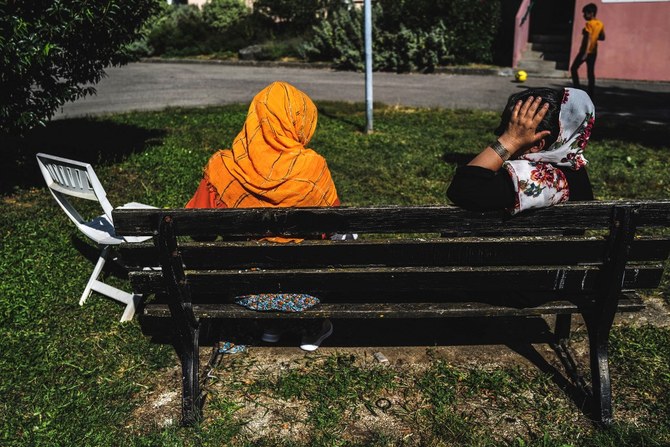

LONDON: Female Afghan evacuees to the UK are facing heightened risks of domestic violence due to Home Office failures to find permanent accommodation for refugees eight months after Britain’s exit from Afghanistan, a rights charity said on Thursday.
Human Rights Watch has urged the Home Office to step up efforts to house refugees, with 12,000 of the 18,000 evacuated from Afghanistan still in temporary accommodation.
Assistant women’s rights researcher at HRW, Sahar Fetrat, said of five women interviewed by the charity, all, while grateful for being evacuated, were facing increased domestic violence, surveillance, and constraints on their movement while they remained in temporary housing.
“They dealt with a huge amount of trauma before and during their flight and are now dealing with conditions affecting their mental health and keeping them from integrating.
“The women I spoke with are resilient and eager to move ahead in beginning new lives in the UK, but they feel stuck right now, in environments that are often dangerous for women. They need more support from the UK government to rebuild their and their families’ lives,” Fetrat added.
Having written to the home secretary, minister for refugees, and other relevant UK authorities in April to raise these concerns, HRW said it was still waiting on a response.
The women said that the lack of personal space in temporary accommodation had increased levels of distress, while pressure from the evacuated community members had “intimidated” those women facing domestic violence from reporting it.
HRW reported that one woman said: “A woman was battered by her husband in our hotel. When she tried to report it, the community in the hotel stopped her by intimidating her over the consequences.”
Another woman said: “Several times, I have heard a couple fighting next door. The husband shouts and leaves, slamming the door, and the wife cries loudly. She has spent seven months in a hotel room and hasn’t seen anything but the hotel premises.”
The women said traditional gender roles meant some of the women would have faced limited freedom in Afghanistan, but the strains would be offset by the privacy of their own space.
Women from less traditional backgrounds were facing microaggressions and sexist comments from some men, with one woman describing having returned from a run to be confronted by a man who said, “I see you have integrated too soon, haven’t you?”
Young, single women were reportedly receiving harsher judgements, with the environment being described as “getting more toxic and intolerable day by day.”
Four of the women interviewed said they had been evacuated because they had worked outside the home, in some cases in prominent jobs, with the fifth woman evacuated due to her husband’s role in the previous Afghan government.
One of the women said: “The sense of constantly being watched for every action I take, everywhere I go, getting judged for not wearing a hijab, is restricting me. It is tiresome.”
HRW said the government must take the needs and preference of women into account, with special attention to concerns that single women or women-headed households may face, as it addresses the worsening refugee crisis.
“The government should have clear and effective policies to deal with domestic violence in temporary housing, including posted and outreach materials in Afghan languages.
“Staff in these facilities should be trained to recognize and respond to gender-based violence, should be made aware of and sensitive to the residents’ diverse backgrounds, and should treat all residents with respect,” it added.


