Japan, EU agree to step up sanctions against Russia

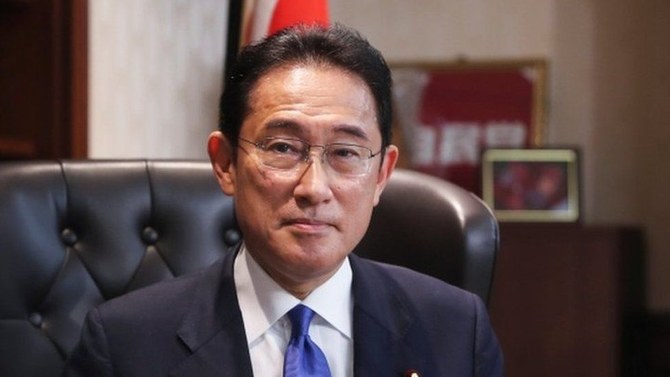
Japanese Prime Minister Fumio Kishida, who held talks in Tokyo with Von der Leyen, also agreed to enhance their strategic partnership to diversify and strengthen supply chains.
Short Url
Updated 12 May 2022
Follow

Japan, EU agree to step up sanctions against Russia

RIYADH: Japan and the EU have agreed to step up sanctions on Russia in response to the Russian invasion of Ukraine, according to a statement released by Ursula von der Leyen, president of the European Commission.
Japanese Prime Minister Fumio Kishida, who held talks in Tokyo with Von der Leyen, also agreed to enhance their strategic partnership to diversify and strengthen supply chains.
Kishida said that Japan supports tough sanctions against Russia as the ongoing war is shaking the world order not only in Europe but in Asia as well.
The Japanese prime minister added that security in Europe and in the Indo-Pacific are inseparable.
Meanwhile, the leaders promised cooperation in a range of areas including digital transformation, renewable energy and climate.
Von der Leyen said the EU’s Global Gateway strategy will enable further joint projects in the region and promote connectivity partnership and green alliance. 


Oil rises as expanding US-Israeli conflict with Iran elevates supply risks

Updated 7 sec ago
Follow

Oil rises as expanding US-Israeli conflict with Iran elevates supply risks

SINGAPORE: Oil prices rose for a third day on ​Tuesday as the widening US-Israeli conflict with Iran and threats to shipping through the Strait of Hormuz ‌heightened fears of supply disruptions from the key Middle East producing region.

Brent crude futures were at $79.44 a barrel, up $1.70, or 2.2 percent, by 07:00 am Saudi time. On Monday, the contract surged to as high as $82.37, its highest since January 2025, though it pared those gains to settle 6.7 percent higher.

US West Texas ​Intermediate crude jumped $1.17, or 1.6 percent, to $72.40 a barrel. In the previous session, the contract initially climbed to its highest ​since June 2025 before sliding back to still settle up 6.3 percent.

“With no quick de-escalation in ⁠sight, the Strait of Hormuz effectively closed and Iran showing a willingness to target energy infrastructure in the region, upside ​risks remain and they grow the longer the conflict drags on,” Tony Sycamore, IG market analyst, said in a note.

The ​US and Israeli air war against Iran widened on Monday with Israel attacking Lebanon and Iran responding with strikes against energy infrastructure in Gulf countries and against tankers in the Strait of Hormuz.

Tankers and container ships are also avoiding the waterway as insurers have cancelled their coverage for vessels, while global ​oil and gas shipping rates have soared. Concerns about transiting the waterway increased after Iranian media reported on Monday that a senior Iranian Revolutionary ​Guards official said the Strait of Hormuz is closed and warned Iran will fire on any ship trying to pass.

About 20 percent of the world’s oil and gas ‌pass ⁠through the Strait of Hormuz.

“The market continues to digest the risk of escalation in the Middle East,” said ING analysts in a Tuesday note.

“While there are concerns about oil flows through the Strait of Hormuz, a greater risk to the market would be Iran targeting additional energy infrastructure in the region. This could lead to more prolonged outages.”

Israeli Prime Minister ​Benjamin Netanyahu said on Monday that ​the US and Israel’s ⁠war against Iran may take “some time” but it will not take years.

Analysts expect oil prices to remain elevated over the coming days while markets focus on the impact of escalating Middle ​East conflict.

Bernstein on Monday raised its 2026 Brent oil price assumption from $65 to $80 a ​barrel, but sees ⁠prices reaching $120-$150 in an extreme case of prolonged conflict.

Refined product futures are also gaining as the Middle East is a key supplier of fuels and their processing facilities are at risk. On Monday, Saudi Arabia shut its biggest domestic oil refinery after ⁠a drone ​strike.

US ultra-low-sulfur diesel futures were up 4.2 percent at $3.0207 per gallon after reaching a two-year high ​on Monday, while gasoline futures were up 1.7 percent at $2.4113 per gallon after climbing 3.7 percent in the previous session.

European gasoil futures gained 4.3 percent to $925 a metric tonne, after climbing ​18 percent on Monday.