Water scarcity in Pakistan’s southwest causes cholera outbreak, two dead

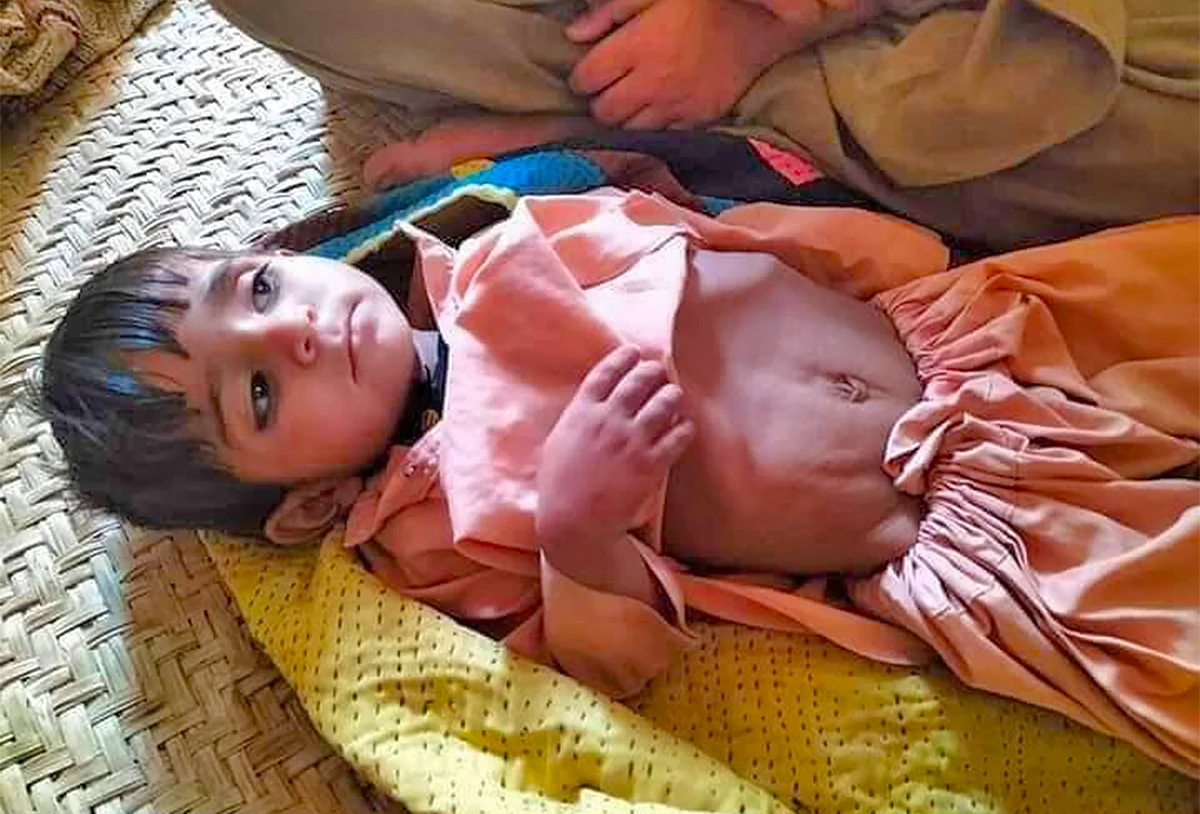
A young boy suffering from cholera is treated at a basic health unit in Pir Koh, a village near Dera Bugti in Pakistan’s Balochistan province, on May 11, 2022. (Photo courtesy: Wadera Qadir Bugti)
Short Url
Updated 11 May 2022
Follow

Water scarcity in Pakistan’s southwest causes cholera outbreak, two dead

  • The area has been hit by cholera since people used contaminated ponds for drinking purposes
  • Officials say nearly 1,500 people have been facing health issues in the remote Pir Koh settlement

QUETTA: The provincial administration of Balochistan on Wednesday took notice of water scarcity in Pir Koh, a settlement in the remote region of Dera Bugti in Pakistan’s southwest, which caused an outbreak of cholera and claimed the lives of at least two people.
With a population of about 40,000, the residents of the area were forced to rely on contaminated ponds to quench their thirst in the absence of adequate clean drinking water.
“Chief Minister Balochistan Mir Abdul Quddus Bizenjo has taken notice of water scarcity in Pir Koh area of Dera Bugti,” said an official statement circulated by his office. “A special fund of Rs10 million has been released to the PHE [Public Health Engineering] department to supply water [to the area] on an emergency basis.”
The statement noted that the provincial administration had also decided to send medical teams to Pir Koh while instructing relevant authorities to ensure continuous water supply to the area with the help of tankers until the beginning of the monsoon season.
According to local officials, about 1,500 people were facing health issues due to the cholera outbreak which also claimed the lives of a woman and a child on Wednesday morning.
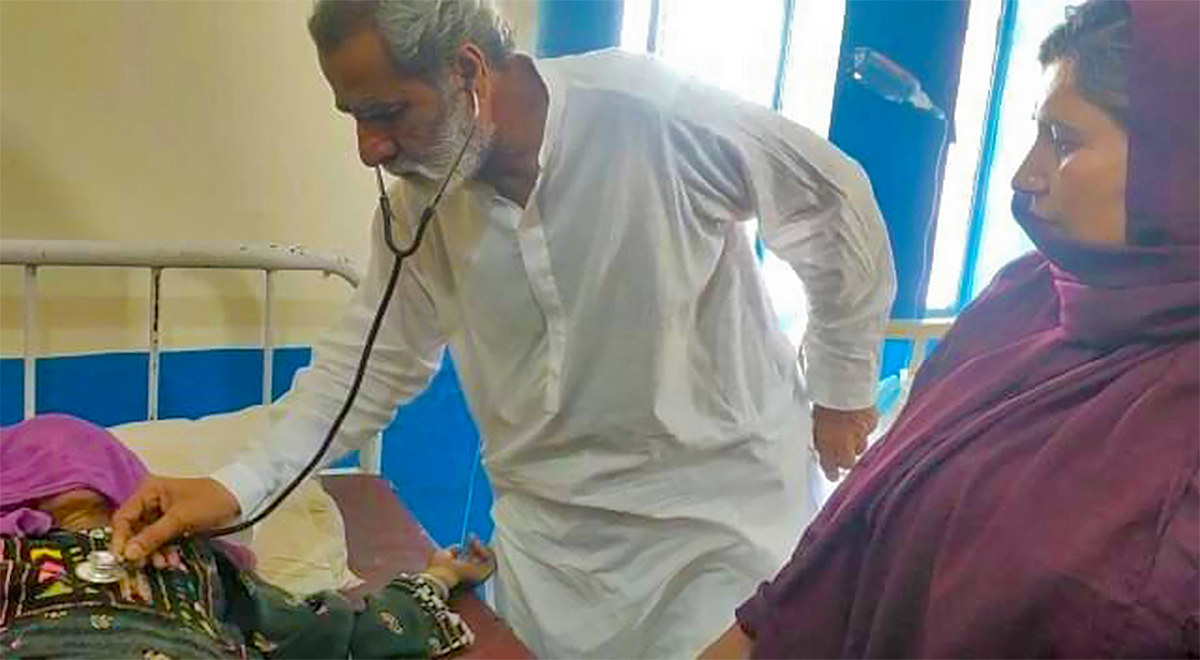


A doctor examines a woman diagnosed with cholera in Pir Koh, a settlement in the remote region of Dera Bugti in Pakistan’s Balochistan province on May 11, 2022. (Photo courtesy: Wadera Qadir Bugti)

“The basic health unit [in Pir Koh] has been treating nearly 1,500 patients, most of them women and children, with clear symptoms of diarrhea since the last week of April after the town was hit by a cholera outbreak,” Azam Bugti, district health officer in Dera Bugti, told Arab News.
“We collected water samples from ponds being used for drinking purposes which have tested positive for the bacteria causing cholera,” he added.
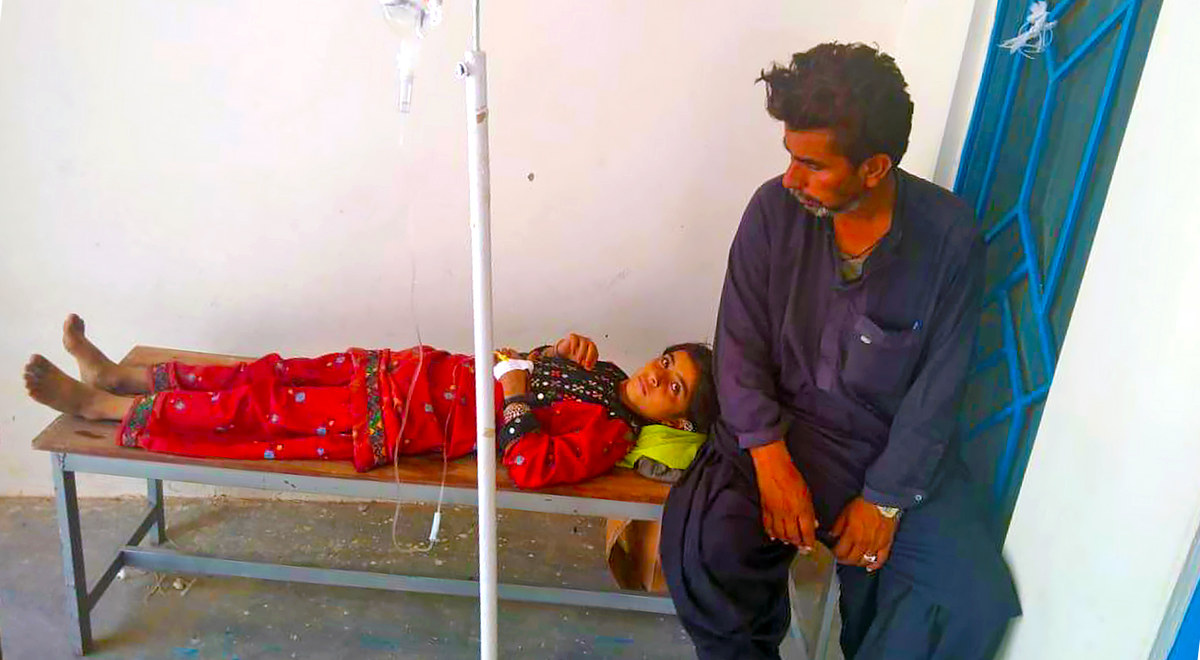


An attendant sits with a girl at a basic health unit in Pir Koh, a village near Dera Bugti in Pakistan’s Balochistan province, on May 11, 2022. (Photo courtesy: Wadera Qadir Bugti)

Pictures and video clips on social media showed the residents of Pir Koh fetching contaminated water from a pool to meet their requirements, as hundreds of others queued up to get clean drinking water from bousers sent by the provincial administration.
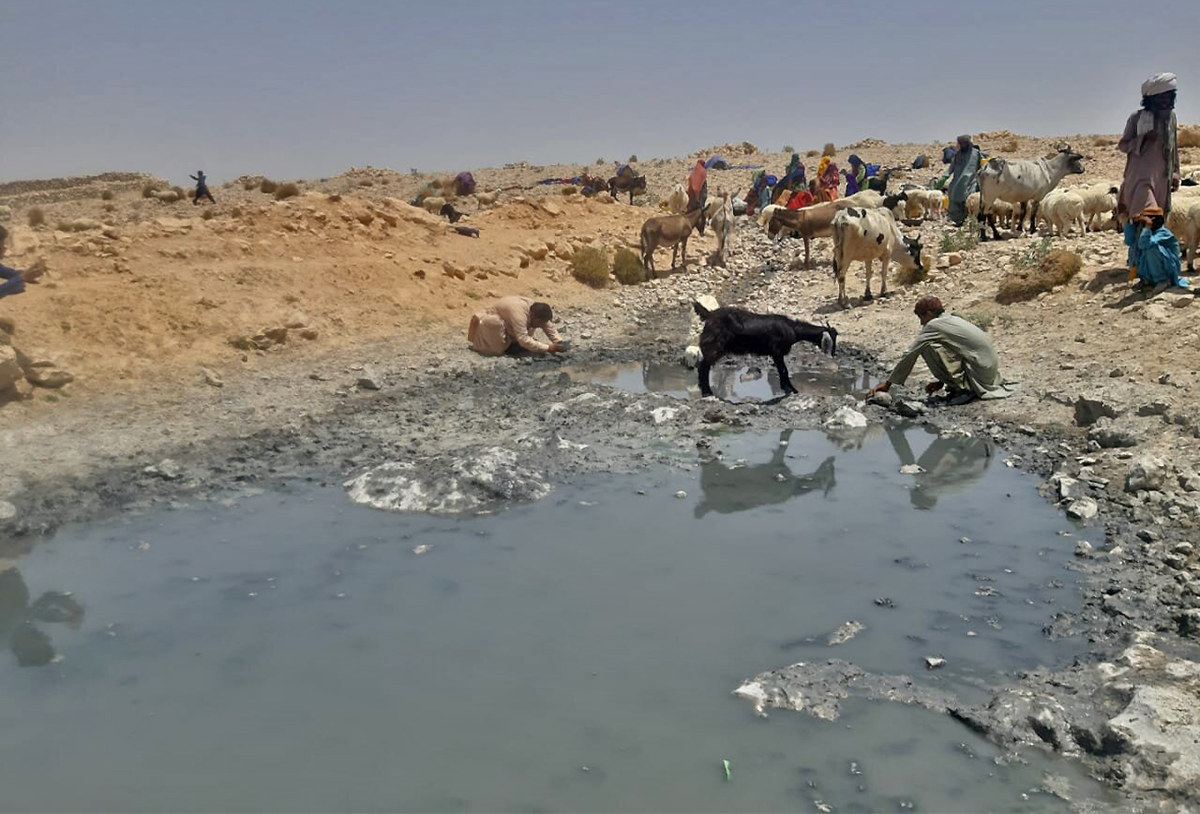


Residents fetch water from a contaminated pond in Pir Koh, a village near Dera Bugti in Pakistan’s Balochistan province, on May 11, 2022. (Photo courtesy: Bushra Qamar)

“The water needs of people in the area increased as temperature started rising in the first week of May,” said the deputy commissioner of Dera Bugti, Mumtaz Kethran. “Unfortunately, water level in most of the towns in Dera Bugti has dropped to about a thousand feet. Hence, the population is now dependent on rains.”
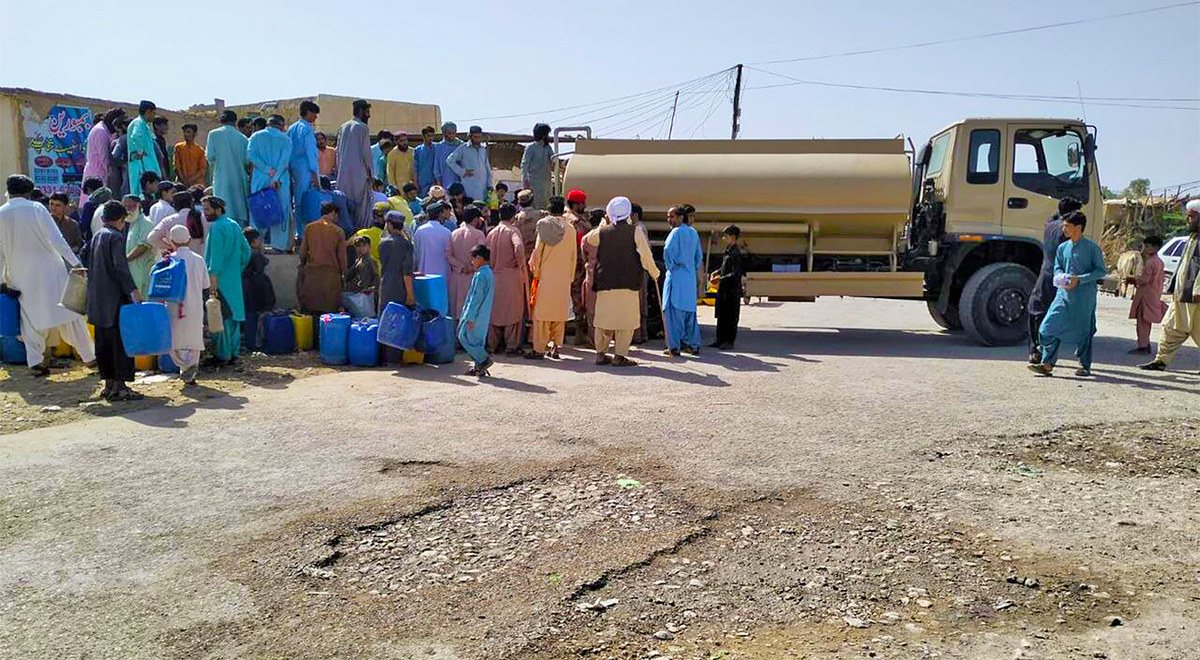


People gather around a water tanker in Pir Koh, a village near Dera Bugti in Pakistan’s Balochistan province, on May 11, 2022. (Photo courtesy: Faiq Ali Bugti)

Dera Bugti, a town rich with natural gas, has been fulfilling the country’s fuel requirements since 1951, though poverty and lawlessness have deprived its own people of basic needs during all these decades.
Pakistan’s state-owned Oil and Gas Development Company Limited (OGDCL) has been regularly providing four water bousers to fulfill the needs of people in Pir Koh, but they are no longer sufficient for the growing population of the area.
“We have been getting these water bousers for the population of 40,000 people,” Shahid Husain Bugti, a resident of the settlement, said. “However, they are not enough to meet the needs of Pir Koh.”


Punjab tells court 17 killed during Basant kite-flying festival this month

Updated 5 sec ago
Follow

Punjab tells court 17 killed during Basant kite-flying festival this month

  • Report by provincial authorities says electrocution, rooftop falls among leading causes
  • Festival was revived this year after nearly two decades of ban over safety concerns

ISLAMABAD: The Punjab government on Wednesday informed the Lahore High Court 17 people were killed in Lahore during the Feb. 6–8 Basant kite-flying festival, which was revived this year after nearly two decades of restrictions.

Basant, a traditional Punjabi spring festival marked by rooftop kite flying, was banned in Punjab after repeated fatalities linked to metallic or chemically treated kite strings, electrocution from power lines, rooftop falls and injuries to motorcyclists.

The provincial government revived the festival this year under regulatory measures that included restrictions on hazardous kite string and enforcement protocols aimed at preventing injuries.

“It is respectfully submitted that during kite flying festival 2025, 17 casualties have been reported in District Lahore due to electrocution (3), falling down from rooftop (12) and trees (2),” according to a supplementary report submitted in compliance with a court order dated Feb. 17.

The supplementary report was filed by provincial authorities in response to proceedings initiated by the Judicial Activism Panel against the Province of Punjab. Further hearings in the matter are expected before the Lahore High Court.

The government had banned metallic or chemical-coated killer strings for the Basant festival this year.

Kites and strings had to bear individual QR codes so they could be traced and motorcyclists had to attach safety rods to their bikes to fend off stray thread.

Some 4,600 producers registered with authorities to sell kites and strings, while rooftops with 30 or more revelers also had to be registered and dozens of roofs were declared off-limits after inspections.