India In-Focus — BharatPe to overhaul governance framework, National insurer LIC IPO oversubscribed 2.95 times

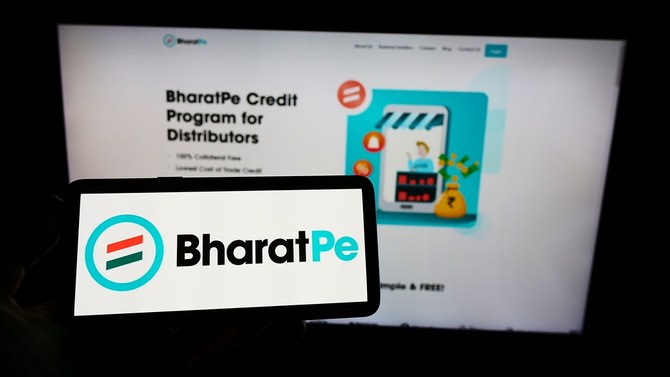
BharatPe allows shop owners to make digital payments through QR codes. (Shutterstock)
Short Url
Updated 10 May 2022
Follow

India In-Focus — BharatPe to overhaul governance framework, National insurer LIC IPO oversubscribed 2.95 times

MUMBAI: Indian payments startup BharatPe said Tuesday its board had recommended several measures including termination of several employees and vendors and filing criminal cases against them for misconduct.

IPO-hopeful BharatPe, which allows shop owners to make digital payments through QR codes, had initiated a corporate governance review in January hoping to soothe investor worries over a public spat involving personal investments by one of its co-founders.

The firm, which competes with apps including SoftBank’s Paytm and Google Pay in India’s booming payments market, came under intense investor and media scrutiny after co-founder Ashneer Grover sought damages from Uday Kotak, head of Kotak Mahindra Bank, alleging that the bank declined him financing for a personal investment.

In January, Reuters had reported that the audit would assess if BharatPe’s senior executives are making proper internal disclosures about personal investments and check for conflicts, leading to a new code of conduct.

India’s largest IPO by national insurer LIC oversubscribed 2.95 times



Investors bid for 478.4 million shares compared with the total 162.1 million on offer. (Shutterstock)

India’s largest-ever initial public offering, by Life Insurance Corp., was oversubscribed 2.95 times as six days of bidding came to an end Monday, according to a stock exchange filing.

The government expects to raise up to $2.7 billion — a third of its original target — from selling a 3.5 percent stake in the country’s top insurer.

Investors bid for 478.4 million shares compared with the total 162.1 million on offer. Bids were oversubscribed nearly twice by retail individual investors, who were offered 69.2 million shares at a discount of 45 rupees per share.

The price range for the issue has been set between 902 rupees ($12) and 949 rupees per share and LIC is likely to be listed on May 17.

A clutch of foreign investors and several domestic mutual fund houses had bid for its anchor book which had closed on May 2.

The 66-year-old company dominates India’s insurance sector, with more than 280 million policies. It was the fifth-biggest global insurer in terms of insurance premium collection in 2020, the latest year for which statistics are available.

Inflation risk continues

India’s retail inflation likely surged to an 18-month high in April, largely driven by rising fuel and food prices and staying well above the Reserve Bank of India’s upper tolerance limit for a fourth consecutive month, a Reuters poll found.

The jump has been long anticipated following the Indian government’s decision to wait until after key state elections in March to hike fuel prices. Energy prices globally have soared since Russia’s invasion of Ukraine in late February.

Food inflation, which accounts for nearly half the consumer price index basket, reached a multi-month high in March and is expected to remain elevated due to higher vegetable and cooking oil prices globally. 

These factors likely pushed inflation in Asia’s third-largest economy to 7.5 percent on an annual basis in April, according to a May 5-9 Reuters poll of 45 economists, from 6.95 percent in March.

If realized, that would be the highest inflation rate since October 2020 and well above the RBI’s upper 6 percent limit.

Forecasts for the data, due to be released at 1200 GMT on May 12, ranged between 7.0 percent and 7.85 percent.


Gulf emerging as beneficiary amid changing global alliances, says TCW executive

Updated 23 January 2026
Follow

Gulf emerging as beneficiary amid changing global alliances, says TCW executive

DAVOS: As artificial intelligence dominated discussions at this year’s World Economic Forum in Davos, asset managers are exploring how the technology can be deployed at scale without losing the human judgement that underpins investment decisions.

For Jennifer Grancio, global head of distribution at asset management firm TCW, Saudi Arabia’s approach to energy and AI makes it a particularly attractive hub for investors.

“Saudi Arabia has been very forward-leaning in traditional energy,” Grancio said.

“They’ve also invested heavily in grid efficiency and electricity, which positions them to serve the wider region. Combined with AI adoption, it makes them a powerhouse for investment opportunities.”

For TCW, the focus is not on replacing human expertise but on expanding capacity.

“We’re using AI to increase capacity, not to replace investment analysts or people who write commentaries or evaluate securities,” Grancio explained.

The firm continues to rely on deep research, deploying AI selectively across functions such as securitized credit, marketing and investment teams.

TCW’s engagement with AI predates the current wave of enthusiasm and adoption.

“We were actually an early AI investor. In the US, we have the oldest AI fund, launched over eight years ago, focused on both enablers and adopters,” Grancio said.

The dual focus on technology and infrastructure increasingly aligns with developments in the Gulf.

“As an investment manager, we look at both the AI systems being developed and how energy and power infrastructure supports them,” she said, highlighting TCW’s global energy and power strategy, which has consistently outperformed its benchmark.

Geopolitical shifts are also reshaping investment flows to the Gulf.

“Concerns around the US, China or Russia have led global investors to rely more on the Gulf,” Grancio said. “It’s a great time for development and trade there.”

Emerging markets are drawing growing attention from investors.

“In the US, there’s a rotation toward global exposure. Elsewhere, there’s renewed focus on emerging markets and managing through volatility,” she said.

TCW has benefited from this trend, particularly in emerging market debt, with sovereign clients increasing allocations by billions of dollars.

Volatility, Grancio added, can create opportunity. “As a value manager, we do deep research and focus on relative valuation. In fixed income and securitized credit, volatility allows us to increase returns for clients.”

In the Middle East, sovereign wealth funds and pension systems are expanding into private credit and alternative income strategies. Education is key, Grancio said.

“Understanding what’s different about private investments is critical. They offer strong compounding and portfolio diversification.”

Private asset-backed finance is a growing trend in the region. “We’re seeing portfolios shift from public fixed income into private securitized credit, a major growth area.” 

Looking ahead to 2026, Grancio said that shifts will vary by region and investor type. “In the US, the wealth market has moved toward ETFs. We’ve rapidly built out a $6 billion ETF platform to meet demand,” she said.