

Can sustainable aviation fuel provide the green alternative airlines need?

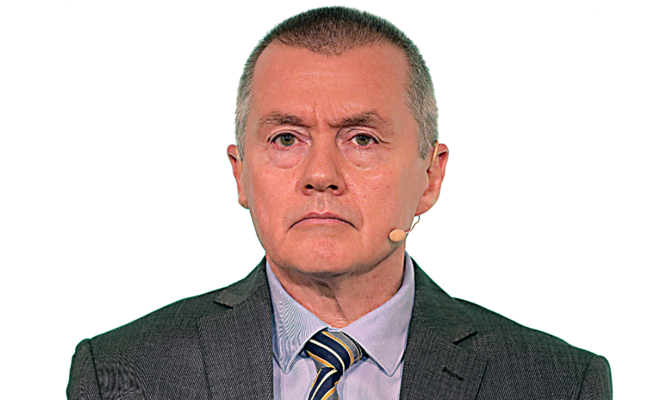
Willie Walsh, IATA director general
Short Url
Updated 08 May 2022
Follow

Can sustainable aviation fuel provide the green alternative airlines need?

RIYADH: Sustainable aviation fuel, made from products as diverse as used cooking oil and farm waste, could become a key tool in the airline industry’s drive to cut carbon emissions.

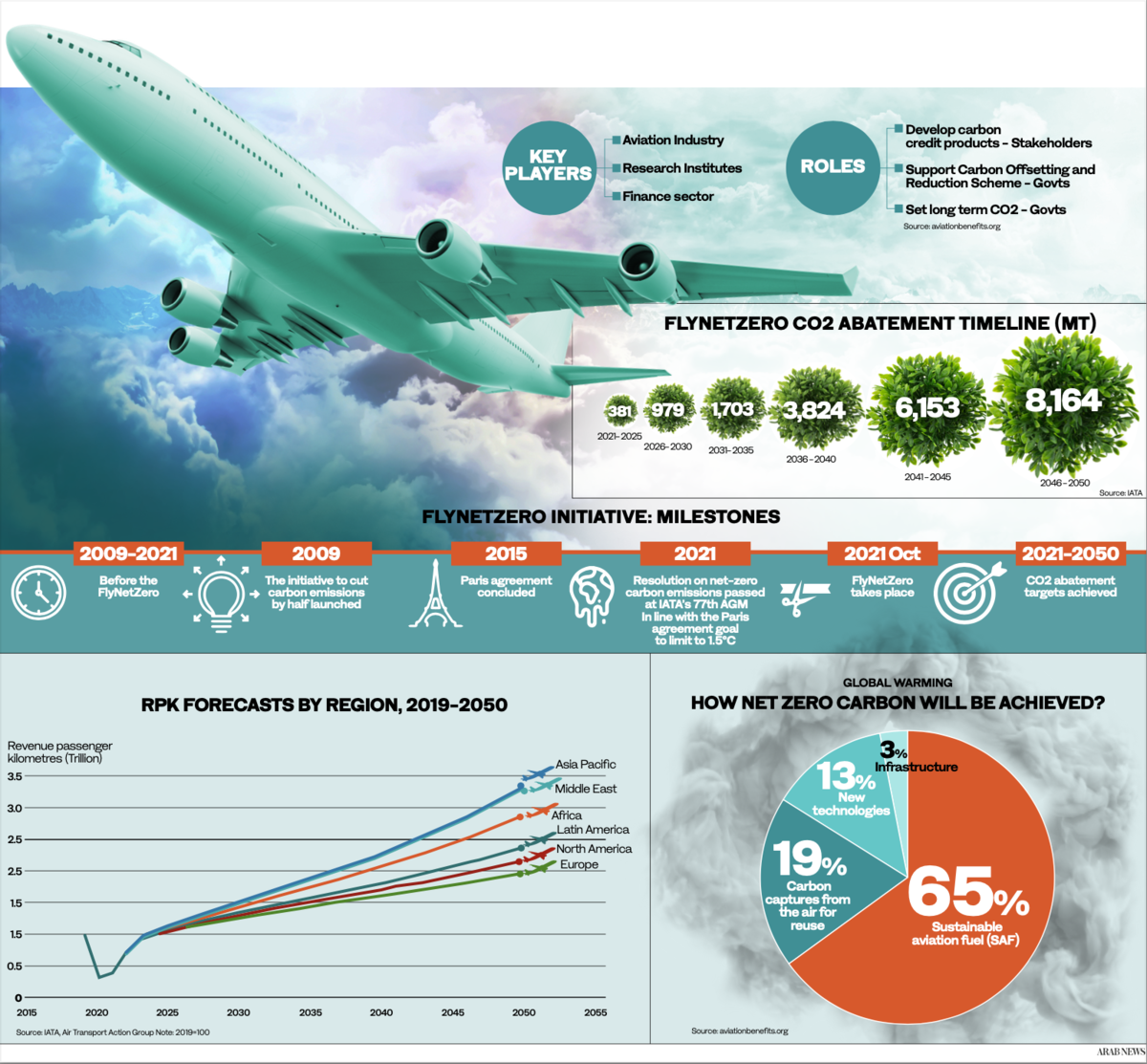
The commercial airline industry’s trade body, the International Air Transport Association, wants to hit net zero by 2050, and SAF may well help the sector get there.

SAF uses a variety of sustainable resources — that also include carbon captured from the air and green hydrogen — that can be mixed with traditional jet fuel “with no changes needed to the aircraft or infrastructure,” according to SAF producer SkyNRG.

It adds that the use of these green fuels cut emissions by between 70 percent and 80 percent per flight. 

This is appealing to an industry which saw its 1,478 airlines account for 2.1 percent of all CO2 emissions and 12 percent of all CO2 output from the transport sector in 2019, according to the Air Transport Action Group. In that year, the industry spend $186 billion on 95 billion gallons of fuel to fly its passengers around the world.

Fossil fuel spending will remain a feature for this sector for some time. Commercial aircraft, like trains and heavy-goods vehicles, cannot rely on electric engines, as they do not provide the thrust these power-hungry vehicles demand.

In addition to this, the sector’s emissions are often singled out, as they make up a significant slice of a passenger’s annual carbon footprint, and also, mile for mile, flying is the most damaging way to travel for the climate. 
All of this makes the aviation sector very interested in SAF. But there are problems.

While any aircraft that take standard jet fuel can use SAF, it costs twice much as using fossil jet fuel alone, according to UK oil giant BP’s Air division.

To force down the price of SAF, production needs to ramp up significantly. Currently, most SAF biofuel comes from waste fats or other agricultural byproducts, but their supply is well below what the aviation industry needs.

Airlines are slowly moving to adopt SAF, with Qatar Airways and Emirates airline among them.

Qatar Airways has said 10 percent of its flights will use SAF by 2030, while Emirates airline signed a memorandum of understanding with America’s GE Aviation in November 2021 to conduct an Emirates Boeing 777-300ER test flight using 100 percent SAF by the end of the year.

Pan-European planemaker Airbus has announced that all its aircraft are certified to fly with a mix of up to a 50 percent SAF blended with kerosene. The aim is that all of its planes will be able to fly solely using SAF by 2030.

IATA says the main challenge of SAF producers is meeting airline demand. 

“I think quantity is the main issue at the moment,” Willie Walsh, IATA director general, told CNBC last February.

About 100 million liters of SAF were used last year, “that’s a very small amount compared to the total fuel required for the industry,” Walsh said.

Airlines have ordered 14 billion liters of SAF, which “addresses the issue of whether airlines will buy the product,” he added.

IATA expects to see SAF production hit 7.9 billion liters by 2025, this would meet only around 2 percent of the industry’s fuel requirements. But by 2050, the association says production would jump to 449 billion liters, or 65 percent of the sector’s needs.

SAF is “the only answer between now and 2050” Boeing’s CEO David Calhoun told CNN.

That may be true. But SAF’s production base is going to have to expand greatly in a short time. At the moment it is using a thimble to fill a well.


Reforms target sustained growth in Saudi real estate sector, says Al-Hogail

Updated 26 January 2026
Follow

Reforms target sustained growth in Saudi real estate sector, says Al-Hogail

RIYADH: The Real Estate Future Forum opened its doors for its first day at the Four Seasons Riyadh, with prominent global and local figures coming together to engage with one of the Kingdom’s most prospering sectors.

With new regulations, laws, and investments underway, 2026 is expected to be a year of momentous progress for the real estate sector in the Kingdom.

The forum opened with a video highlighting the sector’s progress in the Kingdom, during which an emphasis was placed on the forum’s ability to create global reach, representation, as well as agreements worth a cumulative $50 billion

With the Kingdom now opening up real estate ownership to foreigners, this year’s Real Estate Future Forum is placing a great deal of importance on this new milestone and its desired outcomes and impact on the market. 

Aside from this year’s forum’s unique discussions surrounding those developments, it will also be the first of its kind to launch the Real Estate Excellence Award and announce its finalist during the three-day summit.

Minister of Municipalities and Housing and Chairman of the Real Estate General Authority Majed Al-Hogail took to stage to address the diverse audience on the real estate market’s achievements thus far and its milestones to come.

Of those important milestones, he underscored “real estate balance” as a key pillar of the sector’s decisions to implement regulatory tools “with the aim of constant growth which can maintain the vitality of this sector.” He pointed to examples of those regulatory measures, such as the White Land Tax.

On 2025’s progress, the minister highlighted the jump in Saudi family home ownership, which went from 47 percent in 2016 to 66 percent in 2025, keeping the Kingdom’s Vision 2030 goal of 70 percent by the end of the decade on track.

He said the opening of the real estate market to foreigners is an indicator of the sector’s maturity under the leadership of Crown Prince Mohammed bin Salman. He said his ministry plans to build over 300,000 housing units in Riyadh over the next three years.

Speaking to Arab News,  Al-Hogail elaborated on these achievements, stating: “Today, demand, especially local demand, has grown significantly. The mortgage market has reached record levels, exceeding SR900 billion ($240 billion) in mortgage financing, we are now seeing SRC (Saudi Real Estate Refinance Co.) injecting both local and foreign liquidity on a large scale, reaching more than SR54 billion”

Al-Hogail described Makkah and Madinah as unique and special points in the Kingdom’s real estate market as he spoke of the sector’s attractiveness.

 “Today, the Kingdom of Saudi Arabia has become, in international investment indices, one that takes a good share of the Middle East, and based on this, many real estate investment portfolios have begun to come in,” he said. 

Al-Ahsa Gov. Prince Saud bin Talal bin Badr Al-Saud told Arab News the Kingdom’s ability to balance both heritage sites with real estate is one of its strengths.

He said: “Actually the real estate market supports the whole infrastructure … the whole ecosystem goes back together in the foundation of the real estate; if we have the right infrastructure we can leverage more on tourism plus we can leverage more on the quality of life … we’re looking at 2030, this is the vision … to have the right infrastructure the time for more investors to come in real estate, entertainment, plus tourism and culture.”