KARACHI: Pakistan’s edible oil processors on Friday ruled out any panic-like situation and said the country had enough stockpiles for two months, a week after Indonesia, the world's largest palm oil producer, banned exports to calm down prices in the local market.
Indonesia’s President Joko Widodo last Friday imposed a ban on the export of edible oils in order to reduce domestic shortages and rein in burgeoning prices to avoid unrest at home.
Indonesia is the world’s largest producer of palm oil. The demand of the commodity has quadrupled over the years, especially after a demand surge in major markets in India and China. Pakistan imports around 82 percent of its palm oil from Indonesia and 18 percent from Malaysia.
“The stock of palm oil is at a comfortable level for the next two months (around 0.5 million metric ton),” Abdul Rasheed Jan Muhammad, chairman of the Pakistan Edible Oil Refiners Association (PEORA), told Arab News on Friday.
“They (Indonesian president) have taken a unilateral decision that is worrisome, because it does not happen that a trade is banned on a notice of three to four days. There would be an impact if the ban lingered on and it would not only affect Pakistan but the whole world.”
Indonesia's ban on oil exports comes amid disruptions due to the Russian invaion of Ukraine, which has blocked the supply of Russian and Ukrainian sunflower oil to the international market and led to a sharp rise in prices in Indonesia and other countries.
Pakistani edible oil refiners say prices in the local market are not expected to increase due to the availability of sufficient stocks.
“There is no price escalation expected because an abundant stock is available at domestic level,” Jan Muhammad said. "If there would be any price impact, it would be because of the [Pakistani] currency fluctuation."
Pakistani edible oil processors hope the island country would lift the ban on oil exports after Islamabad officially approached authorities in Jakarta. “[We] hope that sanity would prevail as the issue has been take up at the government level,” the PEORA chief said.
Last week, Pakistan's commerce minister Naveed Qamar informed that Prime Minister Shehbaz Sharif had constituted a task force to ensure there were no disruptions in the supply of palm oil to the Pakistani market.
The minister said the supply of palm oil had been temporarily halted owing to Indonesia's domestic issues. He, however, said he was reassured by his Indonesian counterpart that the supply will be resumed by the third week of May.
Pakistan will more oil from Malaysia, besides exploring other options and cracking down on hoarding and smuggling of the commodity, according to the minister.
Pakistani edible oil processors hoped Indonesia would lift the ban next week as the island nation faces an inventory buildup.
“We expect that Indonesia will lift the ban after a meeting that is to be held on May 09, because the stock continues to build up in the country,” Abdul Waheed, a member of the executive committee of Pakistan Vanaspati Manufacturers Association (PVMA), told Arab News.
“It would be devastating if the ban is not lifted but we have enough palm oil stocks to last for 45 to 60 days. They will lift the ban as they are running out of space.”
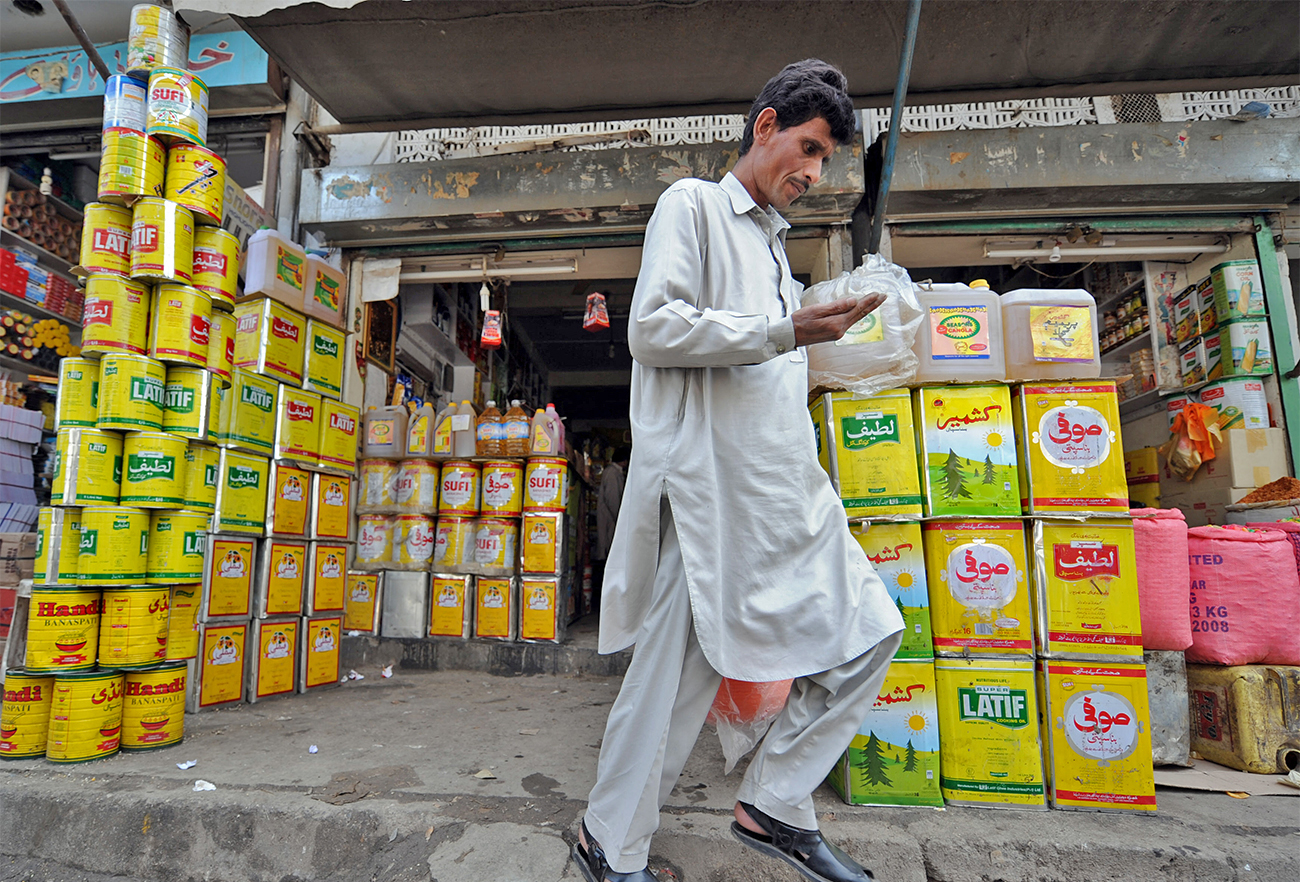
In Pakistan, palm oil is mainly used for the manufacturing of ghee or vanaspati as compared to the soft oil or cooking oil extracted from other sources, including soybean.
The per capita consumption of edible oil in Pakistan currently stands at around 24 kilograms per year, while the global average consumption stands little higher at 28 kilograms per year.
Edible oil and oilseeds are among the largest food and feed imports to Pakistan. The South Asian country imported 209,990 metric tons of palm oil in March, which was over 10 percent lower than the month of February and over 23 percent from March 2021.
Pakistan imported palm oil worth $290.5 million in March, which is 5.43 percent higher than previous year mainly due to the high international commodity prices.
From July 2021 to March 2022, Pakistan imported 2.2 million metric tons of palm oil that was worth $2.7 billion. The quantity of imported oil was only 8 percent higher than the previous year, but the value of the commodity was 46.7 percent higher than the previous year's, according to the official data.