

New book traces Egypt’s cassette culture

“Media of the Masses” examines the diverse cassette culture in modern Egypt. Shutterstock
Short Url
Updated 05 May 2022
Follow

New book traces Egypt’s cassette culture

DUBAI: In an age where online music streaming dominates, American historian Andrew Simon is old-school. His office is lined with books, a retro boombox, and an impressive archive of cassettes, bought from his forays into Egyptian kiosks. Their content is varied; ranging from Madonna’s Eighties hits to former President Gamal Abdel Nasser’s political speeches.

The Dartmouth College professor, who specializes in Middle Eastern studies, has released a new book — “Media of the Masses” — examining diverse cassette culture in modern Egypt, a pioneer of cultural production in the Arab world.

The author hopes his book will be translated into Arabic and intends to digitize his collection for public usage.
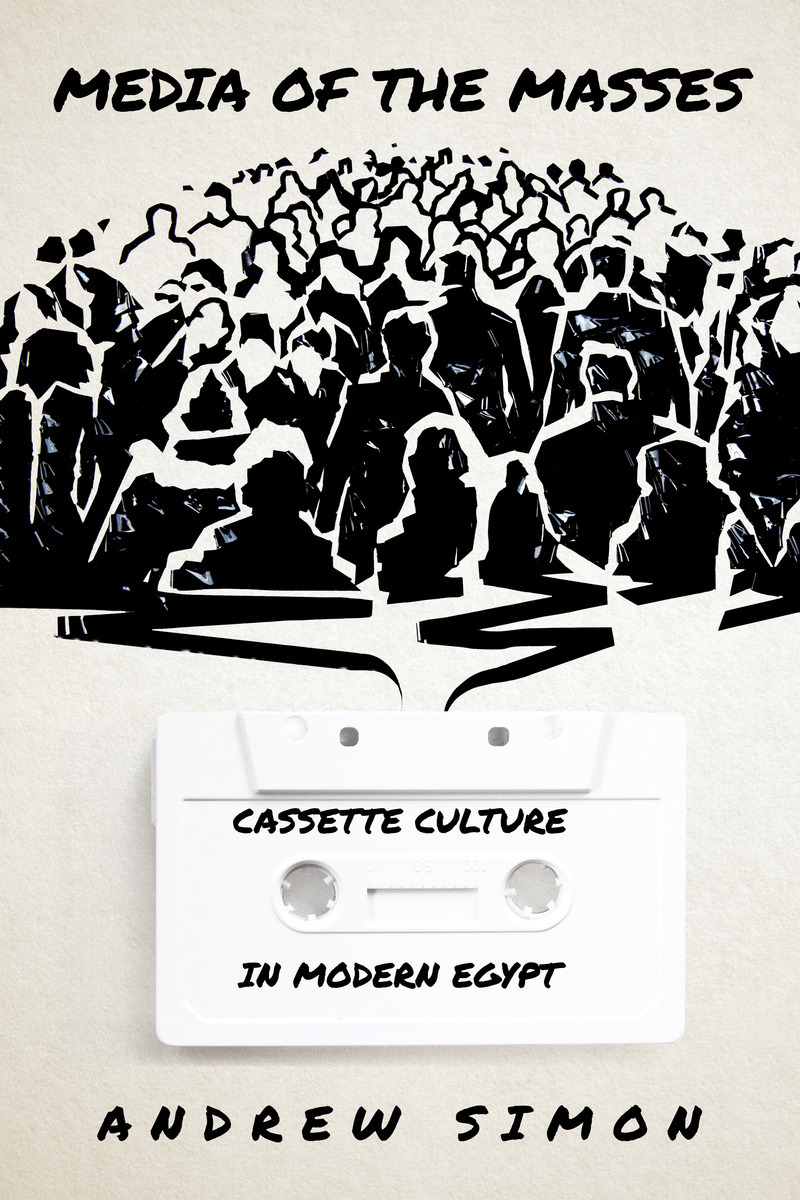


Simon explores the huge impact of affordable cassette tapes on Egyptian society. Supplied

“Anyone in the Middle East, or outside of it, will be able to listen to the tapes,” he said. “The audio quality is not as bad as you might expect. It feels less filtered, more raw and grainy.” 

Simon, who studied Arabic, first visited Cairo in 2007. “In Cairo, sound inundates and overwhelms you,” he told Arab News. “There’s such a rich soundscape, when it comes to the noise of traffic, the music videos emanating from sidewalk cafés, and my exposure to all those sounds, even prior to the 2011 Revolution, piqued my curiosity when it came to cassette culture as well. I was hearing Islamic sermons, popular shaabi music, the Spice Girls, and Amr Diab. I was hearing these different noises around me and wanted to make sense of that.” 

In his book, Simon explores the huge impact of affordable cassette tapes, as opposed to more-expensive vinyl records, on Egyptian society, politics, and culture during the Seventies and Eighties.

“The real power of this technology, to me, is how it enabled countless people to transform from being cultural consumers to producers,” he said. “For the first time, anyone could contribute to the creation of culture, circulate cultural content, challenge cultural gatekeepers or political authorities. . . The Internet is like an iteration of the cassette tape.” 

There is also an emotional element to the medium. “What struck me was seeing how so many people I met had held onto their tapes — even if they don’t necessarily listen to them on a daily basis anymore,” said Simon. “There are so many memories attached to them.”


Saudi label KML unveils new collection in Paris

Updated 21 January 2026
Follow

Saudi label KML unveils new collection in Paris

DUBAI: Siblings Razan and Ahmed Hassan presented their Fall/Winter 2026–2027 collection at Paris Fashion Week on Tuesday, continuing the rapid rise of their KML label.

The duo has gained international recognition since launching the brand in 2022, most recently being named semifinalists for the LVMH Prize — a prestigious annual award for emerging designers.

Creative director Ahmed’s minimalist designs and sharp tailoring mean KML — owned by his sister, Razan — has built its identity around reimagining traditional Saudi garments through a contemporary lens. Jackets are paired with shawl-like elements, large leather belts recall those historically worn by Bedouin men, and skirts nod to silhouettes once worn by men in the Eastern Province, Jazan and the Hijaz.

The collection leans on wrap constructions, asymmetry and elongated proportions. (Getty Images)

The approach is reflected in the new collection, which features a restrained palette of black, white and muted earth tones, leaning on wrap constructions, asymmetry and elongated proportions.

Flowing skirts, structured wrap tops and robe-like coats dominate the lineup, with some looks referencing classical draping while others lean toward utilitarian dressing, defined by sharp shoulders, cinched waists and clean, architectural lines.

In a previous interview with Arab News, Ahmed said their grandmother was a huge influence on their lives as he and his sister grew up in Riyadh. He fondly recalled both her progressive nature and inimitable style. As a young boy, Ahmed would often accompany her to fabric shops so she could get her designs stitched by a local tailor. The experience left an impression, though fashion was not an obvious initial career path.

Ahmed studied architecture and became an intern at Zaha Hadid Architects, where he developed an appreciation for structure and form. Razan, meanwhile, pursued law at Prince Sultan University and she went on to practice full-time.

“One summer, we both realized we weren’t doing what we truly wanted to do, so I decided to go to the UK to study creative writing, and Ahmed went to Central Saint Martins (in London) for a few courses,” Razan explained.

That was the catalyst for KML. In August 2023, they launched their debut capsule collection and towards the end of that year they applied to the Saudi 100 Brands program. The Fashion Commission recognized their potential, helping KML launch collections at fashion weeks in Paris, Riyadh and Milan.